
Exutoire
Son and Paul-Antoine, please introduce yourself:
Hello! Thanks for having us. It’s Son and Paul-Antoine, and together we’re Exutoire. We work with architecture in all the forms we can imagine. We see in the culture of space an opportunity to see and think about the world. Whether it be through designing furniture, writing, curating, teaching, publishing, or building, we try to be critical and aim for more equity in and through architecture.
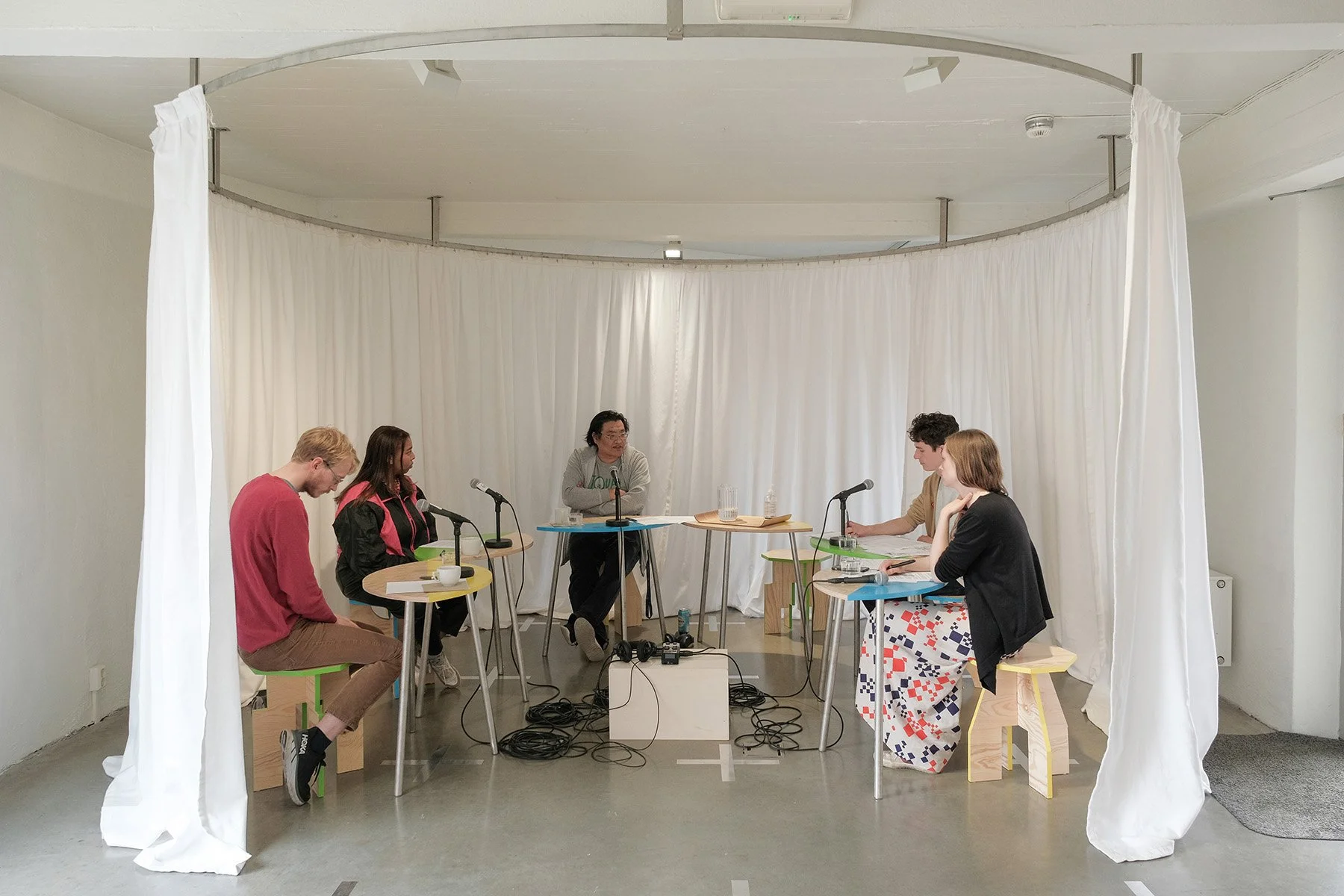
Safe Space, with Armelle Breuil & contributors, ROM for kunst og arkitektur, Oslo, 2021. Photo © Safe Space Collective.
#1 You describe Exutoire as a queer critical spatial practice concerned with social, spatial, and material justice. How does this position shape the kinds of projects, formats, and collaborations you pursue?
This denomination serves as a means to give ourselves a moral compass and ethical stance. The term “critical spatial practice” comes from the feminist architecture theorist Jane Rendell while the prefix “queer” situates what we do in a lineage of queer theory in architecture led by the likes of Butler, Halberstam, and Ahmed. In our practice, queer and intersectional feminist approaches are meant to defy the normativity of/in the discipline as much as the built environment. Ultimately, the goal of it all is to vouch for a more equitable architecture - one that requires social, spatial, and material justice.
Many of our projects have a discursive and advocatory positioning. Therefore, they’re often about building platforms for discussions: podcasts, zines, exhibitions, performances, public programs. They’re all aided by design of course as we use our skills to care for the audiences via the making of spaces, furniture, prints. From the beginning, we’ve intuitively been drawn to collaboration as a way to get out of our bubble and learn from/with others. Weaving together a multitude of perspectives helps us be more mindful in doing architecture.
#2 What do you find particularly compelling about working at the intersections of different disciplines?
We consider architecture a “culture of space” rather than a mere act of building. Our profession is highly dependent on complex systems and the contingent character of architecture is something to embrace rather than shy away from. We can’t pretend to know everything, nor should we. Housing, for instance, is not just form and geometry; it involves all kinds of legal and financial entanglements. So in a way, establishing an alternative housing sector will have a much larger societal impact than designing one housing project. Understanding other disciplines such as law, politics or economy therefore is paramount for us.
Beyond space-making, graphic design, curation, teaching become tools helping us research and share critical ideas. Working across disciplines also allows us to sustain operations by diversifying our activities and revenue streams. A graphic design commission takes less time than an architecture project but pays (much) better.
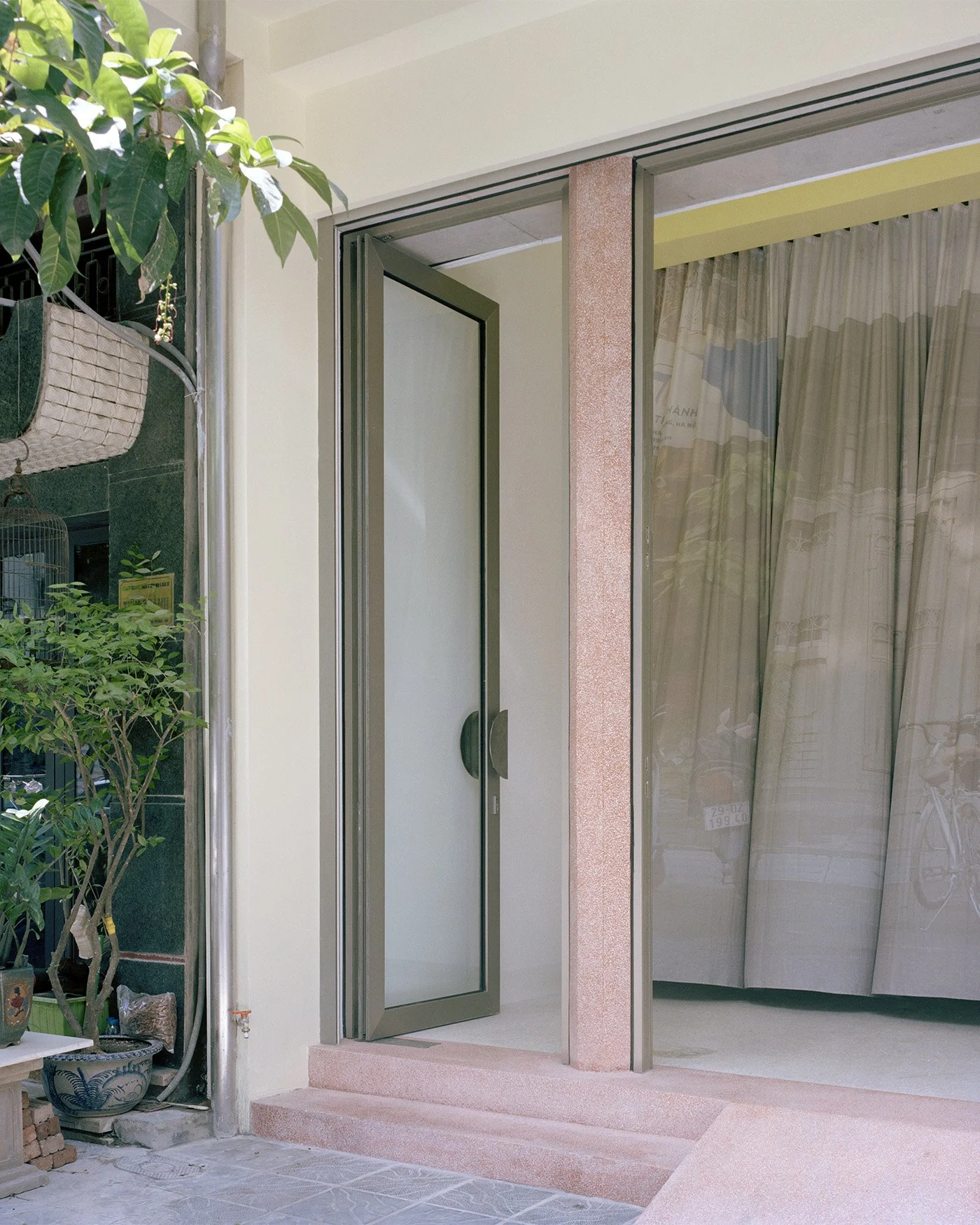
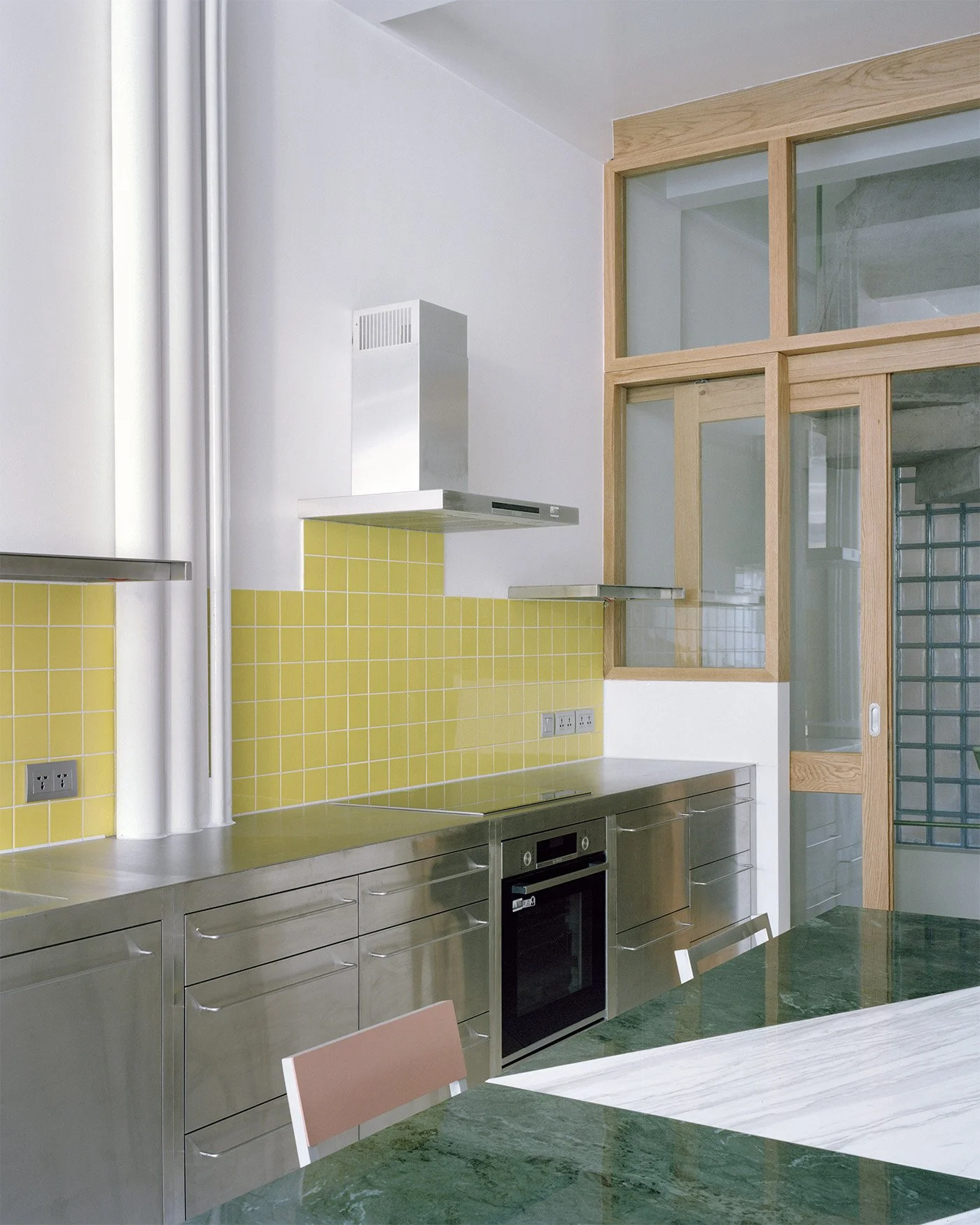
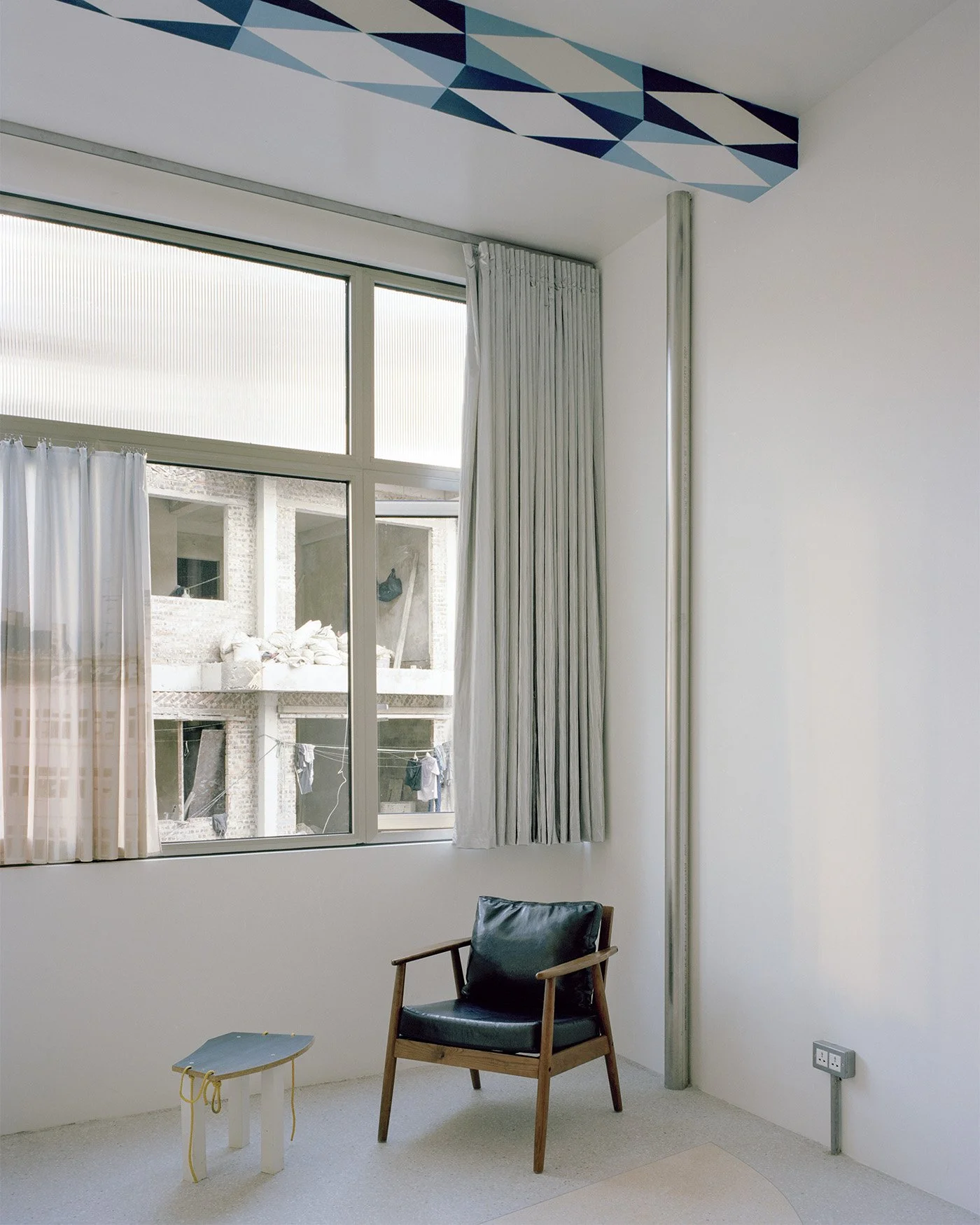
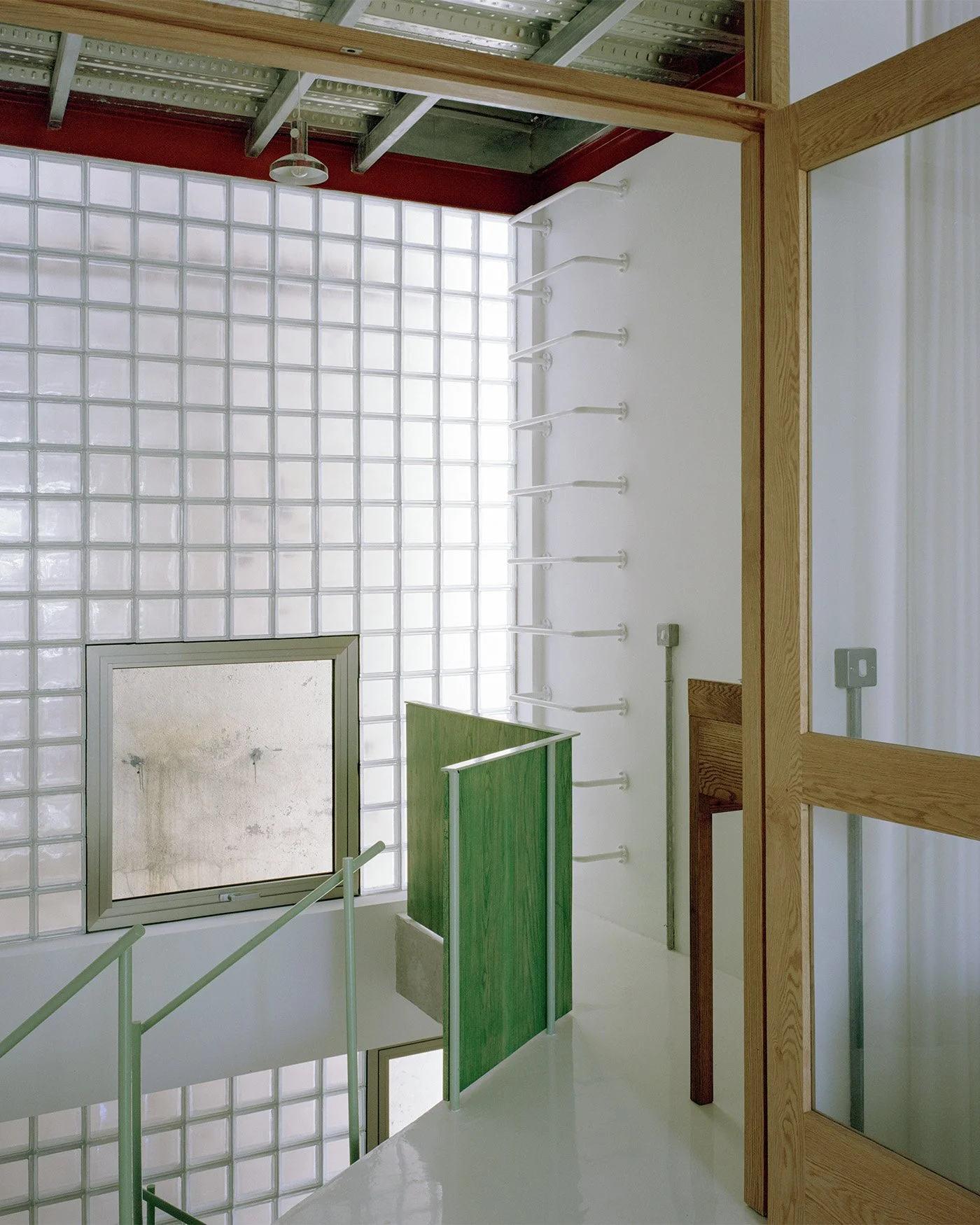
22YB1, Hanoi, 2025. Photo © Maxime Delvaux
#3 You renovated an early-1990s Hanoian tube house. What defines this particular housing typology, and how did you approach the renovation?
The tube house has been a ubiquitous and predominant individual housing typology in Hanoi and across Vietnam for decades. Its precedent is the Chinese shophouse which has evolved over time under French colonial influences and the densification of the city. Today, it’s typically a tall extruded volume (from 3 to 9 stories) on a narrow (3–6 m) and long (10–20 m) plot of land. It used to be the dream house of any middle-class nuclear family in the 1990s–2000s but is now more and more forgotten and even despised because of its often dark, stuffy, humid spaces.
We have a special relationship with this building type because one of us grew up in one and both of us see a lot of potential in its existing stock, especially in a city where demolition and the desire for novelty are among the causes of pollution and environmental degradation. For 22YB1, we wanted to do a sort of experimental preservation of ordinary heritage - if we can call it that - by performing a gut renovation of a 30-year-old run-down tube house structure. We kept the concrete skeleton, replastered the walls, upgraded the façades, repositioned the staircase to open up the floor plans, replaced the inner partitions with transparent operable doors and windows to let light and air in. That completely changed the dynamics of a conventional tube house: a promising prototype for future projects.
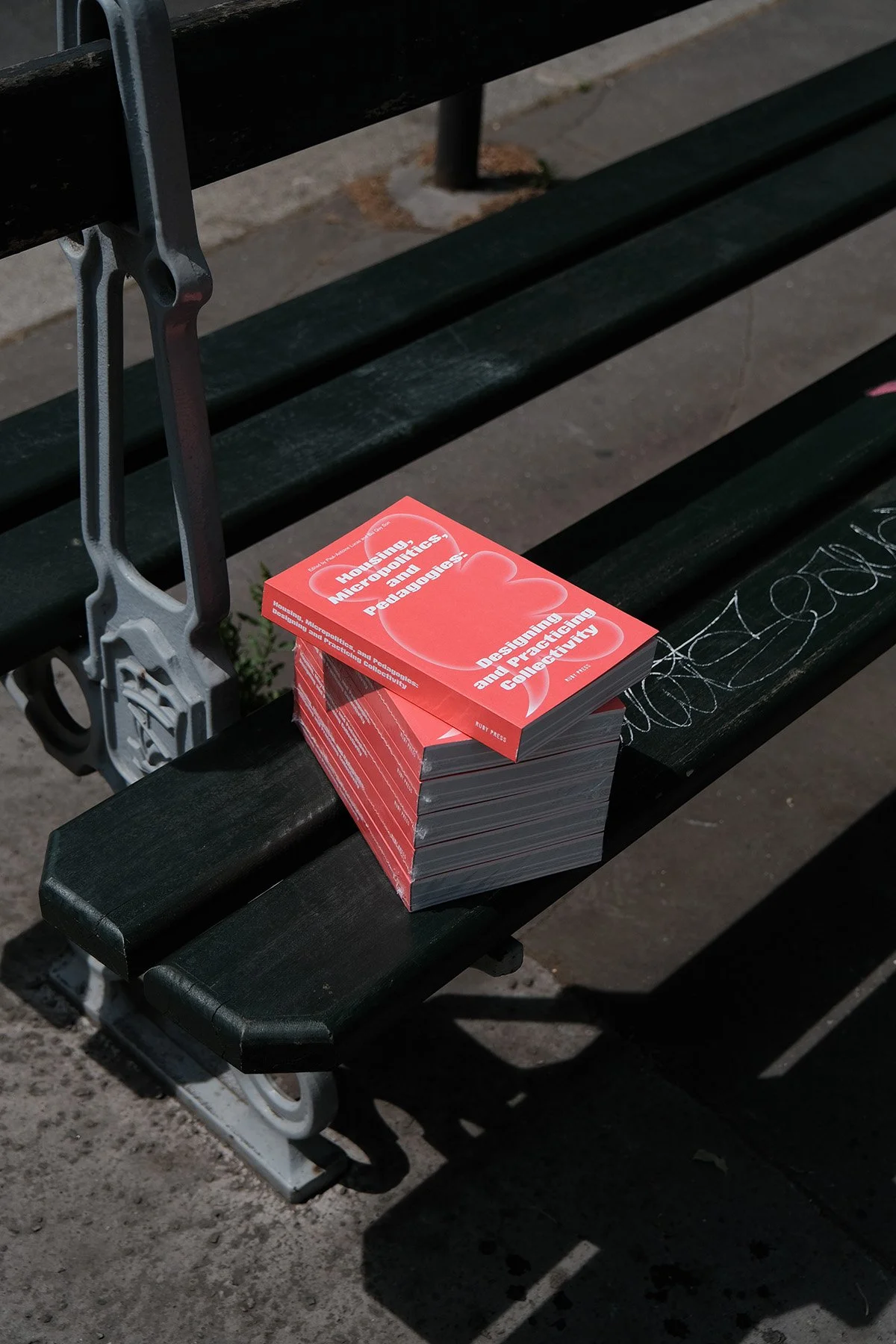
#4 Together with others, you published the book Housing, Micropolitics, and Pedagogies: Designing and Practicing Collectivity. How did the book come about, and what do you consider its most important takeaway?
The book is a reflection on a master’s studio we taught at the Oslo School of Architecture and Design in 2022 with another colleague, and gathers our writings, 5 contributions, and student works. Starting from the crisis of housing affordability in Norway, it seeks to affirm the architect’s responsibility in proposing alternatives through design advocacy. In thinking about how to do so, we realized the importance of the architecture studio (at school) as a political playground to instigate political agency in young architects. From there we delved into other pedagogical strategies that center joy, kindness, and repair as values of the profession.
All in all, we want the readers to remain hopeful and most importantly take action. Considering various European contexts, this housing crisis is not irreversible but the antidote requires a great deal of mobilization and political will. Architects have been key players in the establishment of a cooperative housing sector in Catalonia since the 2010s, planners and designers were involved in the resurgence of the cooperative movement in Switzerland in the 90s, and Céline Zimmer (one of the contributors) is currently spearheading the first not-for-profit cooperative housing project in Luxembourg. Schools, curricula, policies as well as the profession can all be reformed. We only need to act now.
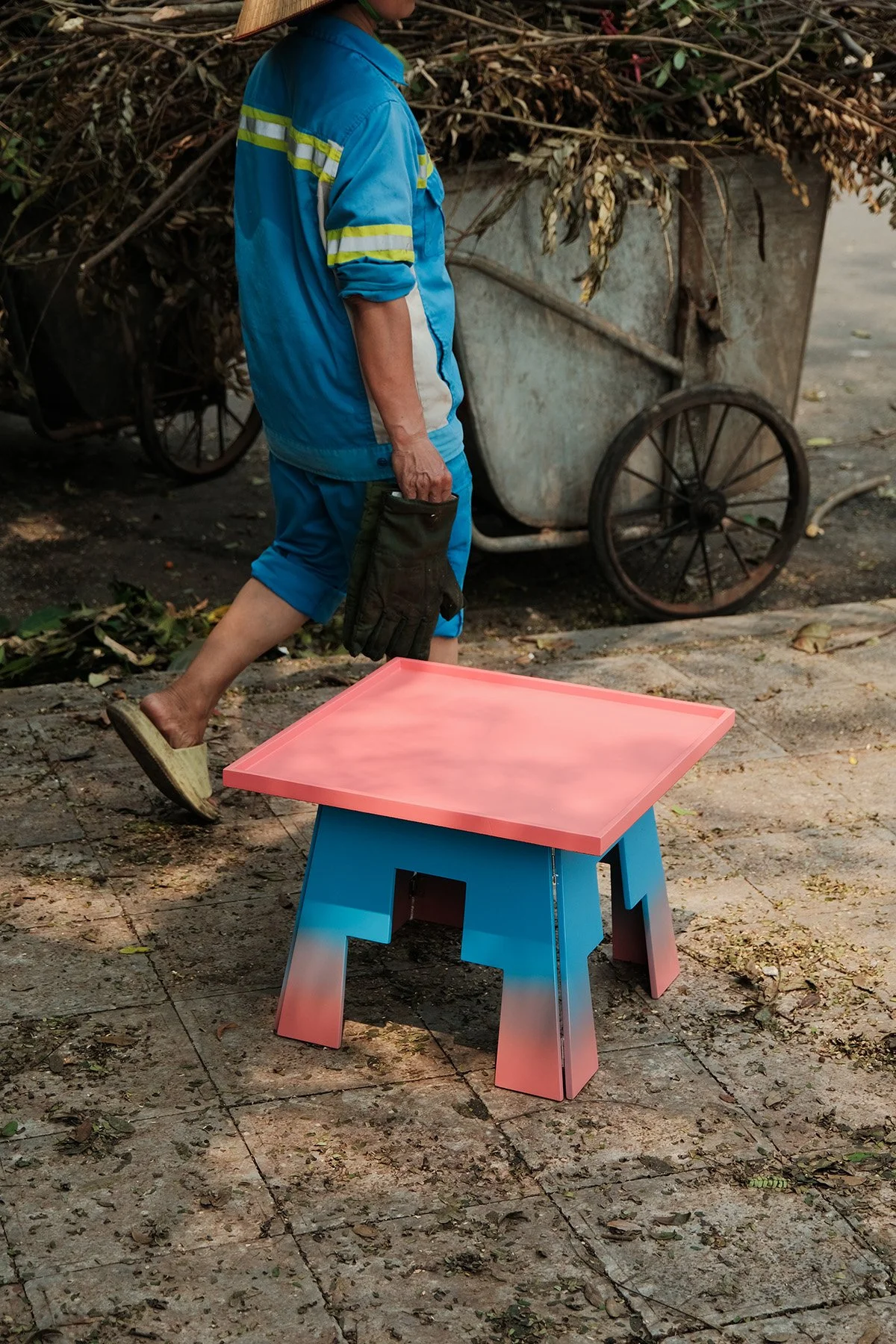
Left: Housing, Micropolitics, and Pedagogies: Designing and Practicing Collectivity, Ruby Press, 2025. Photo © Exutoire, Right: Trà Đá Stool Set, Hanoi, 2024. Photo © Exutoire
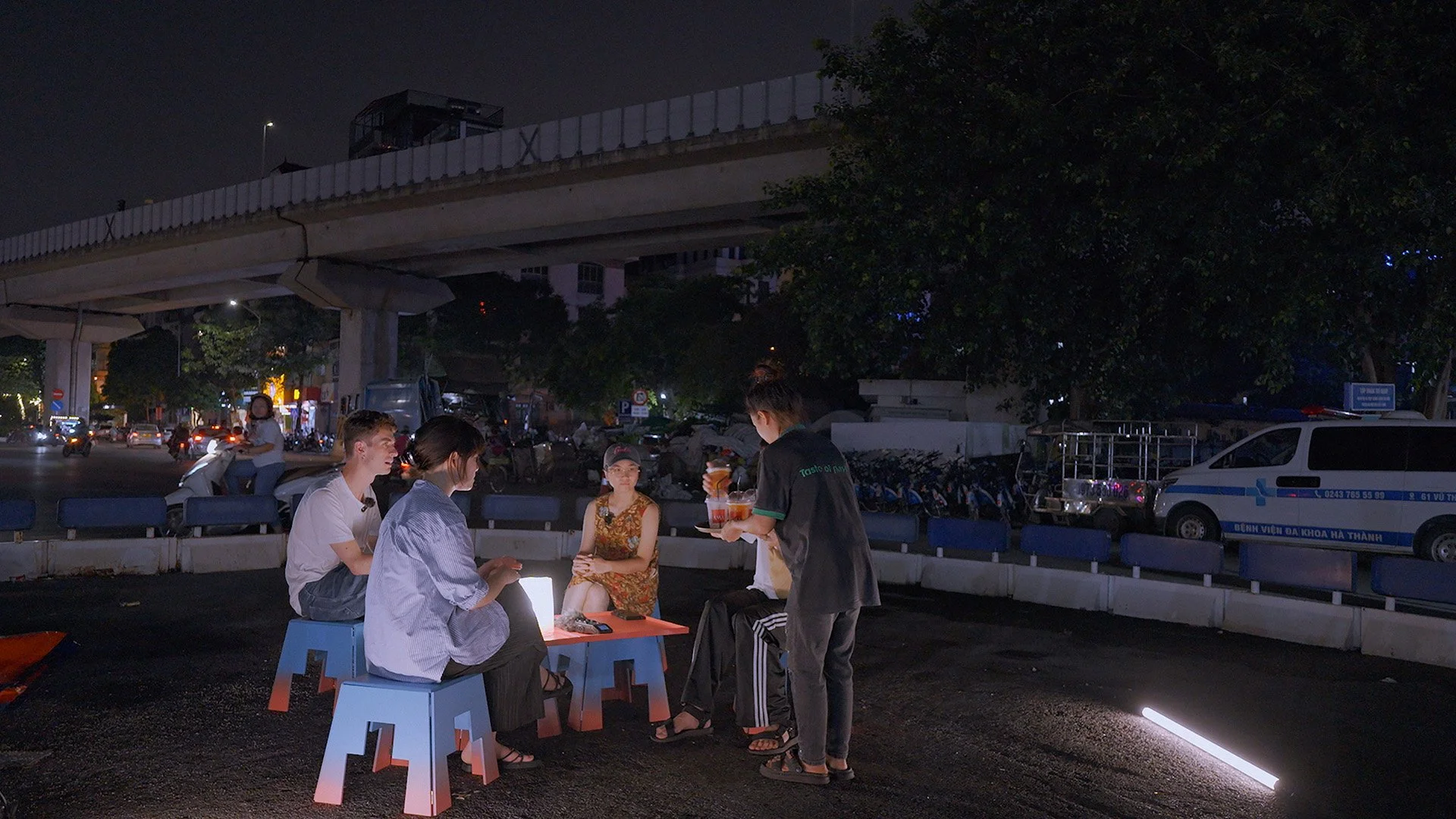
Dinner at the Roundabout, with ba-bau AIR, Hanoi, 2024. Photo © Cao Viet Nga.
#5 With the TRÀ ĐÁ stool set, you introduce a small, mobile intervention into the city. What inspired this project, and how can such simple objects transform the way people gather and occupy public space?
We made the first prototype for Trà Đá in 2024 but the idea had already been brewing for 2 years by that point. We wanted to pay homage to and learn from the small plastic stools that we see everywhere and use daily at street food and iced tea (or trà đá) stands. They are like an invasive species that we love dearly and that have shaped so much of the urban streetscape as well as our socialization rituals. So our idea was to create a slightly larger contemporary version of the stools by rethinking their expression using local craft, in this case working with lacquer artisans from Hanoi.
More specifically, we made the stool set - where table and stool tops are interchangeable - for a dinner-performance-film in collaboration with our friends, the Hanoi-based artist collective ba-bau AIR. Because of the guerilla-like character of the performance where we informally occupied a roundabout for an evening, we decided to make the objects foldable using hinges and thus easily transportable. This way, the stools/tables stay true to their function of serving collective street life but are now built even more specifically for performativity and elasticity.
#6 Together with Céline Zimmer, you will curate the Luxembourg Pavilion at the 2027 Venice Architecture Biennale. How did your collaboration develop, and how are you jointly exploring the question of spatial overconsumption through the pavilion?
For us, collaborations often come from personal and professional alignment—serendipitously. We first met Céline when we invited her to contribute to a seminar at the 2022 Oslo Architecture Triennale as her PhD research about alternative housing models for Luxembourg triggered our interest. We shortly became friends, bonding over this shared obsession with decommodifying housing. She later contributed to our book and, in turn, invited us to design her Our New Housing exhibition at LUCA – Luxembourg Center for Architecture. After an unsuccessful try together at the open call for the 2025 edition, we went at it again and got selected this time around to represent Luxembourg at the 2027 Venice Architecture Biennale.
The Grössenwahn/Thừa đủ project—though we cannot yet divulge too much—explores the question of inequitable (over)consumption of living space. Using Luxembourg and Hanoi as case studies, we seek a dissonant dialogue where two political, social, economic, and historical contexts bring nuanced and critical insights into what future models of sharing could look like. There’s no question that we consume too much, and for countries like Luxembourg, the finiteness of land resources is visible. However, the issue of excess is much wider and its consequences manifold, complex, globalized. No matter in Vietnam, Luxembourg or anywhere, we need to rethink our value system around frugality and temperance.
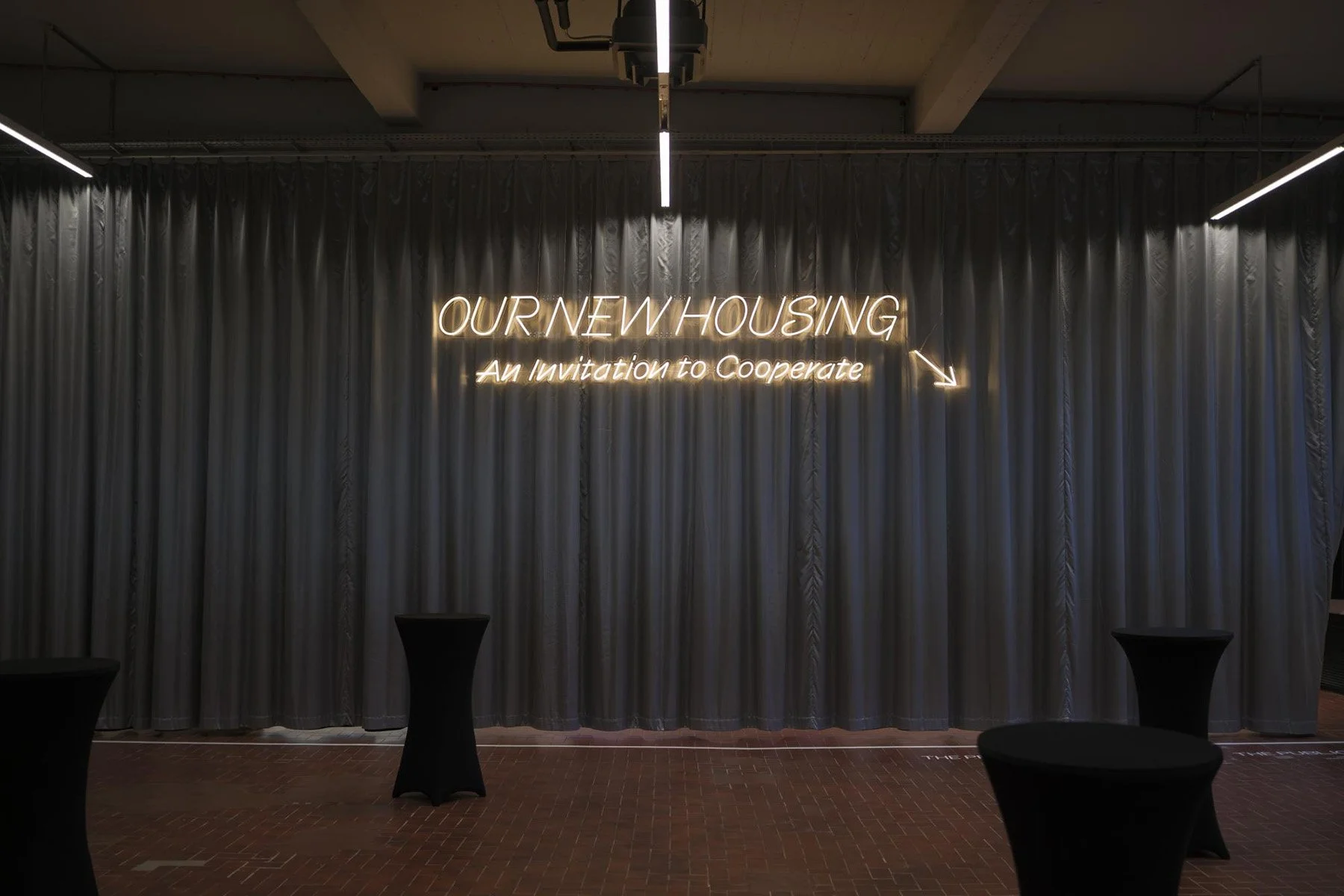
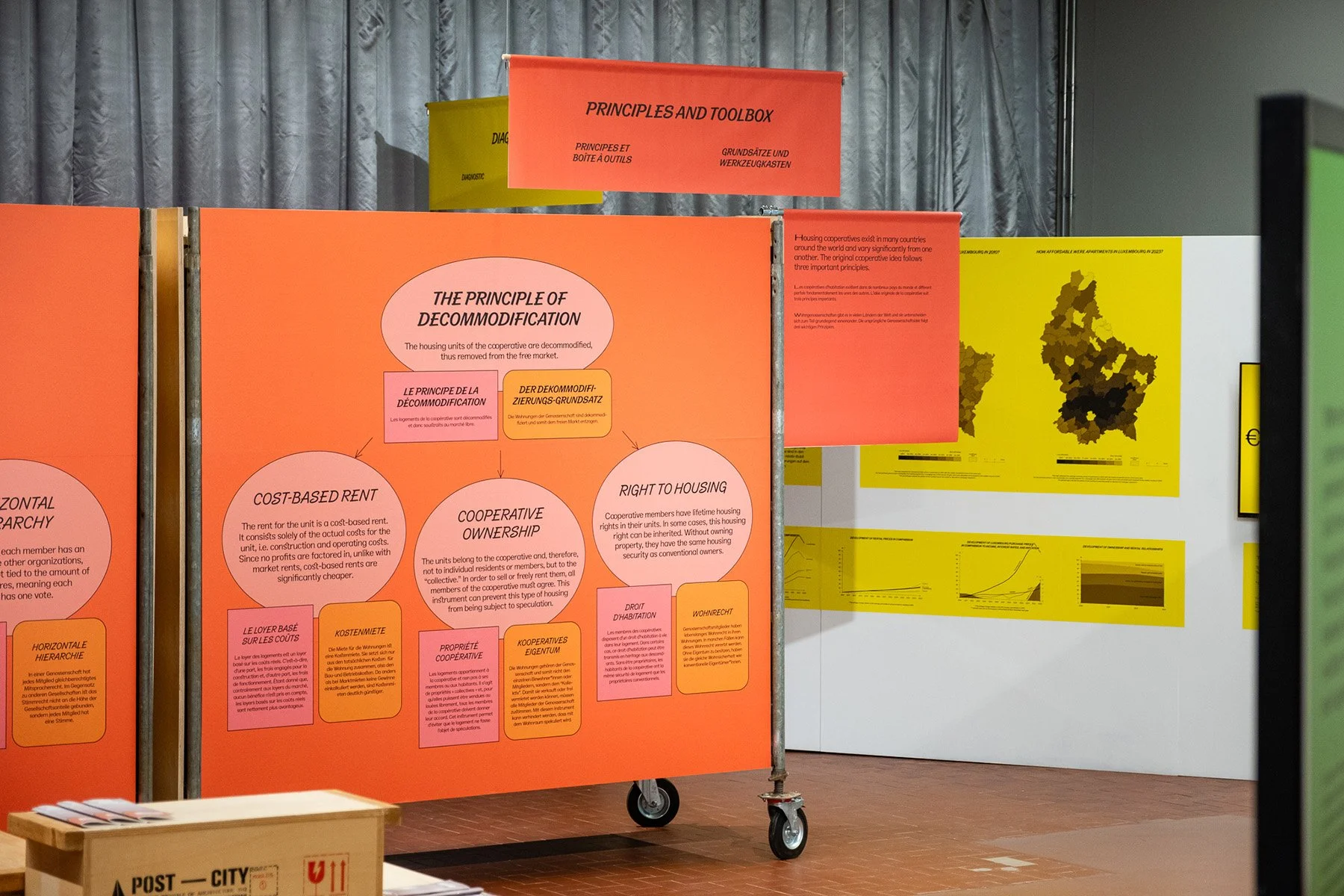
01: Our New Housing - An Invitation to Cooperate, curated by Céline Zimmer, LUCA, Luxembourg, 2025. Photo © 2025 LUCA – Luxembourg Center for Architecture | Pancake! Photographie, 02: Laurent Sturm
#7 How do you see the role of an architect in today's society?
We sincerely believe that the architect profession is in crisis and needs to be rethought with urgency. Both the books we read and our own experience working in the industry have shown us this identity and belonging crisis in the ugliest details: from losing disciplinary agency to capitalist powers, to contributing to extractivism and the destruction of the planet, to driving ourselves ever further away from the social communities and missions we are to serve. We really do want architects to slow down, self-reflect, own up to our mistakes, learn to undo the wrong things, and be kinder to the humans and non-humans that should be at the core of our work.
#8 How does your environment influence your work?
It’s the people whom we surround ourselves with that have the most influence on us: our collaborators, peers, friends, neighbors, family. Exutoire in itself is just a duo so we work a lot with others, which is a real pleasure. Besides the human aspect, the physical, climatic, cultural contexts obviously are also deciding factors in what we do. For example, right now we’re very concerned with the question of how to live with intense humidity and pollution as they are some of the biggest challenges for Hanoian city life.
#9 Three things that inspire you at the moment?
Critical slowness, Viet coffee life, and cute renovations.
#10 What do you currently read, watch, listen to?
We’re both in the middle of a PhD so architecture discourse is all over our work table, from Making Space: Women and the Man-Made Environment (Matrix, 1984) to Architecture After Revolution (Alessandro Petti, Sandi Hilal, Eyal Weizman, 2013).
Paul-Antoine: Foreign Babes in Beijing: Behind the Scenes of a New China by Rachel DeWoskin, a memoir as a nuanced socio-cultural analysis of 1990s China, feels surprisingly relatable to my experience as a foreigner living in Vietnam in the 2020s.
Son: Having an R&B moment listening to Kehlani, Teyana Taylor, and SZA.
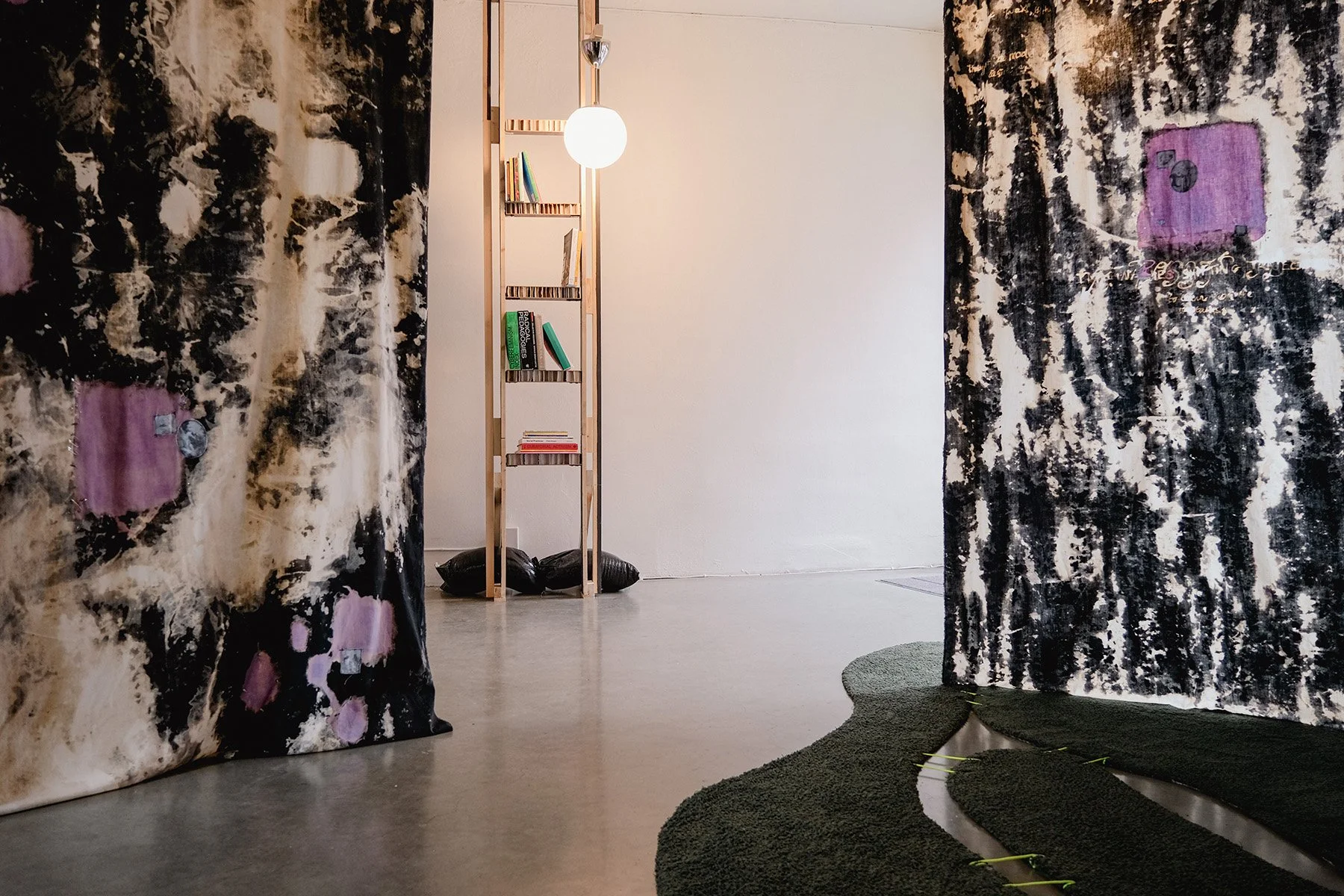
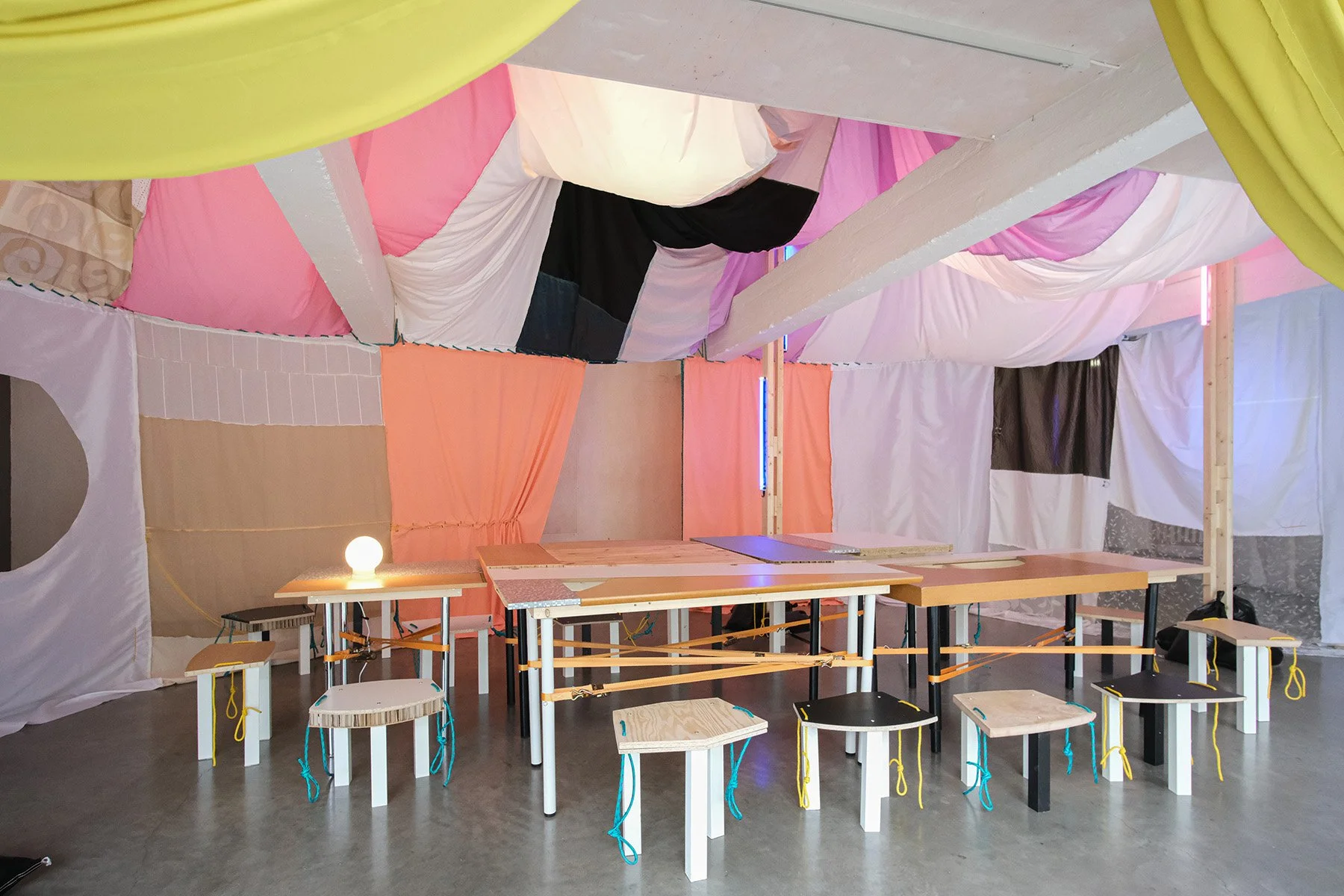
Dissident Publics: Future Artefacts of Queer Methodologies, with Maike Statz, Danja Burchard, Léa Brami, Mahé Cordier-Jouanne, Lexie Owen, Liene Pavlovska, and Jan Trinh, ROM for kunst og arkitektur, Oslo, 2023. Photo © Bui Quy Son.
Links
Website: exutoireexutoire.com
Instagram: @exutoire_
Interview by Caroline Schulz