
Christian Plenz
Please introduce yourself:
Hi, i’m Christian Plenz, an aspiring architect.
I did my Bachelor at University of Applied Sciences Darmstadt. I also met my partner Eliane Binder there, who strongly influenced my studies and supported me throughout my master’s thesis. I finished my Masters at Münster School of Architecture.
I’ve also worked at various architecture studios, during and in between my studies, as well as Academic Tutoring. Currently I am a Junior Architect at Henrike Thiemann Architektur.
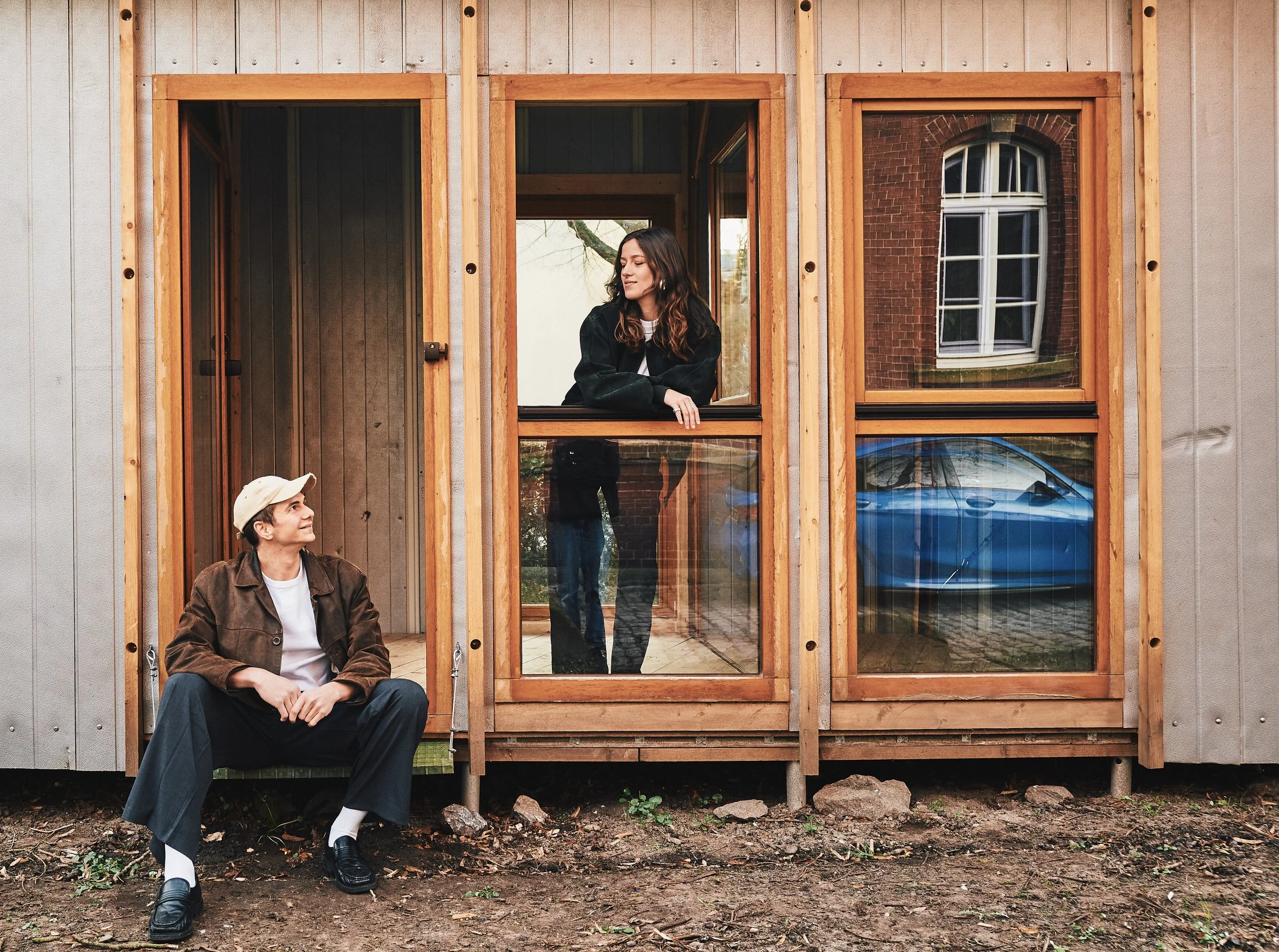
Christian Plenzen & Eliane Binder ©Luca Stroscher
#1 Please explain what you examined in your master's thesis, emphasizing the most important aspects.
In my master’s thesis, I built a small cabin from reused materials and explored how circular construction can actually work in practice. What triggered the project was a simple observation: in the construction industry, we constantly demolish buildings while losing most of their materials in the process.
In the theoretical part, I looked at demolition practices, irreversible connections, and why so many components can’t be reused.
The practical part became a real-life experiment: I built a demountable cabin almost entirely from reused materials collected within a 100 km radius. The design didn’t start with drawings—it emerged from what I was able to find.
That process became the key idea: architecture not as something imposed on materials, but something that grows out of them.
#2 From a practical point of view, how challenging was it to source all the materials within a 100 km radius and how did it lead to “form follows availability”?
Most components were sourced via eBay Kleinanzeigen, and picked up with friends and rental trucks. The main challenge was logistics: limited storage, tight budget, and transport. Each element came with its own constraints. A window defined an opening. Sandwich panels defined the structural rhythm. Timber became the flexible connector between everything. Instead of designing first and sourcing later, the process flipped.
The design followed the materials — and not the other way around.
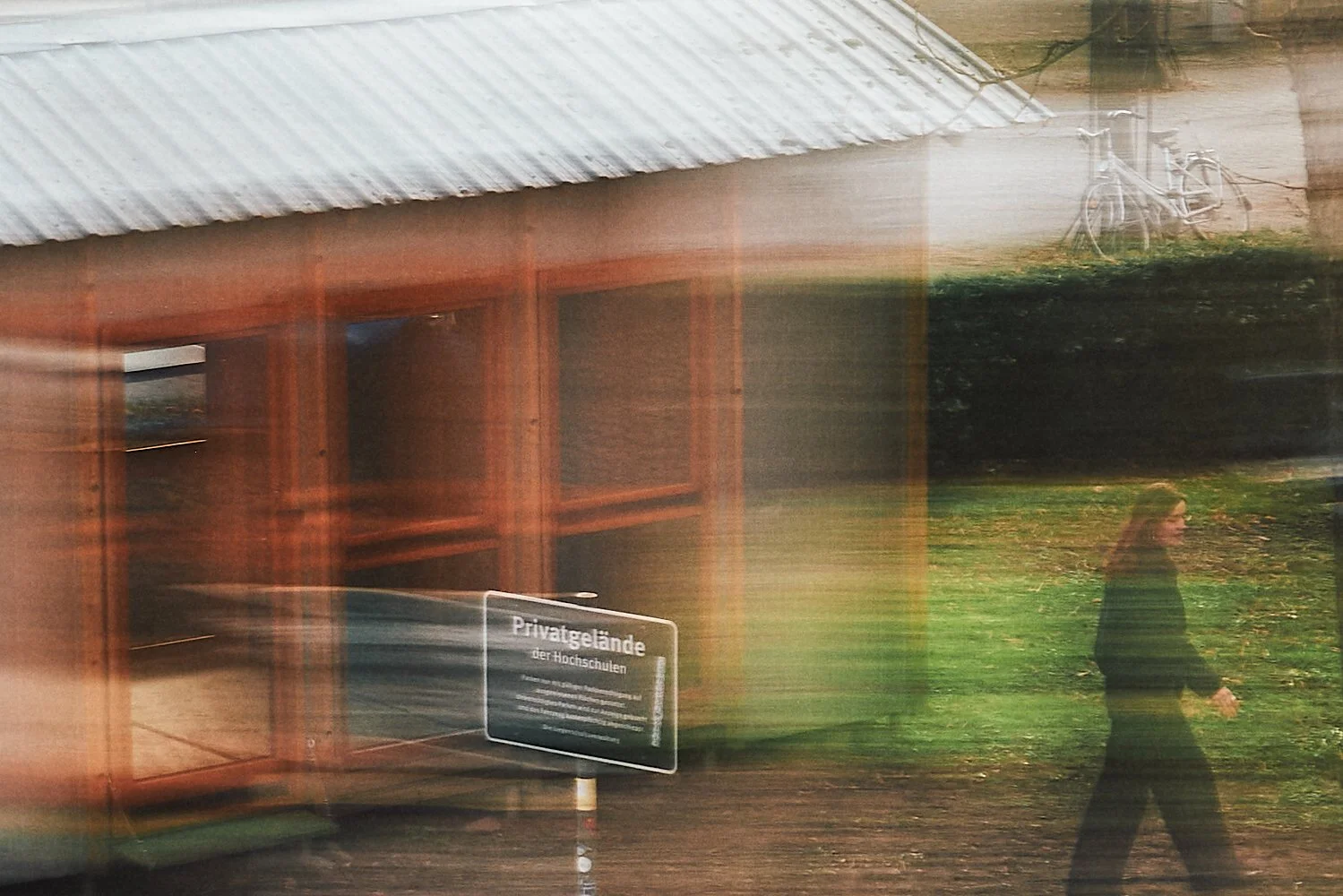
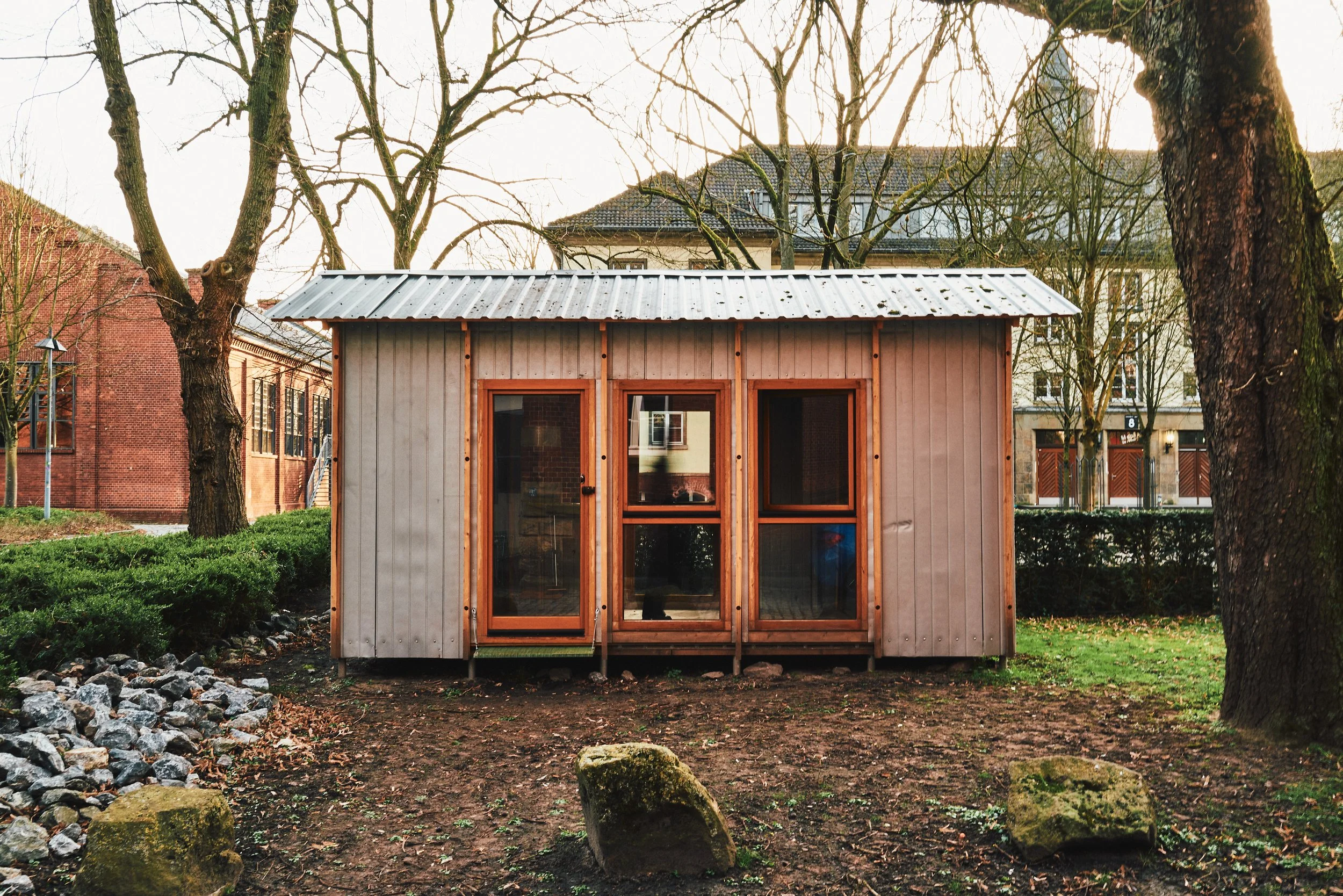
©Luca Stroscher
#3 What was your greatest learning, in terms of theoretical implementation as well as practical implementation?
From a practical perspective, what I saved in money I had to invest in hours of labour reworking the materials for reuse. Therefore the economic benefit of reuse is often limited, as labour costs are high. However, this might shift in the future, as material scarcity increases and the cost of new resources rises, making reuse more economically attractive.
On a theoretical level, one key insight was that materials which are difficult to recycle can actually be the most important to reuse. The sandwich panels I used are a good example. Made of aluminium and polyurethane foam, they form an irreversible composite and are typically incinerated in Germany— effectively ending their material lifecycle. Unlike timber, which can often be reused in cascades, these panels have almost no recovery pathways. Reuse is therefore not just an option, but one of the few ways to keep them in circulation at all.
#4 Your work shows that architecture is definitely capable of circular construction. What would you like to see from academia and the industry in terms of circular construction?
I would like to see more products designed for disassembly, with manufacturers taking back components after their life cycle.
Academically, material catalogues and reuse strategies are emerging in some schools.
Government regulations, however, remain crucial. An excample: In Germany, the Altholzverordnung prevents reuse of structural timber (A4) due to chemical preservative concerns. According to Informationsdienst Holz, in Austria, only 10 % of construction timber is chemically treated. Assuming similar conditions in Germany, 90 % is unnecessarily burned. Pre-demolition testing could enable safe reuse and keep these materials in circulation.
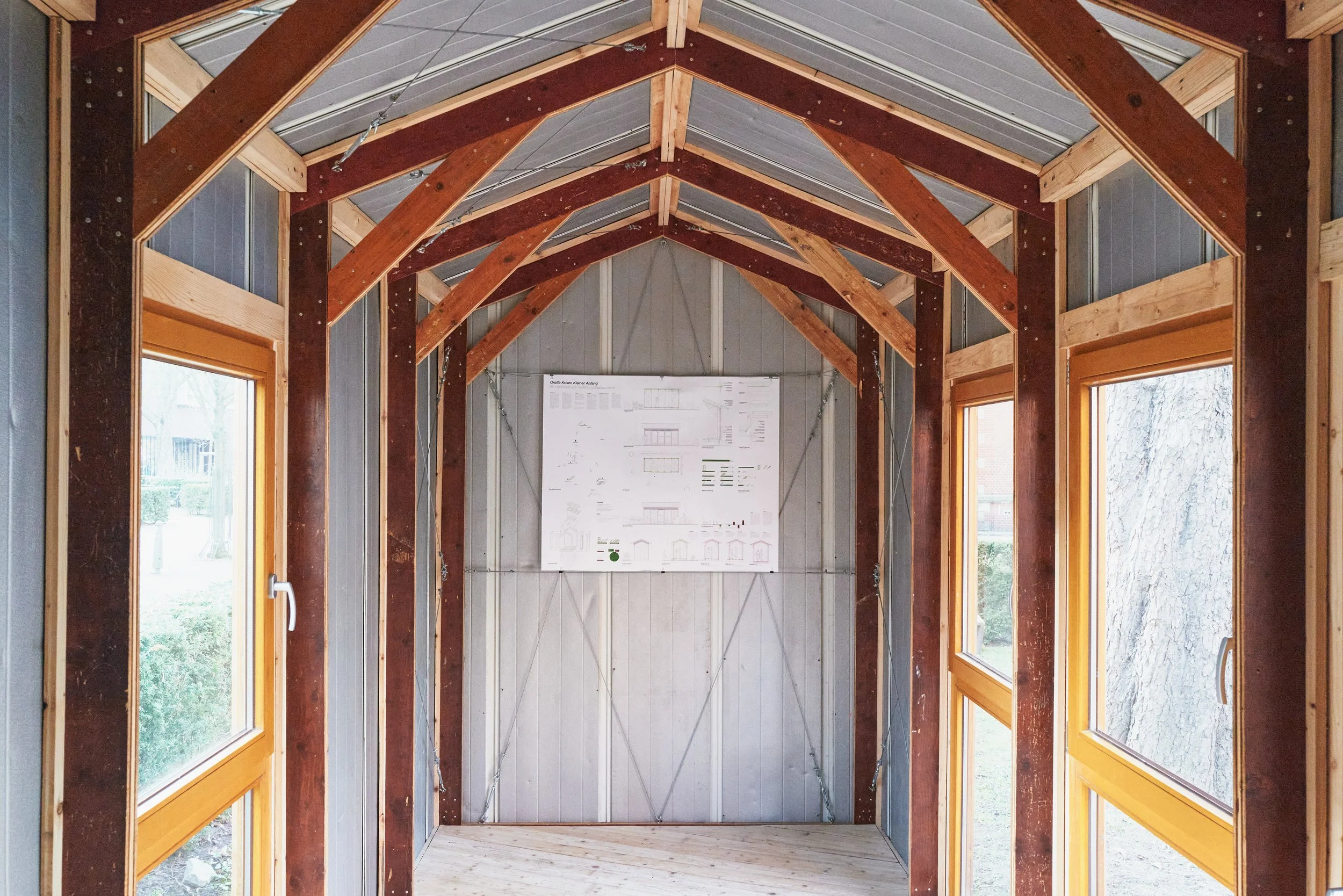
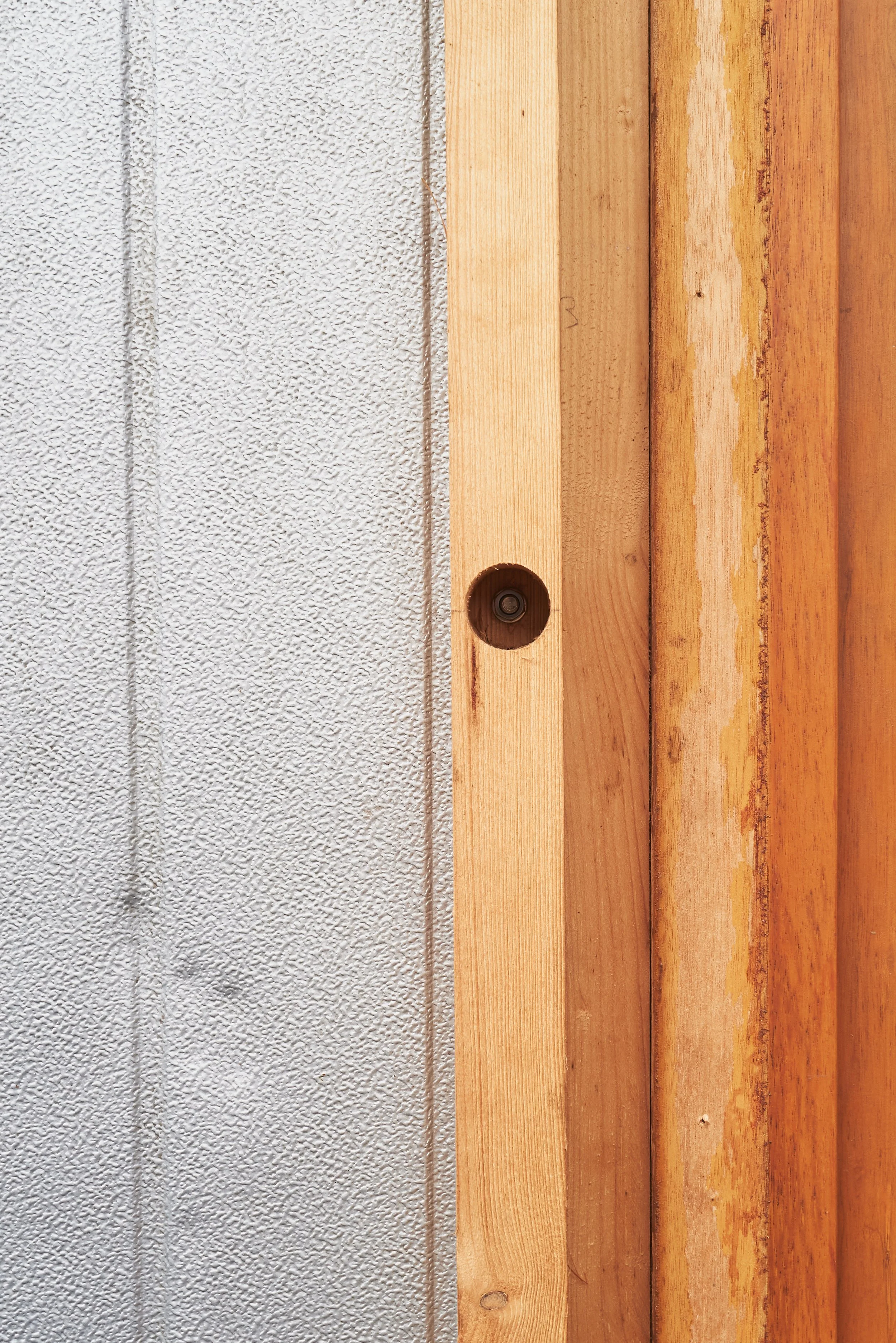
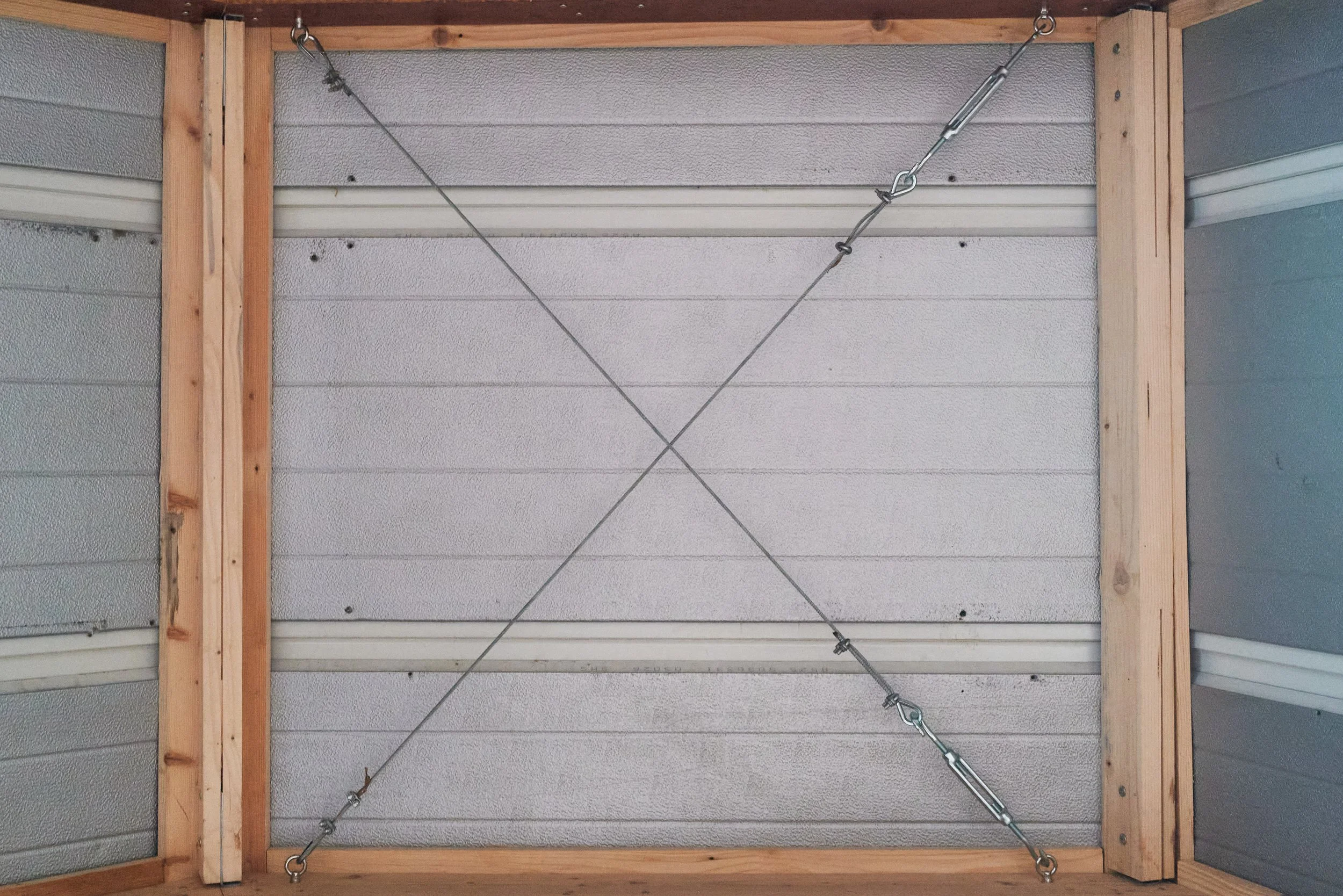
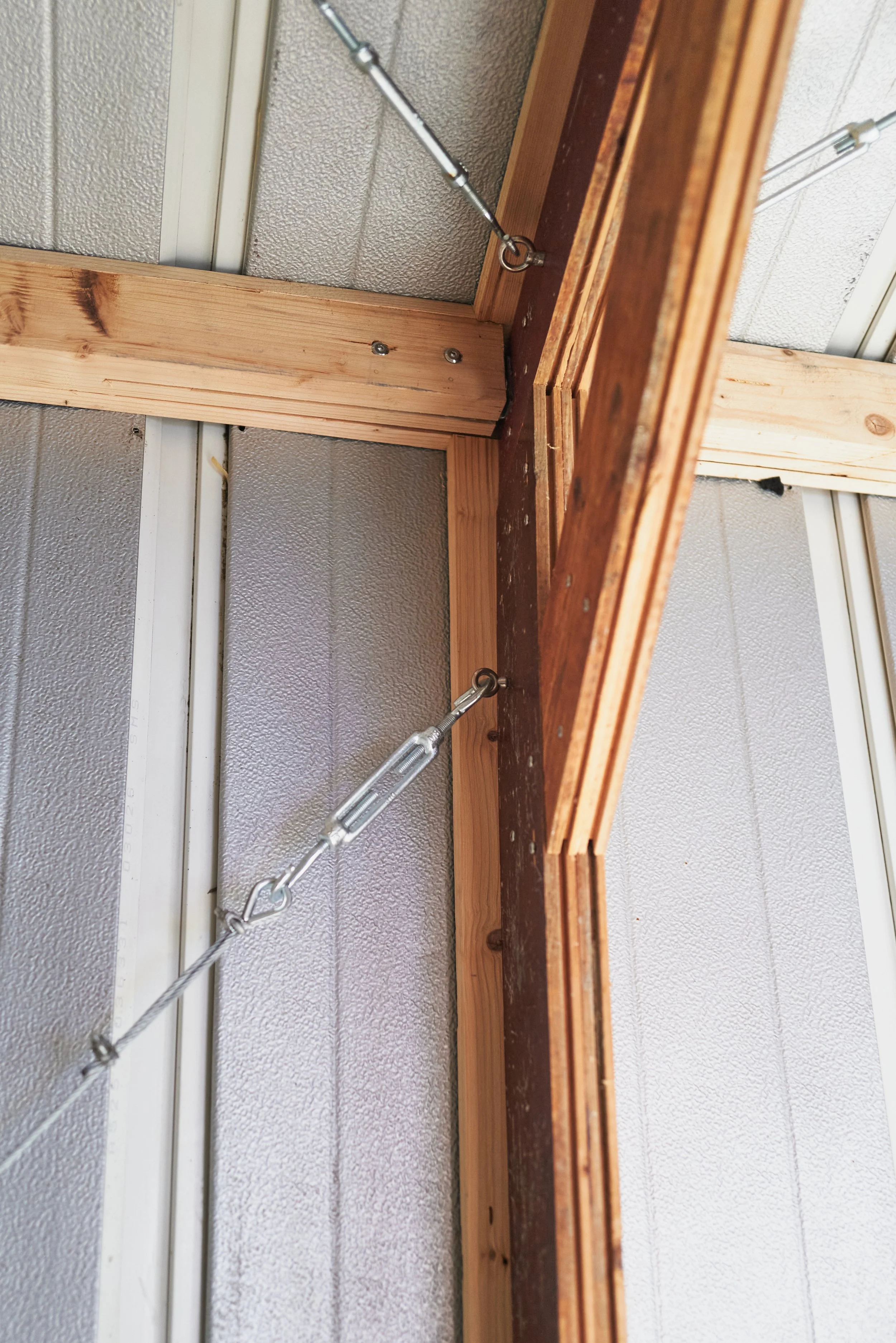
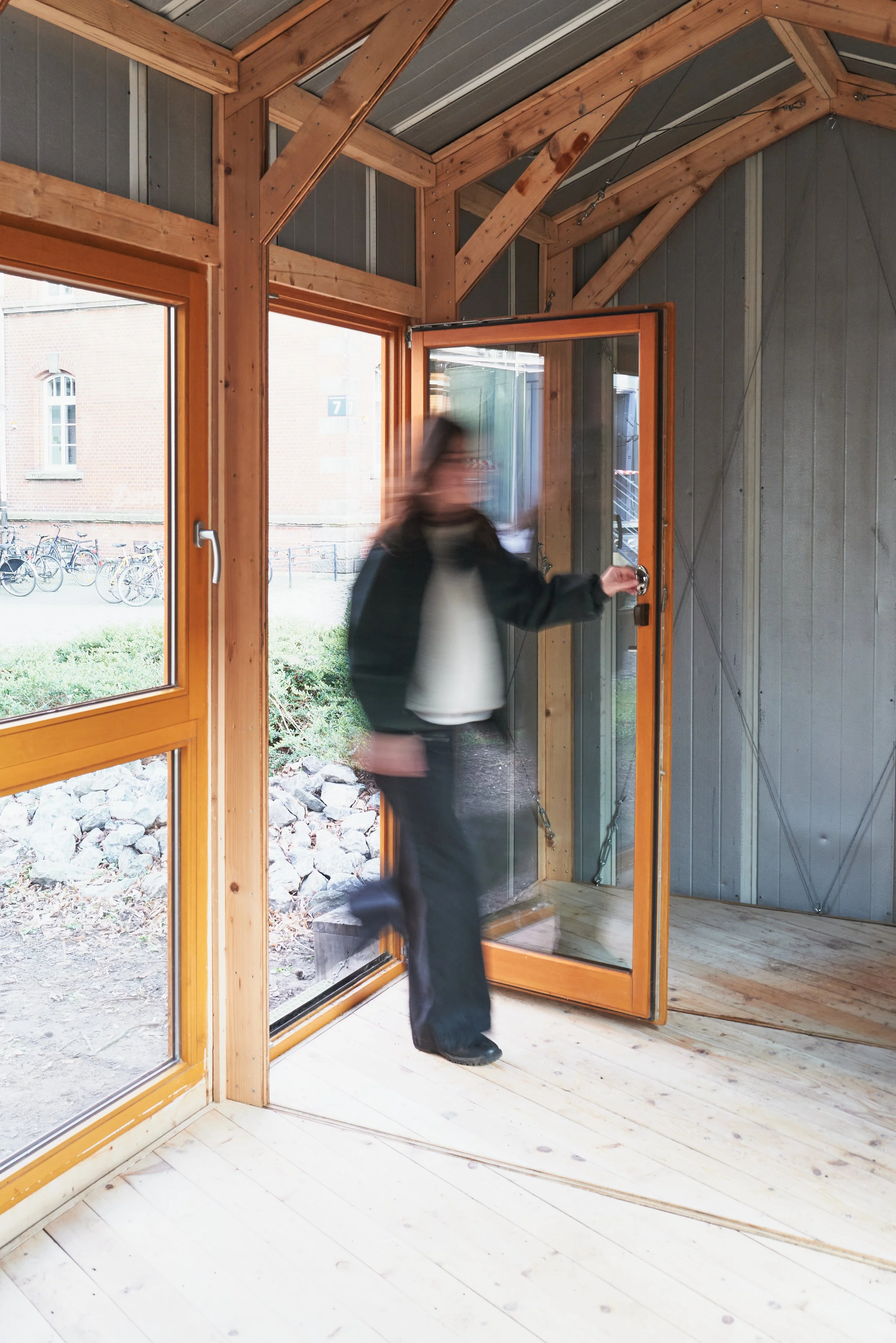
©Luca Stroscher
#5 Your "real-life sized" laboratory will soon be dismantled on the MSA campus. How was your 1:1 model received on campus, and what opportunities do you see in building on a ‘real-life’ scale?
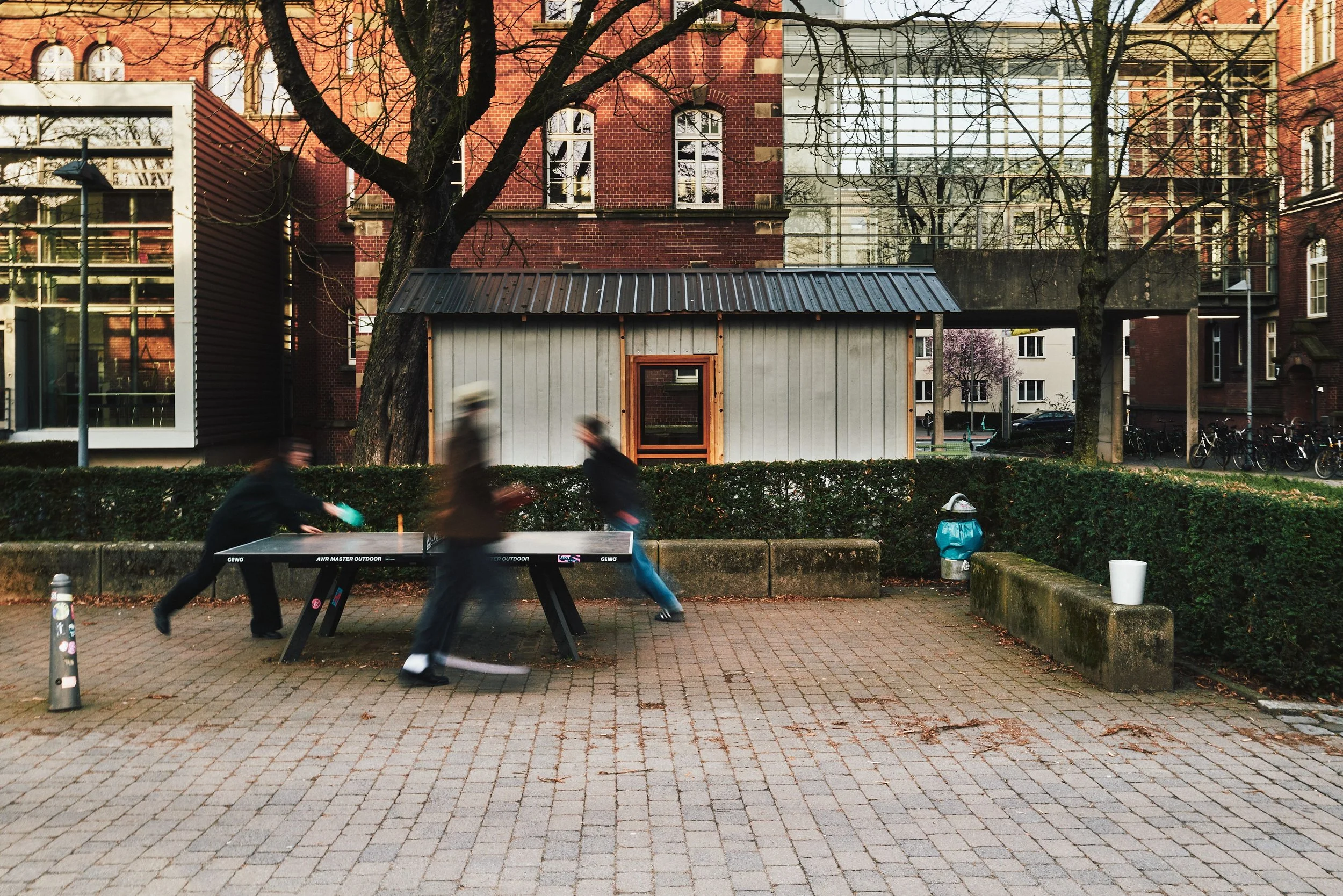
The pavilion attracted a lot of attention on campus and received mostly positive feedback. At one point, a professor asked whether it could even be considered architecture. I found that question quite interesting, as it opens up a discussion about what architecture can be.
During the pre-Christmas period, the pavilion was also used as a mulled wine stand, which turned out to be a great success.
This highlights one of the main potentials of building at full scale: it creates spaces that people can directly use, experience, and appropriate.
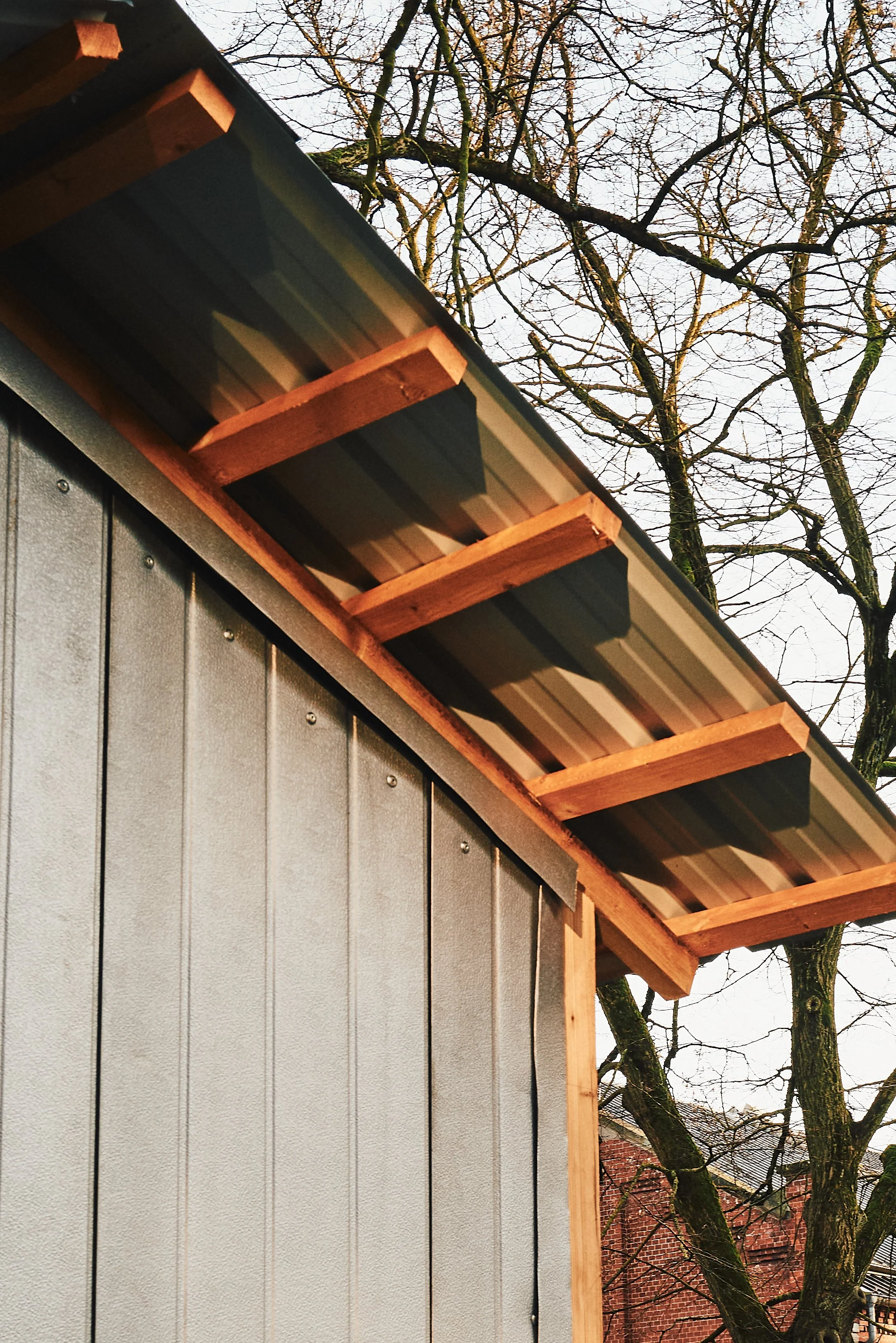
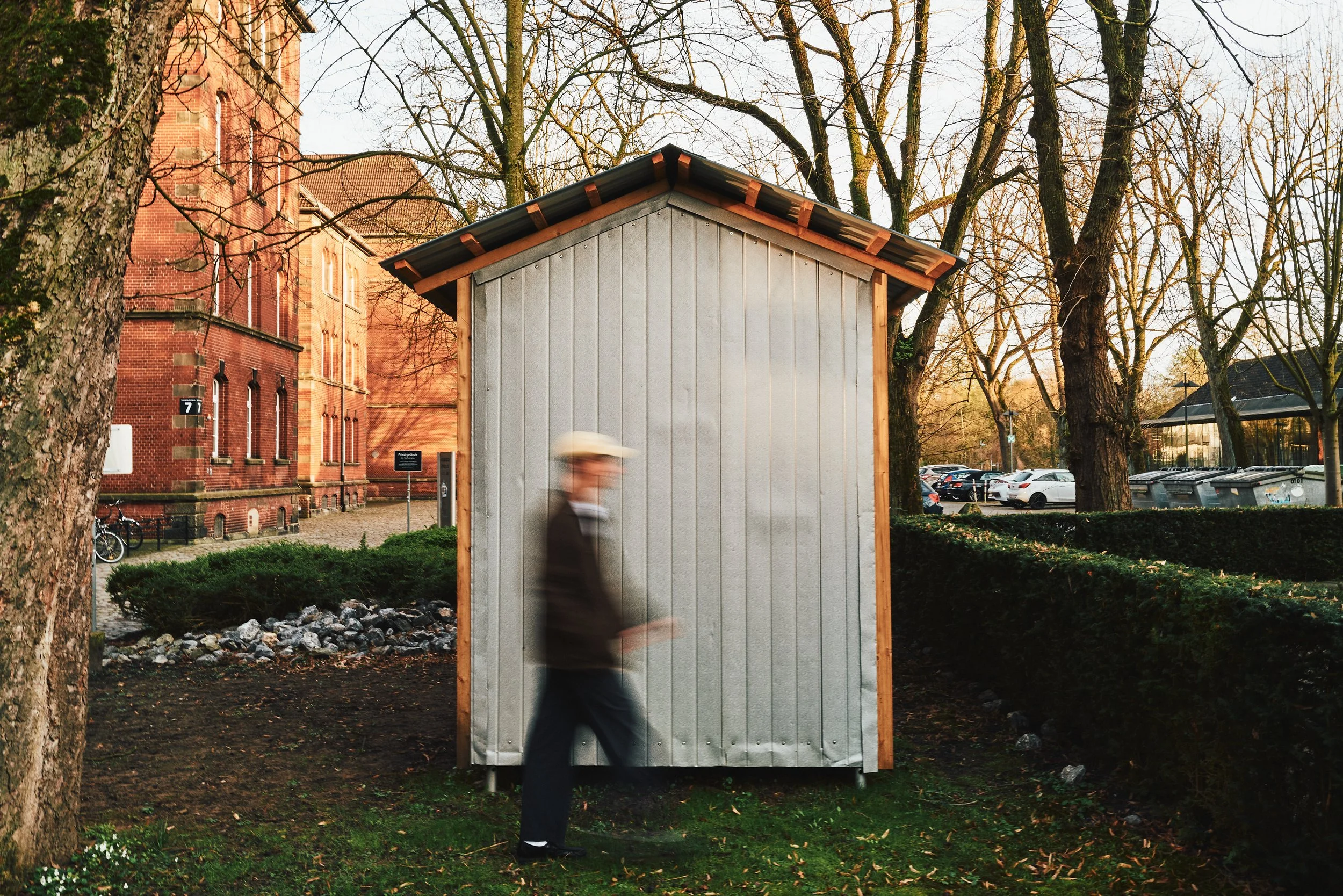
©Luca Stoscher
#6 Will the laboratory be rebuilt in a new location, in other words what would you like to see happen with it in the future?
The pavilion was designed for disassembly and will be relocated to Italy. It will be set up next to an old ruin in the countryside, where it will serve as a temporary shelter during the renovation process.
Over time, it will be expanded and adapted into a small cabin. The process will be documented and shared, showing the transformation from a reuse experiment into an inhabitable space.
#7 How do you see the role of an architect in today's society?
Architects have a growing responsibility to address the environmental impact of buildings. In this context, architects are not only designers of buildings but also coordinators of material flows.
I believe that the role of architects is shifting from creating static objects to designing adaptable systems. Circular construction requires thinking beyond the initial construction phase and considering the entire lifecycle of buildings and materials.
#8 How does your environment influence your work?
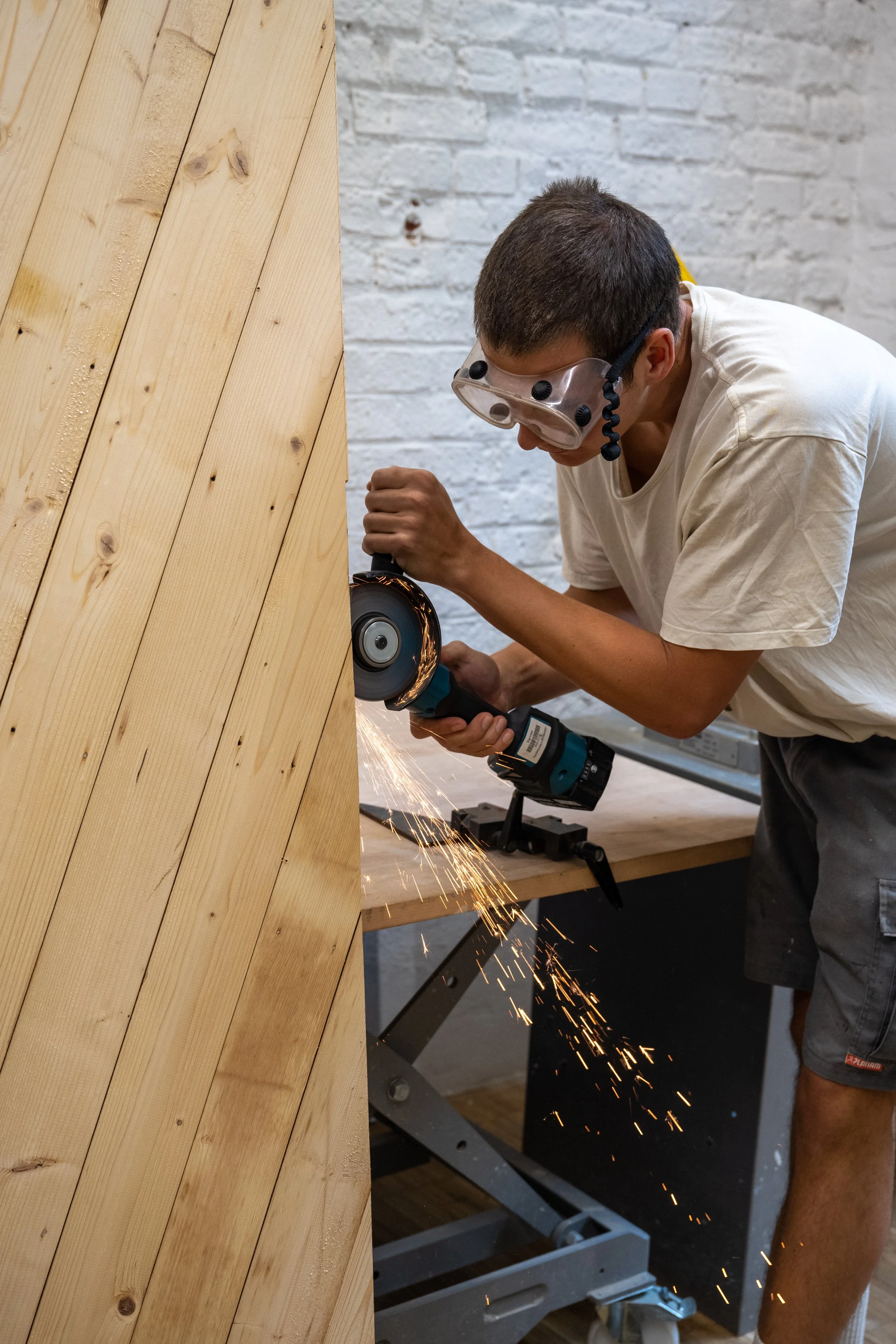
I have many friends who express themselves through design and architecture and who actively build, experiment, and explore new ideas. This creates a great support system that encourages me to take risks and try new approaches.
At Raumsuche, an architecture collective, I share ideas and projects with like-minded people, which continues to inspire collaboration and creative approaches in my work.
#9 Three things that inspire you at the moment?
Beauty - Structure - Patterns
#10 What do you currently read, watch, listen to?
I am currently following Martijn Doolaard, a Dutch designer who documents the conversion of an old farm in the Italian Alps on YouTube. I enjoy the cinematic views, the focus on craftsmanship, and his approach that good buildings deserve time and effort.
©Luca Stroscher
Links
Instagram: @plenzplenzen @raumsuche
Interview by Helena Tietmeyer, Photos by Luca Stroscher