
Anoe Melliou
Anoe, please introduce yourself:
I'm an architect, and a designer who operates across different scales. I approach each project as a critical inquiry, engaging with notions of subjectivity. I am also the founder of Regarding Relations, a practice exploring the personal and political through curation.
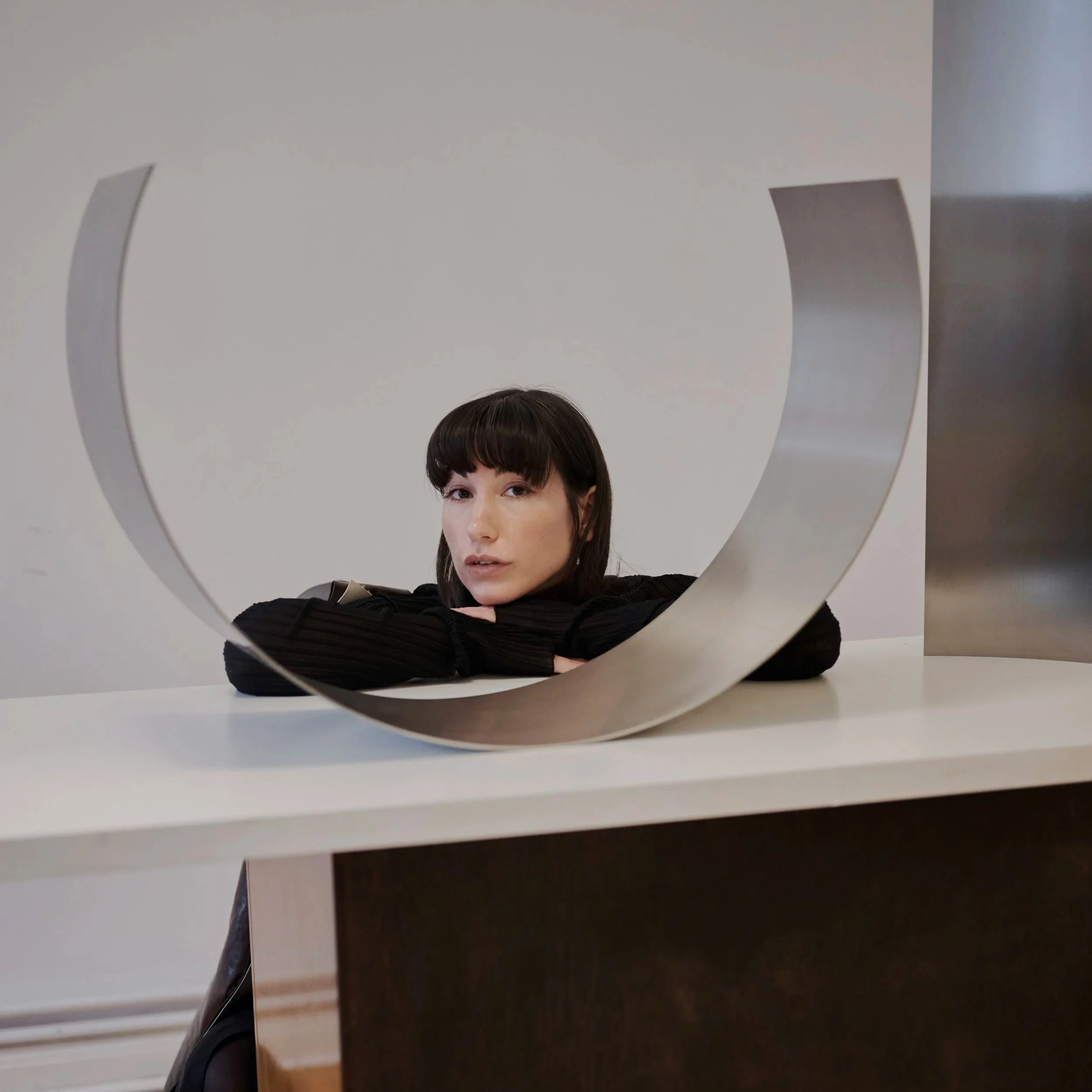
Anoe Melliou ©Phuong Anh Nguyen Le
#1 You founded Regarding Relations as a way to think and work through relationships — between objects, bodies, materials, and systems. When did this relational approach begin to shape your practice?
Regarding Relations has been a way to create a collective, or a community, which I began curating a few years ago. It is a project in progress: it has defined values, but the format is open. The reference to relations comes from the link to public relations; the strategy or structure that defines interaction. It has been a way to explore the scene, historical and contemporary, initially through a digital narrative, and from there to advance into encounters, conversations, and exhibitions. Regarding Relations notes the shift of towards, and about — the context, and the method, for curating and interpreting design, with a sense of responsibility towards social and political conditions.
#2 Your work feels conceptually driven yet grounded in material presence. How do you decide when an idea needs to become an object or a space — and what form it should take?
I often begin with a defined form, or an intention. It is an image, or an ideal; a feeling. I have an inclination toward abstraction, and I perceive structural integrity as a dynamic action. The idea, which I adore, is a weightless expression. It is an alluring thought. The process of development is defined by constraints. It is a process of negotiation, and I might feel troubled, or exhausted in the attempts to achieve it. I am concerned with the object’s limit conditions, where each configuration is held within a margin of viability. Every object is a test of its own limits, and an articulation of the margin in which form, structure, and perception can momentarily hold together before dissolving or collapsing. Working at a one-to-one scale is therefore a necessity dictated by this margin.
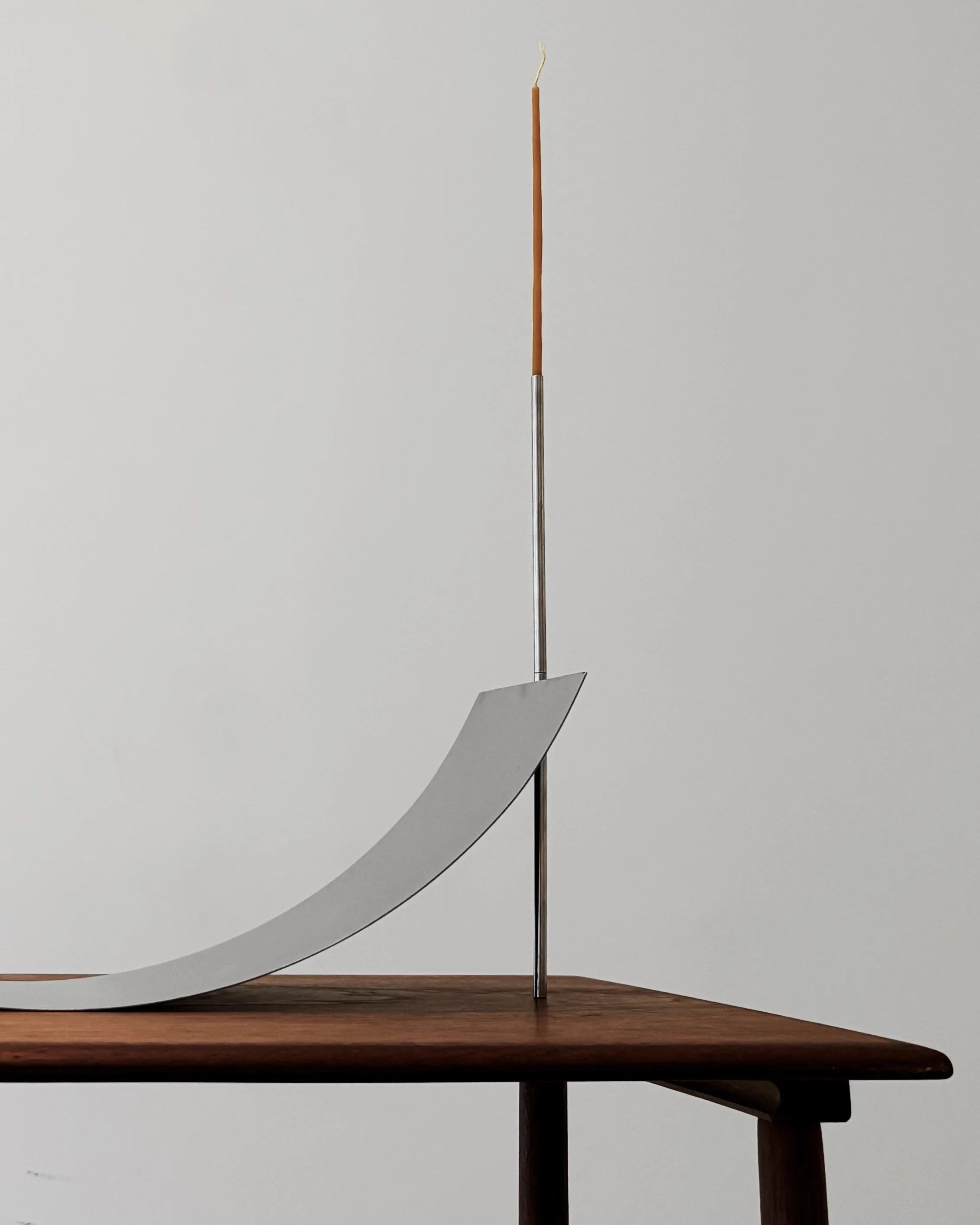
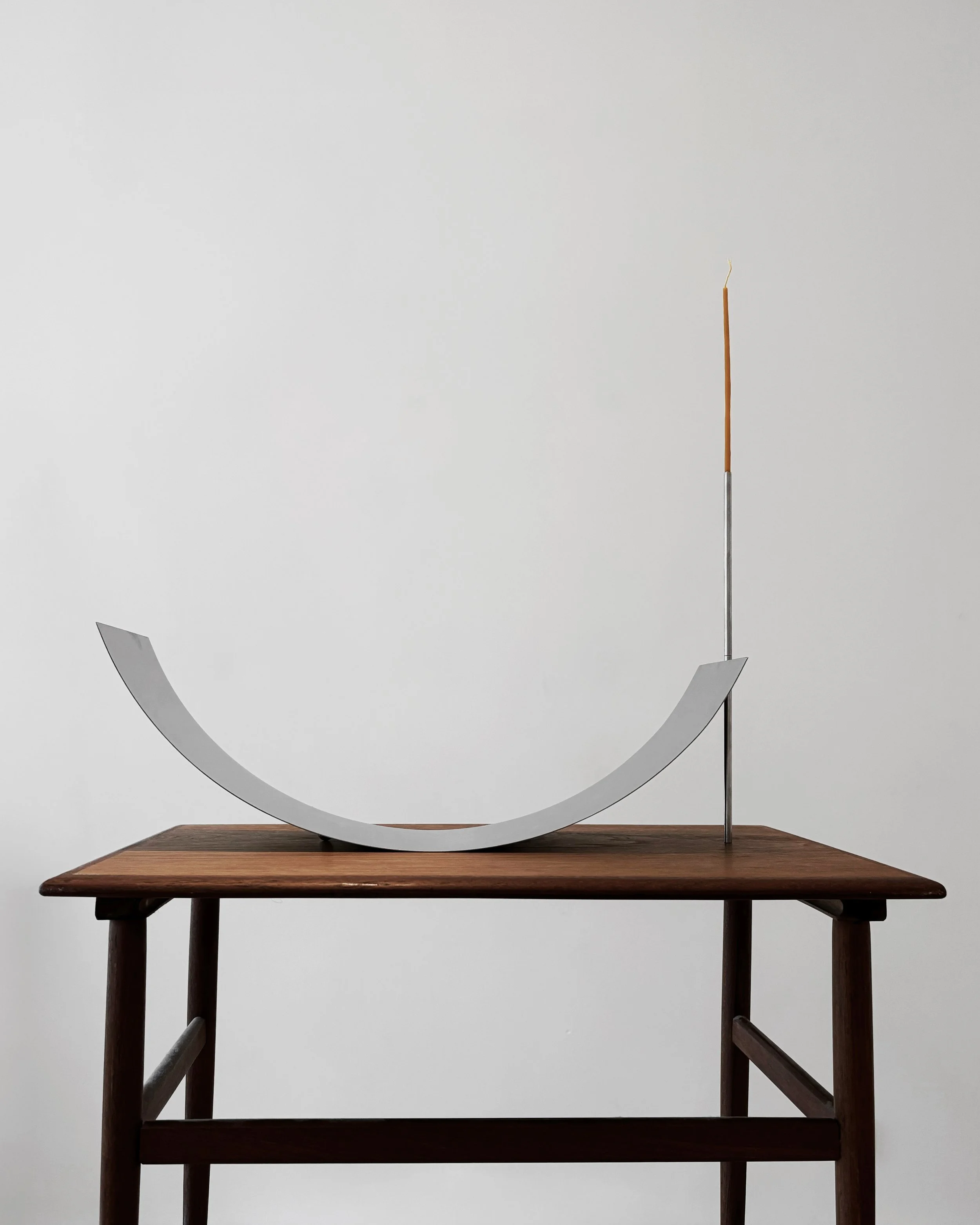
Apollonius, Modular Candleholder, Studio Views, 2025
#3 With exhibitions like Collectible Fair and Conceptual Conversations ahead, how do moments of showing work impact your process?
I tend to think of my practice as operating within an unfixed space. A development of propositions, redefined through rearrangement. As my vocabulary is structured through curved modules and magnetic details, each element is self-sufficient and is abstract, able to enter a constellation depending on context. These configurations often emerge in response to the specific space, or in relation to the programme. The series can be re-articulated through its setting.
#4Your work often begins with reflection and theory, yet results in very tangible forms. How do you navigate that shift from thinking to making?
Language, and the despair about it, is attractive to me. The misinterpretation itself, and the ambiguity, between what is said, what was intended, and what is perceived, is a generative condition I am after. Ideas evolve through the physical reality of objects, and the margins of their failure, rather than remaining fixed at the level of initial intention. The excerpts, of thoughts or theory, are fragments, modules. I have arrived to certain aesthetic and conceptual intentions; an approach to how I treat the system, the composition, the details; it’s a vocabulary that advances. There is a state of fragility, that is necessary. The emphasis is eventually on the thing, and the potential of its relations, its phases. I think about possibilities.
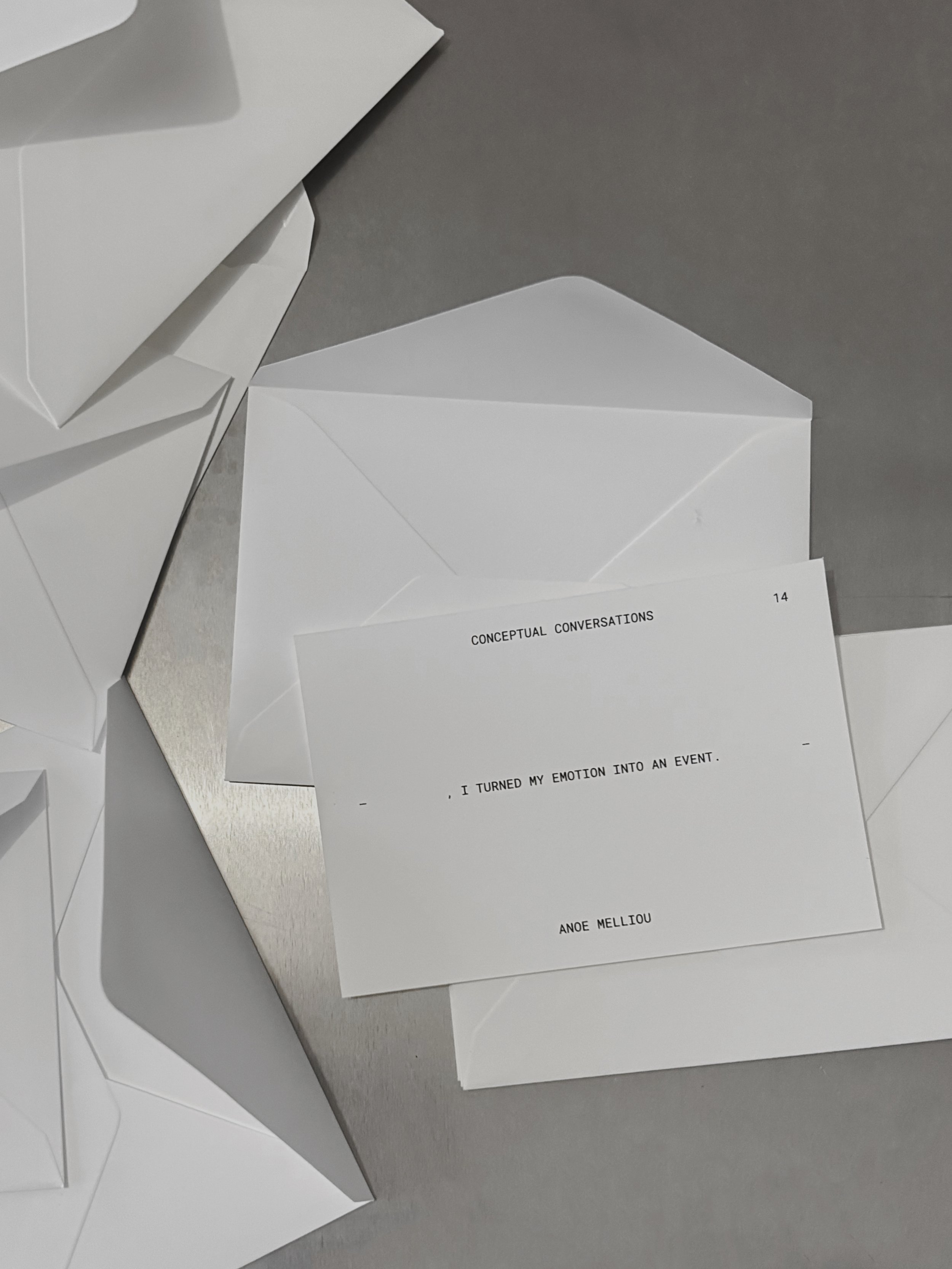
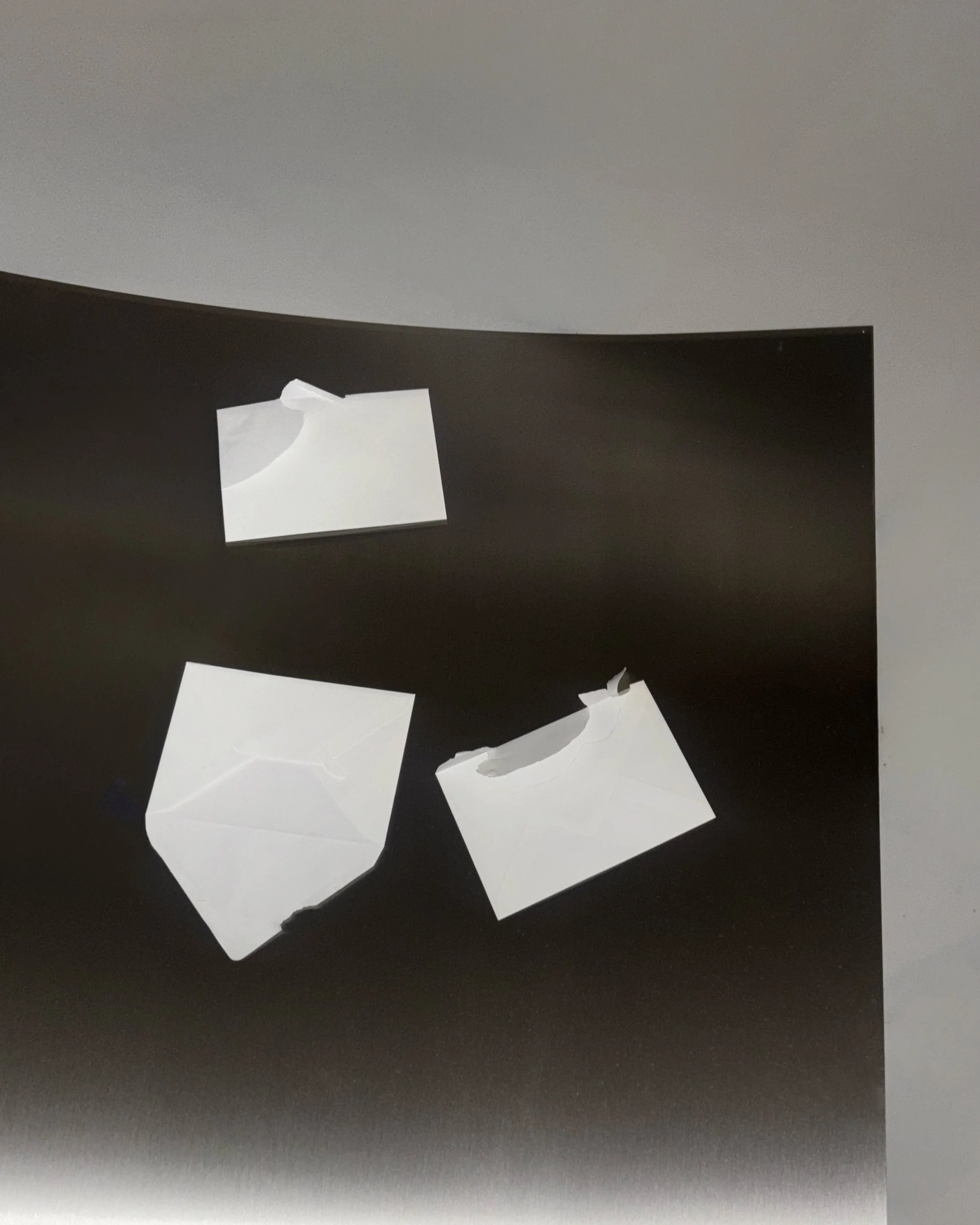
Collective Index, Presented at Conceptual Conversations, Berlin, 2026
#5 How personal is your work to you? Are your pieces a way of processing lived experience, or do you see them more as observations of broader social or political conditions?
I am interested in how identity shifts, and I approach the limits of this transition intentionally. I try to grasp a sense of grace — a sense of strength, that may seem effortless. To process that, I engage with the concept of a series, of excerpts that can interact. I assemble structures, whose parts can be reversed, and rearranged, creating nuances and reinterpretations of an installation. This approach has been inherent in me, and it’s a quality I enjoy. It can be perceived at any aspect of my life. I appreciate the possibilities of unfixed space, and I engage with the personal, the subjective, as a perspective that is relational. In gender theory this has been described as situated, and performative.
#6 At this stage of your practice, what feels essential to stay true to — especially while navigating different disciplines, contexts, and expectations?
Intuition. It is also a form of resistance.
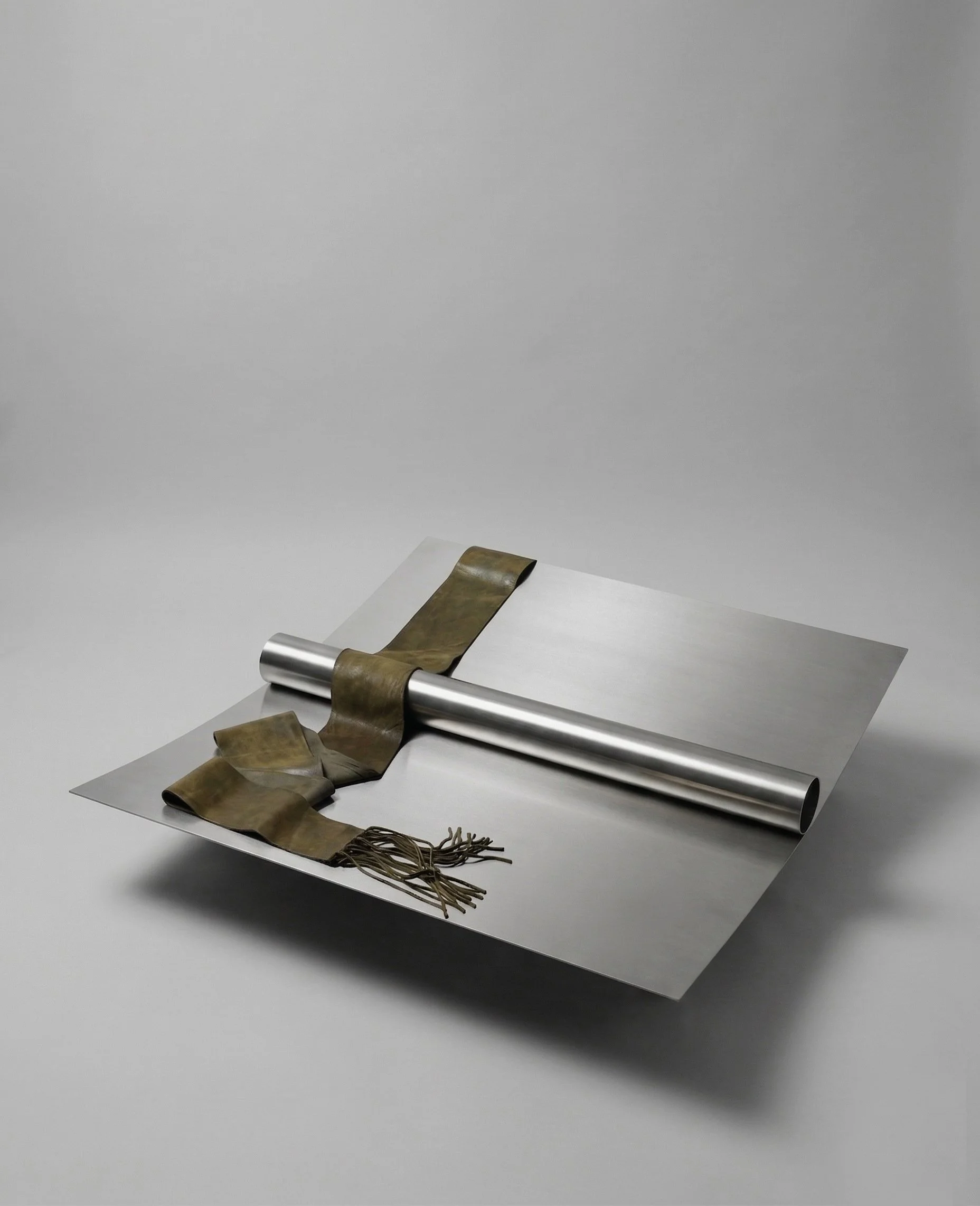
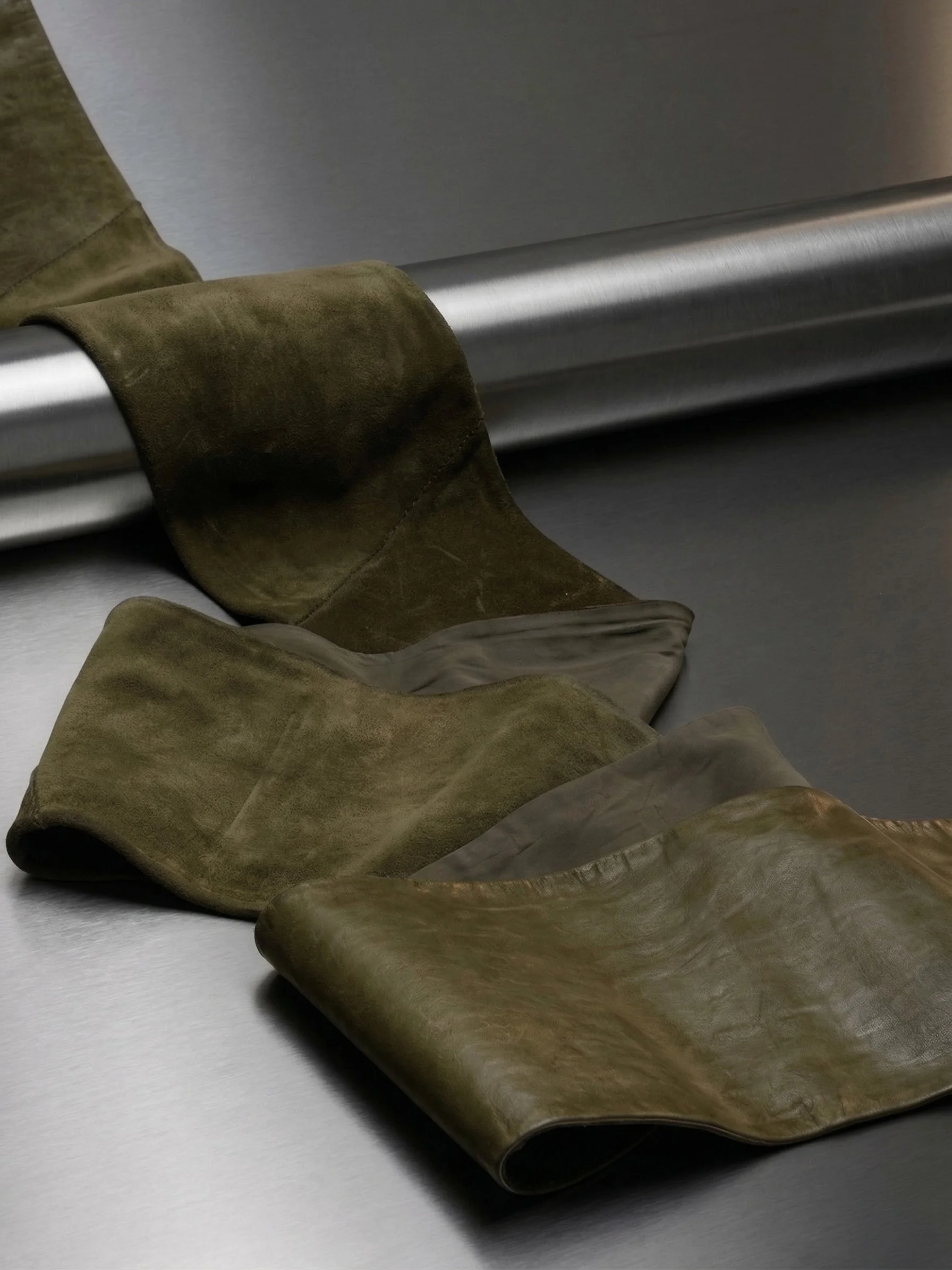
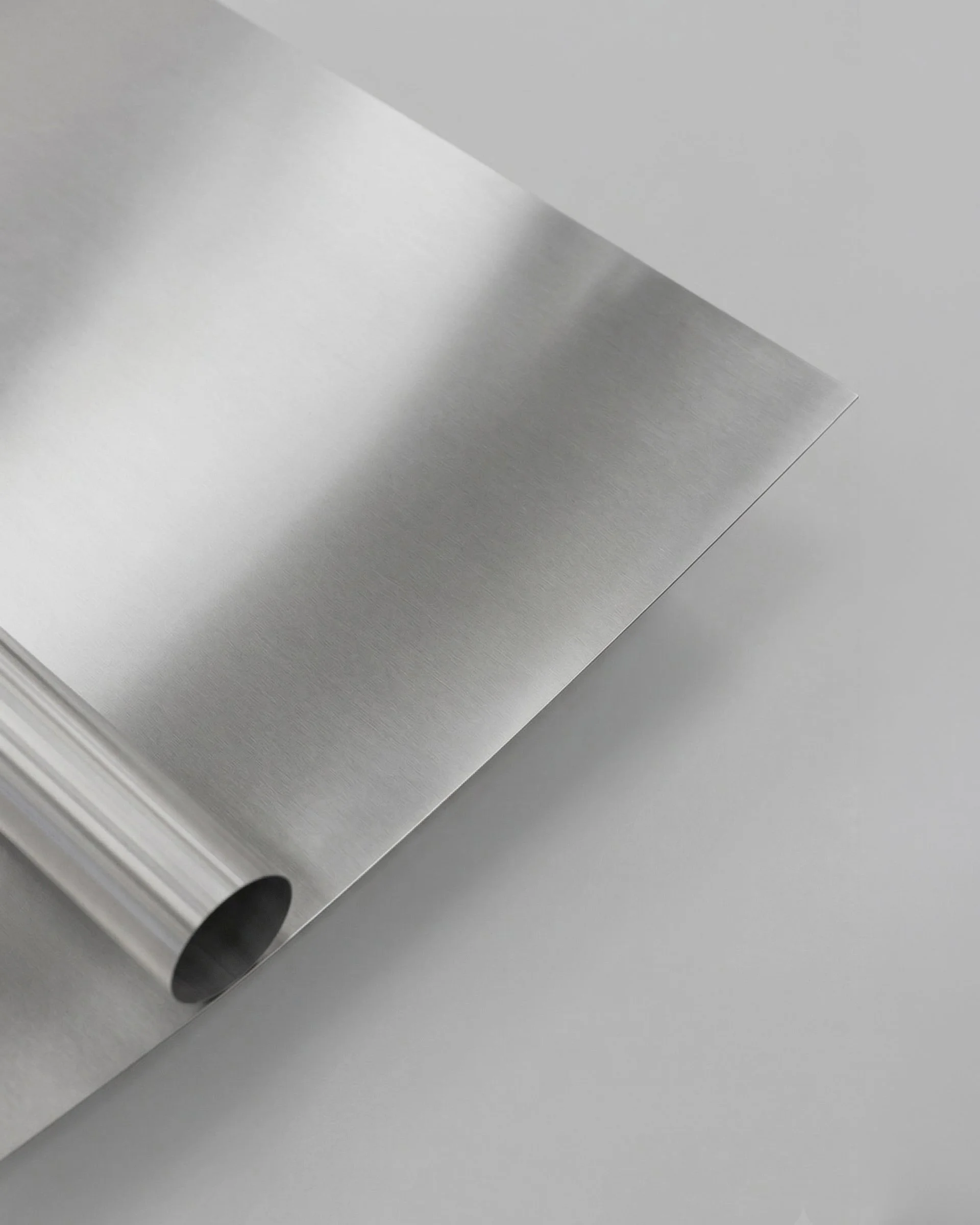
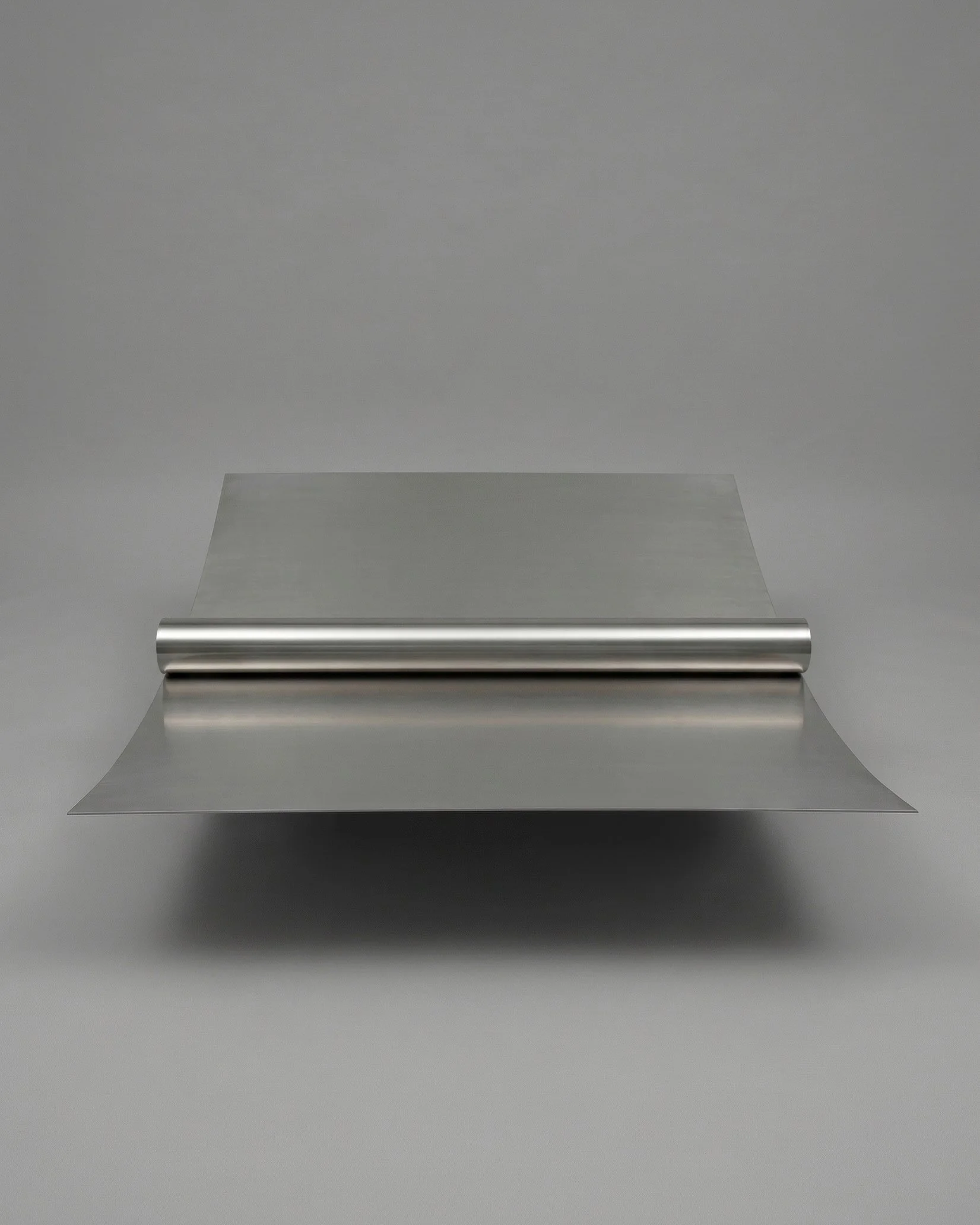
Hygra Physis, Daybed, Presented at Collectible Fair Brussels, 2026
#7 How do you see the role of an architect in today's society?
Developing social vulnerability, being adaptive to the present, and daring to overcome paradigms.
#8 How does your environment influence your work?
I am still dispersed, and the modes of my practice belong to different environments. Thinking happens in transit. I tend to write notes while walking. Fabrication happens in industrial spaces with heavy machinery. For editing and refining documentation, I prefer being in the living room, or bedroom. While designing I need to be flexible. I have welcomed a rhythm which is not still.
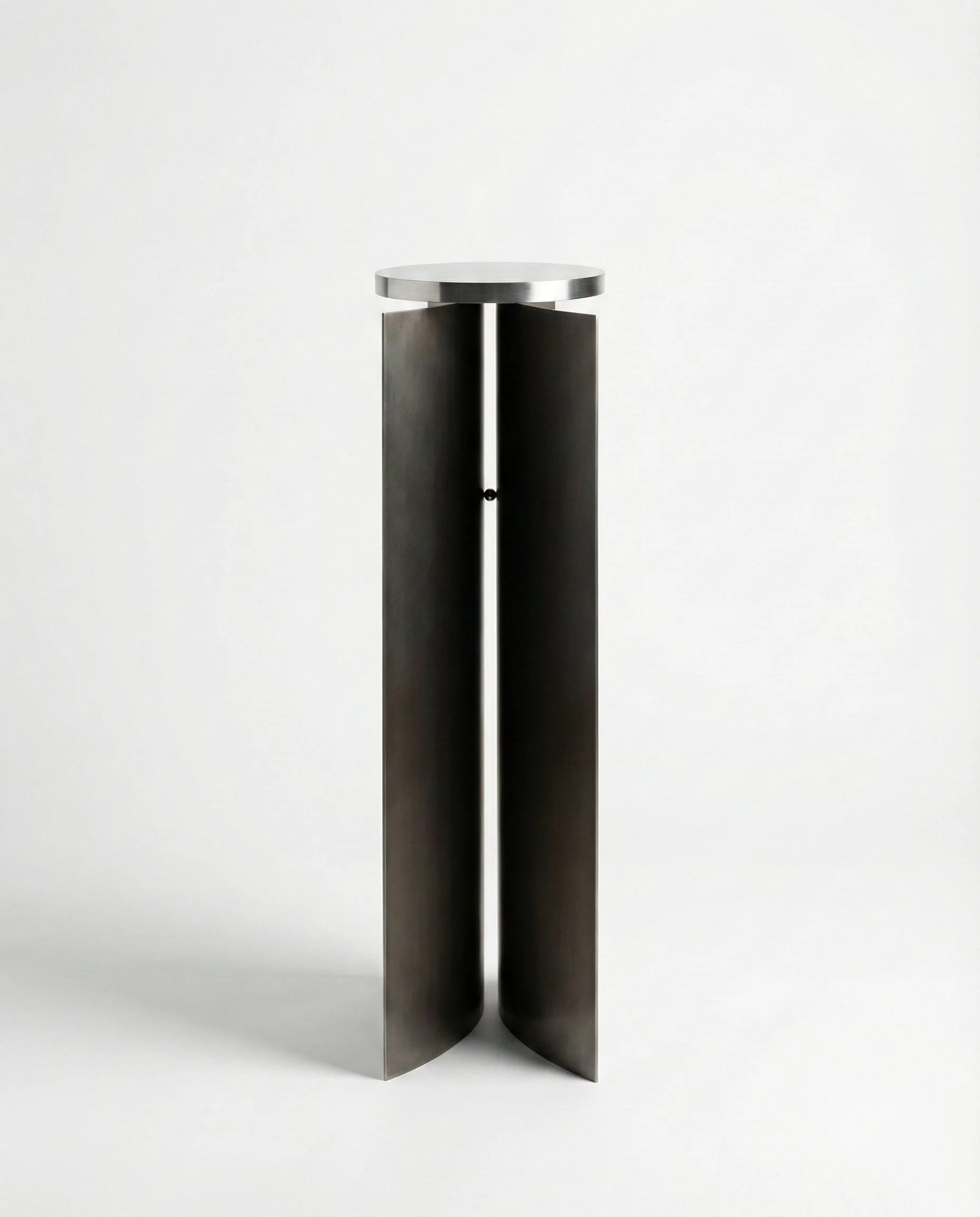
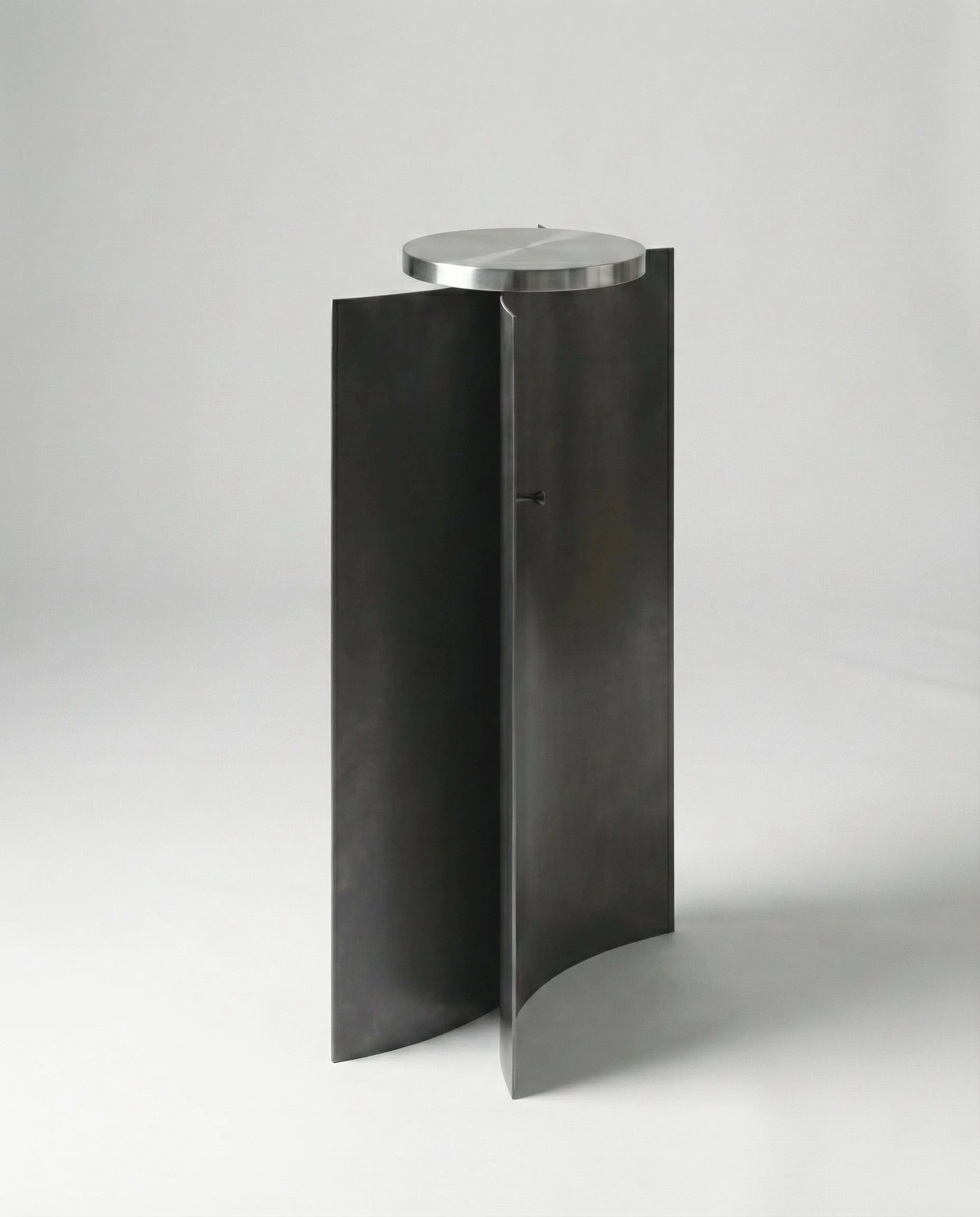
Asymptote, Side-Table, Exhibited at Conceptual Biennale Berlin, 2025
#9 Three things that inspire you at the moment?
Ephemera, such as envelopes; torn, open or deformed. The beauty of the disheveled, used. Knots, the way a leather cord can create so intricate and simple shapes, so practical and essential, and so elegant. Ruffles or drapes, incidental folds of aged paper, wrinkled receipts, or a pleated skirt, a Baroque curtain — there’s an amazing essay by Deleuze, The Fold.
#10 What do you currently read, watch, listen to?
I have returned to Malina, a novel by Ingeborg Bachmann. It feels deconstructed — shifting from inner troubles and commitments to romantic entanglements and fantasies. There is an avant-garde movie based on that, with Isabelle Huppert. The protagonist is unnamed; she’s a writer. I remember the apartment she lives in, and the way she hurries through the city. She often speaks about the contradictions and the impossibility of words.
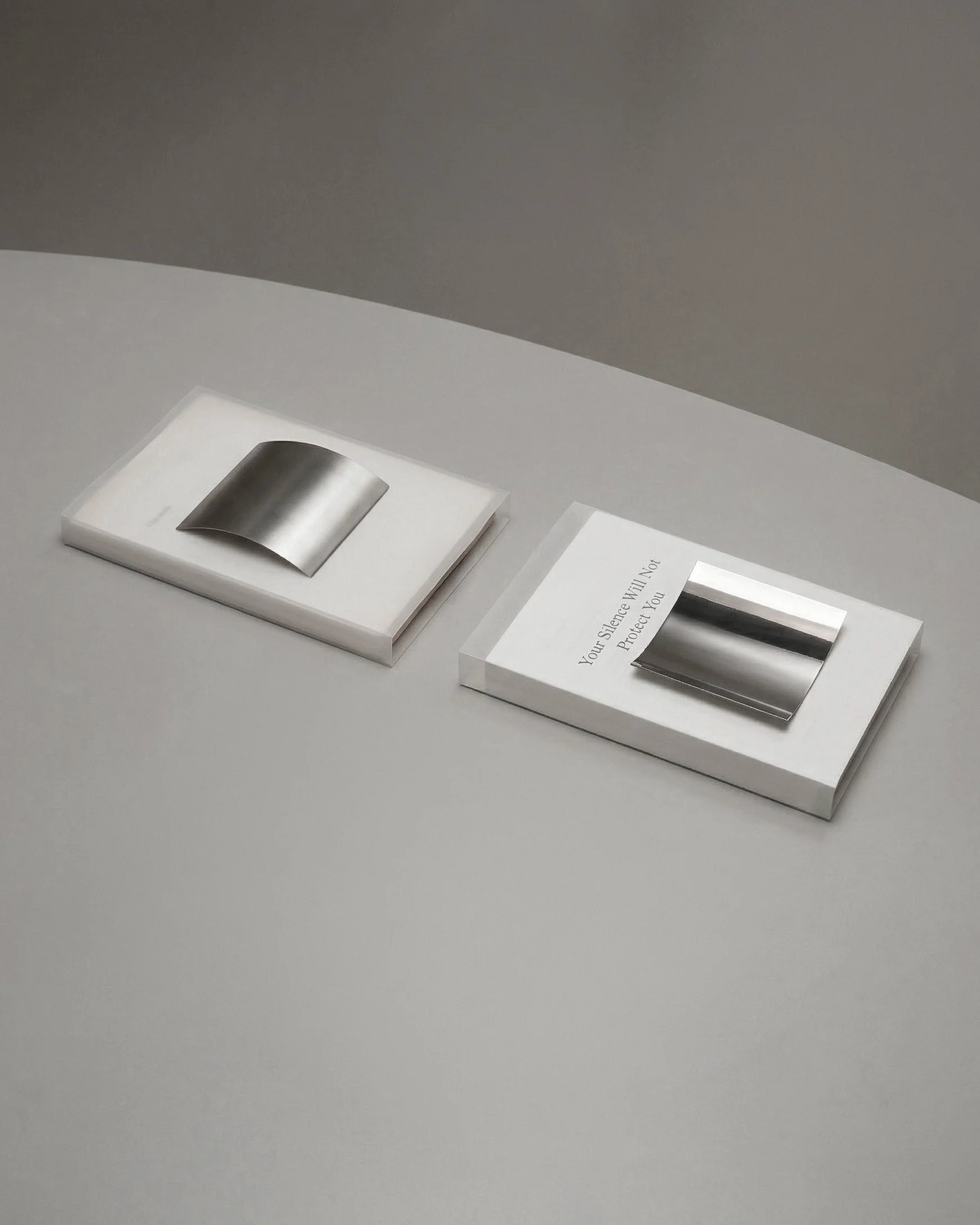
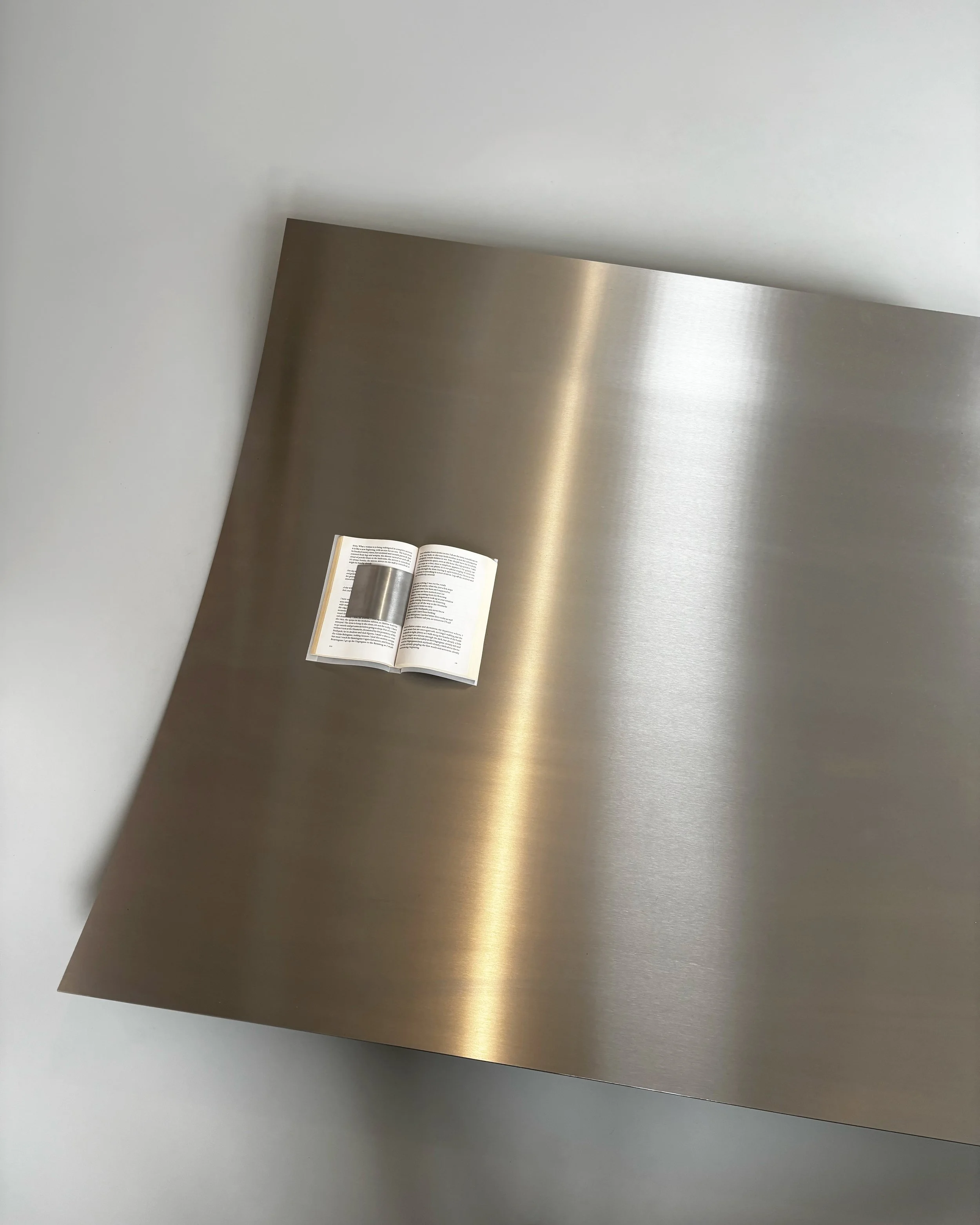
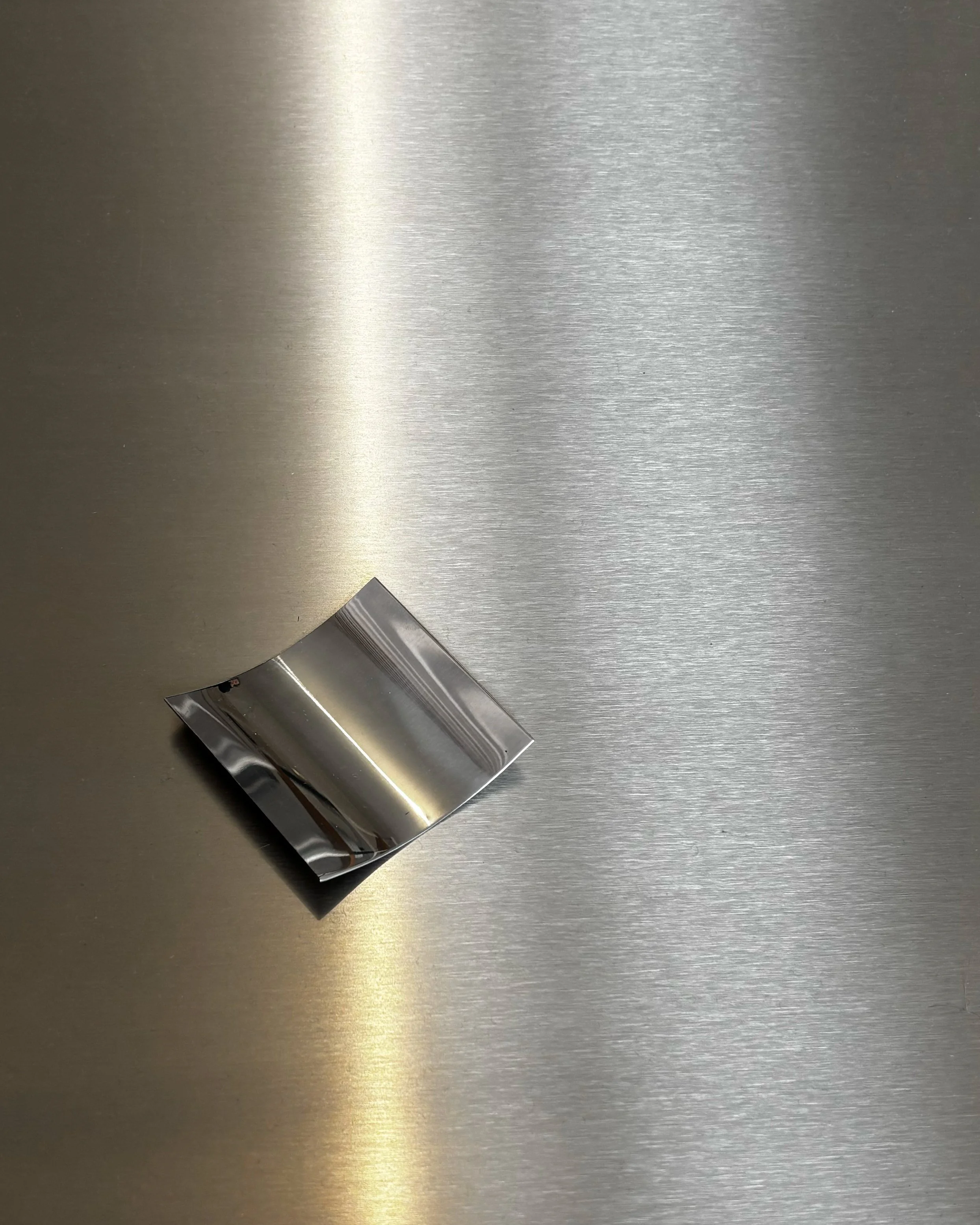
Ida, Page Adornment, Presented at Conceptual Conversations Berlin, 2026
Links
Instagram: anoemelliou
Website: https://regardingrelations.com
Interview by Lisa Puschmann