
DEPENDE
Please introduce yourself:
DEPENDE is a design practice driven by dialogue, curiosity, and collaboration. We understand ourselves as a tool for creativity, working together with clients to open shared spaces of exploration. Through conversation and exchange, each project becomes an opportunity to discover new design possibilities.
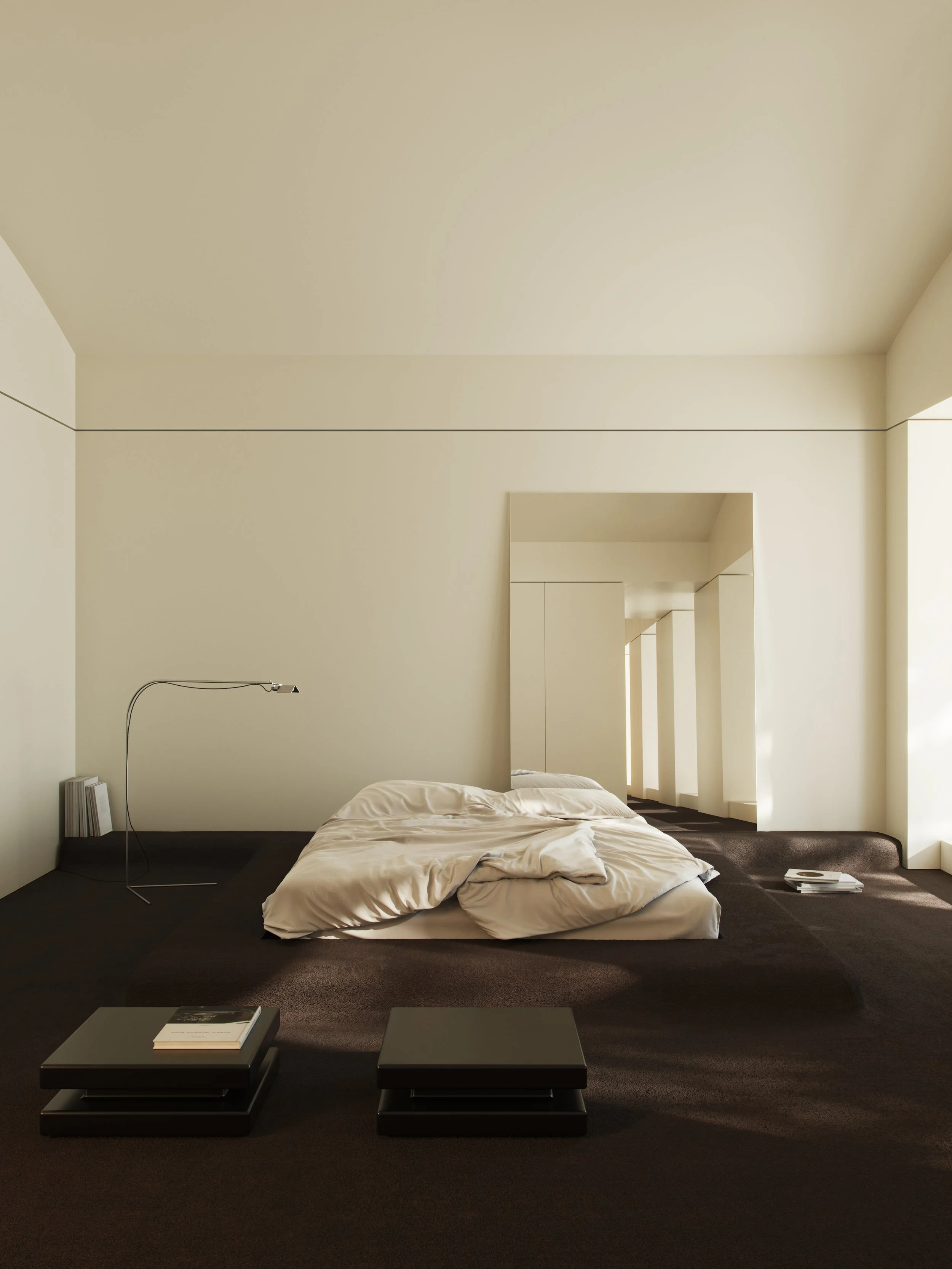

San Vicent Apartment
#1 Your work suggests a hands-on, almost analog creative process with sketches, physical models, and spatial testing. What does a typical creative process look like for you?
Each project deserves its own creative process. We don’t begin with a fixed methodology; the way of working appears naturally when we start thinking about the project. A dialogue emerges between us, with the client, and with the space itself, and that exchange defines how we move forward.
Treating every project in the same way inevitably leads to repetition, and repetition risks turning new work into a copy of the previous one. For us, maintaining a playful dimension within the process is essential. Design should escape routine and remain something we genuinely enjoy.
Because our studio is formed by very different profiles, there is a constant exchange of approaches, references, and working methods. This diversity prevents us from following a single roadmap. There are many paths toward the same result; what motivates us is exploring those paths and enjoying the journey itself.
#2 You’ve developed a very distinct spatial language in your work. How did this language evolve, and how would you describe it today?
We don’t believe we have a fixed language, and we’re not interested in defining one. Some projects require negotiation with clients who arrive with clear expectations, but beyond those situations we design by asking ourselves what we haven’t yet seen and what we would like to encounter. Our aim is not to repeat recognizable gestures but to contribute something meaningful to the broader design field. We prefer participating in an ongoing conversation rather than consolidating a signature style.
We do maintain certain principles as clarity of intention, spatial tension, and emotional impact, but their expression changes from project to project. Rather than a language, what defines our work is an attitude: questioning, testing, and resisting repetition while remaining open to unexpected outcomes.
#3 The San Vicente Apartment is defined by its glass block wall, forming a luminous core within the space. Can you tell us more about the role of light, transparency, and atmosphere in this project, and how this central element shaped the overall design?
When designing, we often question the role of light and whether artificial illumination is truly necessary. Our spaces rarely rely on homogeneous general lighting; instead, light is treated as an intentional spatial tool.
In San Vicente Apartment, we explored the possibility of a home that could function almost entirely without turning on lights during everyday use. The glass block wall became the luminous core of the apartment, filtering daylight and transforming it into atmosphere.
This semi-transparent element diffuses and reshapes light, generating multiple spatial situations throughout the day. With a single intervention, the space changes according to time, movement, and perception. For us, the project’s success lies in this clarity: one precise gesture capable of organizing light, space, and experience simultaneously, achieving richness through simplicity.
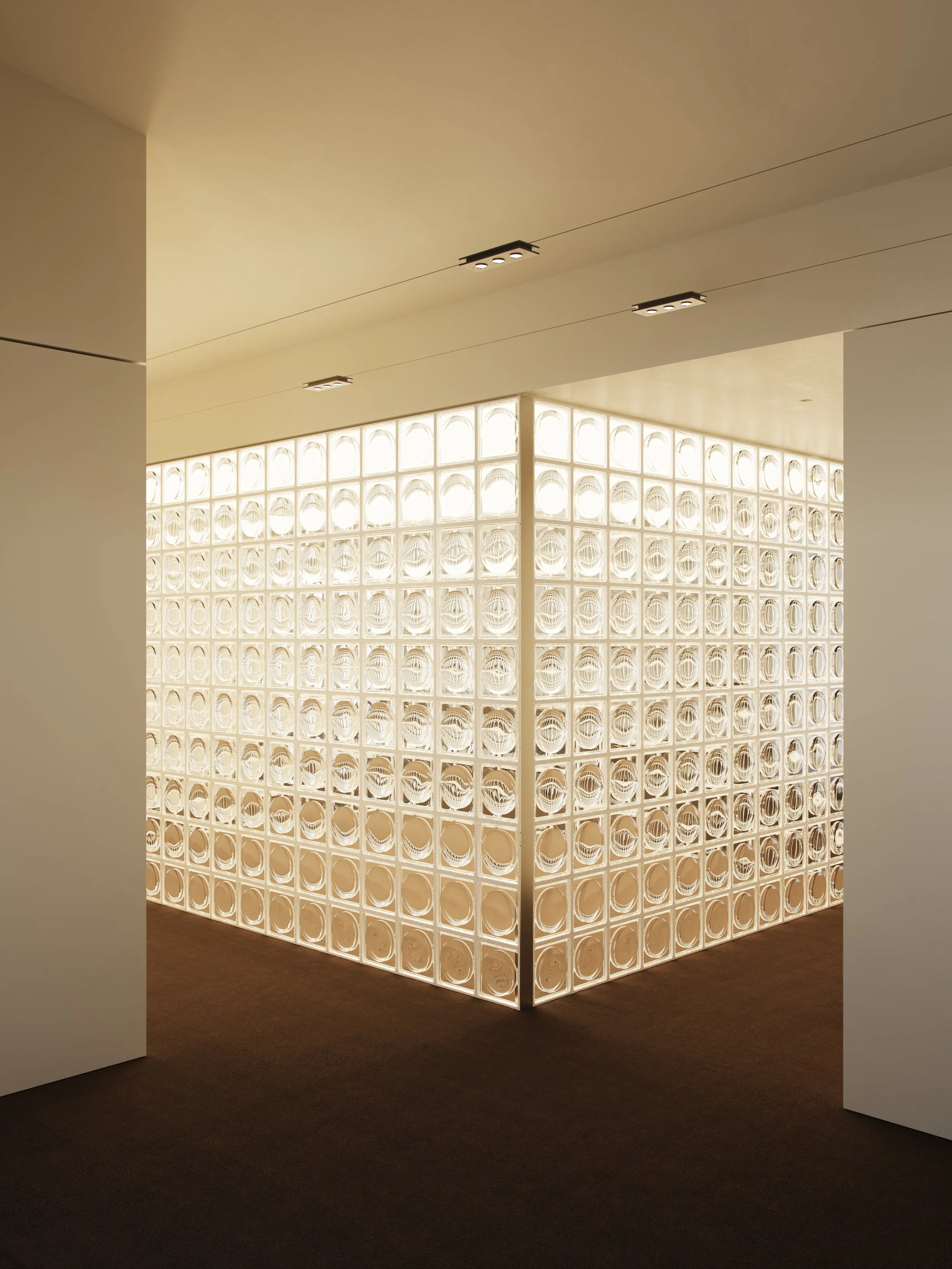

San Vicent Apartment
#4 In Threshold as an Act of Transformation, the tinted okoumé wood wall plays a central role, interacting playfully yet elegantly with the blue floor. How do you approach materials as narrative and emotional tools and what guides your material decisions?
The final material decision appeared late in the process. Formally, we were satisfied with the spatial gesture; a wall inserted into a volume, dividing spaces in an almost theatrical way, but something felt unresolved. Taking distance allowed us to understand that the issue was material rather than spatial. We moved from a neutral beige palette toward one defined by contrast and tension. The tinted okoumé wall and the blue floor complement each other while simultaneously competing for attention.
For us, materials operate as narrative and emotional tools. They influence perception as strongly as geometry does. The challenge lies in achieving balance between expressive elements without neutralizing their character. When materials enter into dialogue, or even conflict, the space gains depth, intensity, and identity.
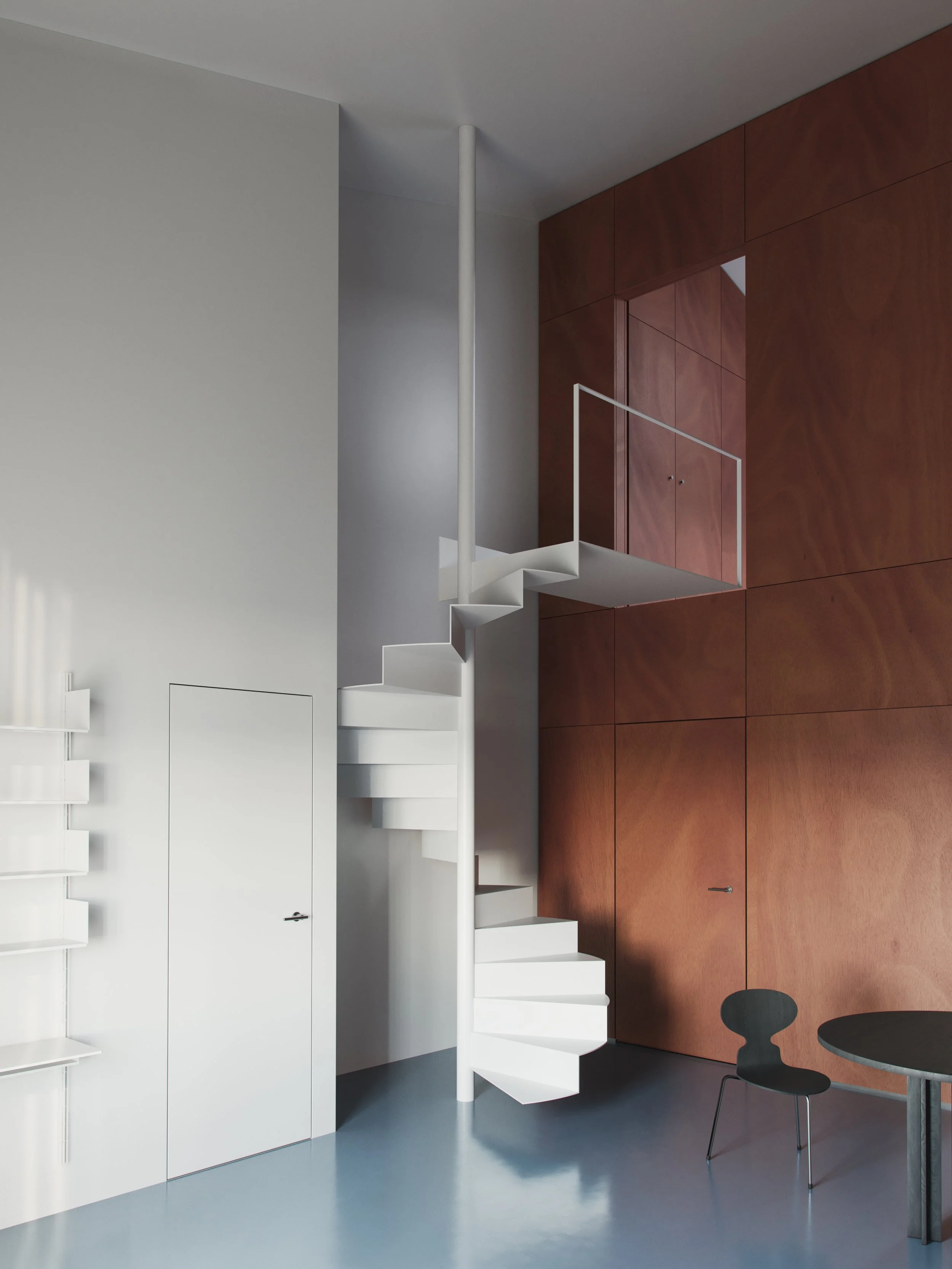
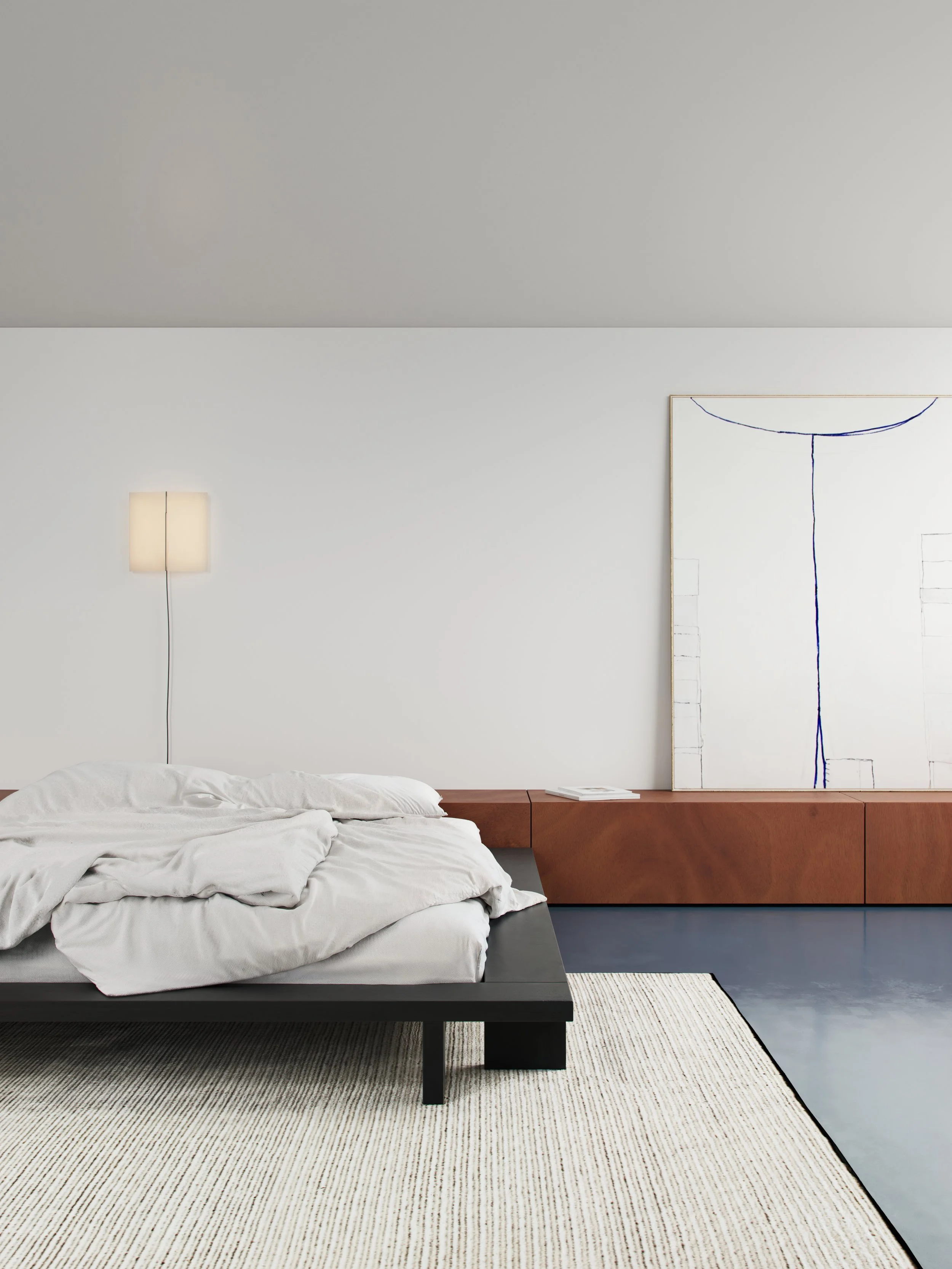
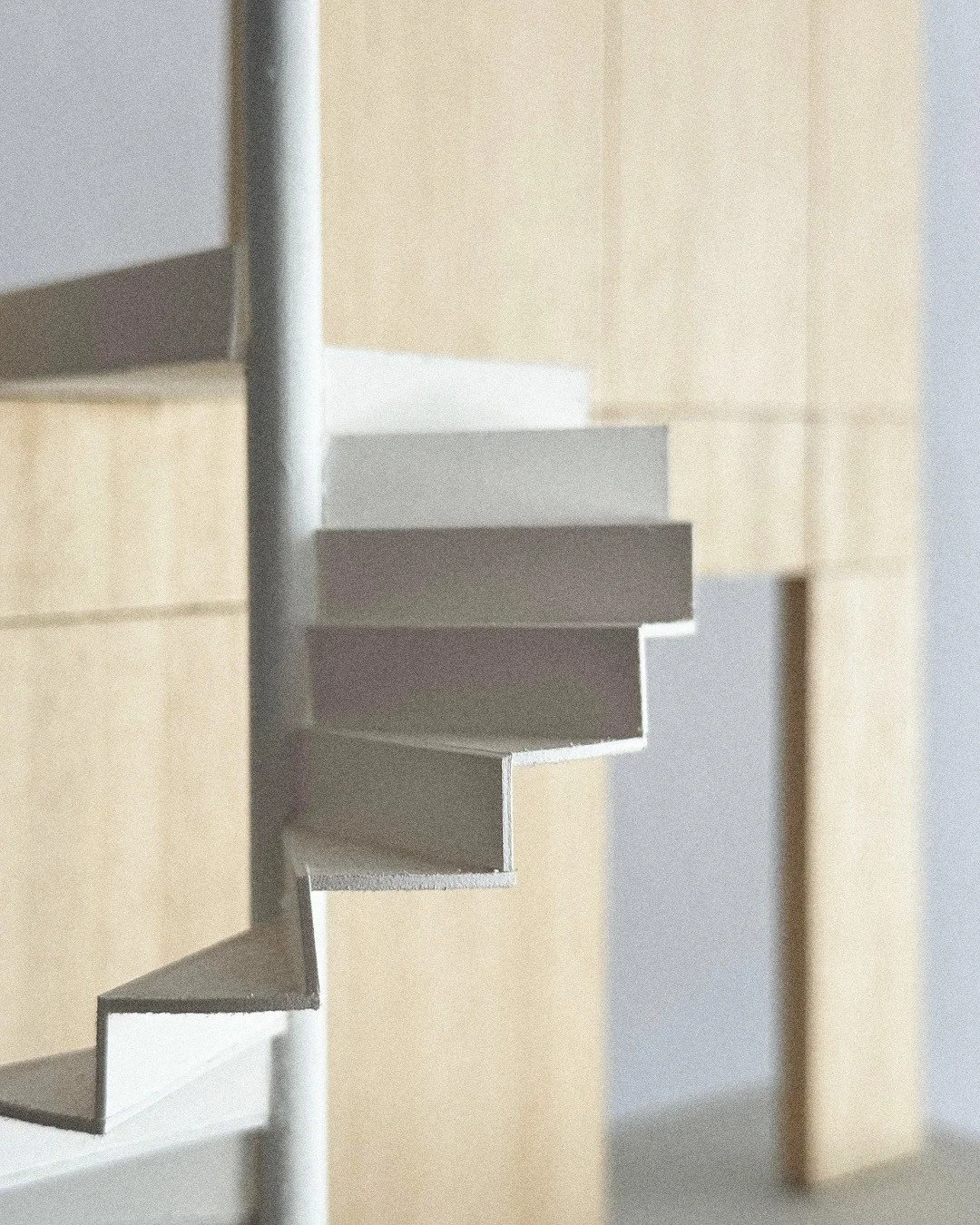
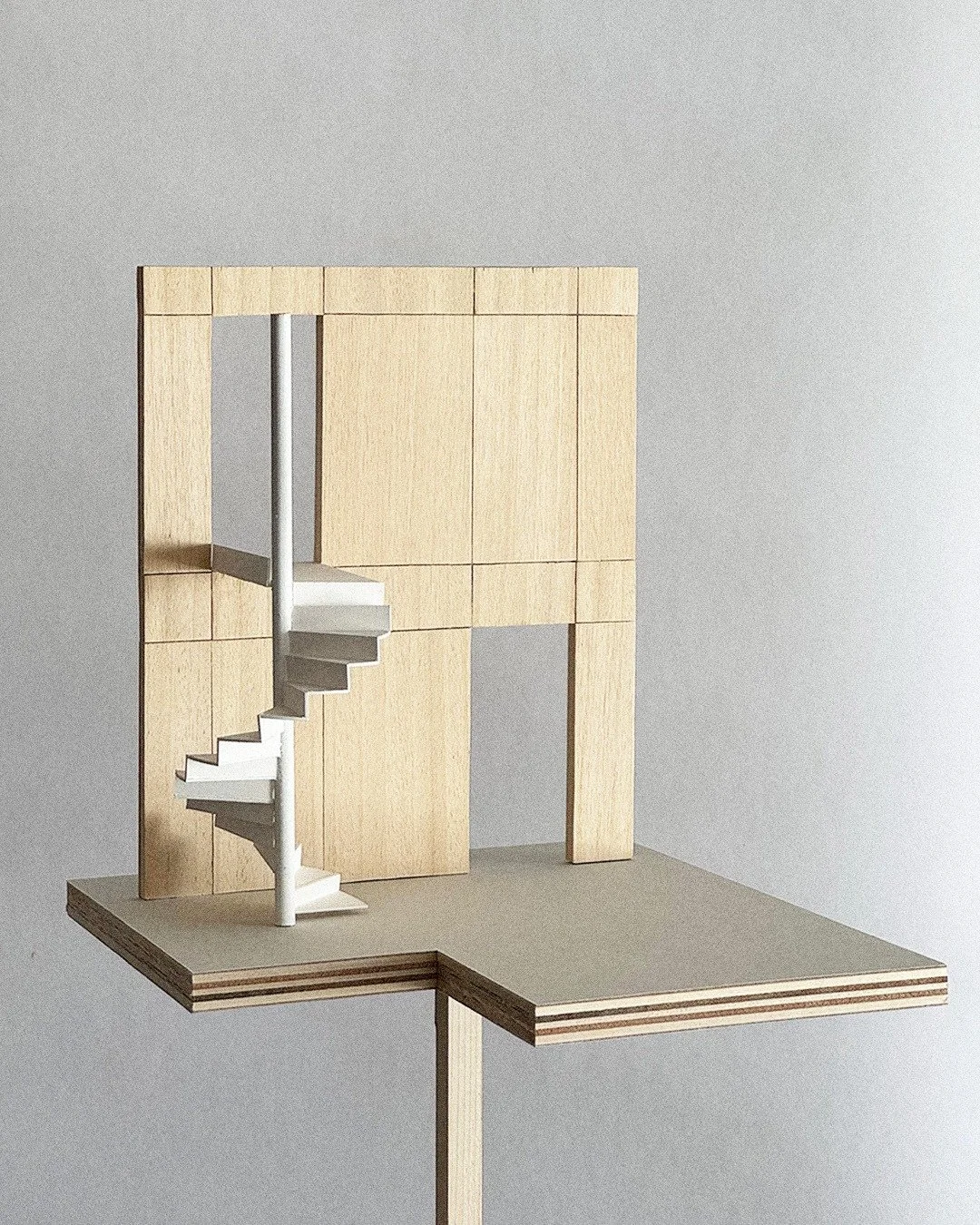
Russafa Apartment
#5 You recently shared a sneak peek of a raw space designed for wine, sound, and social energy. What excites you about creating spaces for collective experiences, and what makes designing for such hybrid, atmospheric uses particularly challenging or rewarding for you?
Collective experiences amplify perception. When people share a space, atmosphere becomes more intense and unpredictable, and that condition deeply interests us. Experience becomes the main design driver.
We begin by asking what users might feel or expect: surprise, intimacy, energy, or curiosity. Once that emotional framework is defined, we explore spatial and material strategies capable of provoking those sensations. Designing for hybrid environments, where wine, sound, and social interaction coexist, requires embracing experimentation. There is no exact formula, only continuous trial and error that allows room for bold ideas. The greatest challenge is recognizing when an idea we love does not actually serve the project. Fortunately, working as a collective helps maintain critical distance; different perspectives allow us to question decisions before they become fixed.
#6 What’s next for you? Are there ideas, scales, or typologies you’re currently drawn to or questions you’re hoping your future projects will explore?
For us, the question is less about typology or scale and more about whether there is space to deposit new ideas. Not all concepts belong in a single project, but we are interested in contexts where we can genuinely contribute something meaningful. We approach projects through emotion and surprise. We want spaces not only to function but to provoke an internal reaction in the user. We feel comfortable operating within controlled tension and duality. The central question guiding our practice is simply: why? Not from a purely functionalist perspective, but from an intentional one. We look for explanations that make sense to us emotionally and intellectually. Architecture, for us, is less about definitive answers and more about understanding our relationship with reality through space.
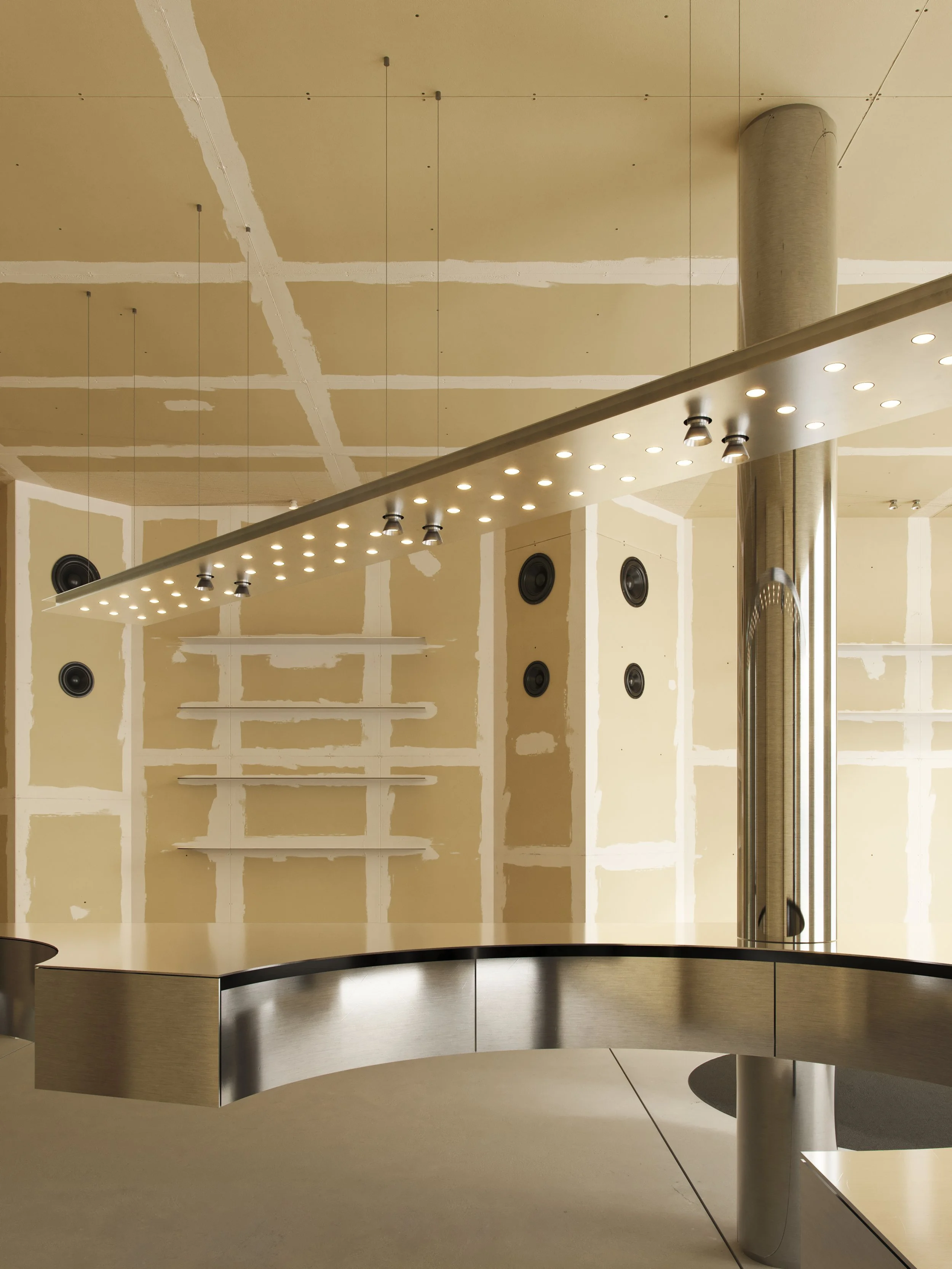

Wine Bar in Valencia
#7 How do you see the role of an architect in today's society?
The role of the designer today feels simultaneously undervalued and misunderstood. Architectural/Design education often promotes the figure of the designer as a Renaissance individual artist; intellectual, and technical expert at once. This narrative tends to encourage individualism and ego rather than collaboration. Many young architects enter professional life prepared to self-exploit in pursuit of recognition or validation. The result is often isolation instead of dialogue.
We believe architecture should move toward collective intelligence and shared authorship. The architect’s role should not be centered on personal genius but on facilitating conversations, mediating realities, and constructing meaningful relationships between people, space, and context.
#8 How does your environment influence your work?
Our environment is fundamental to how we work. The studio reflects the diversity of its members: some gravitate toward sober minimalism and architectural references, while others inhabit a productive chaos filled with prototypes, unfinished experiments, and unexpected objects. Rather than eliminating these differences, we embrace them. The friction between order and disorder generates energy and becomes part of the creative process itself.
The space we inhabit mirrors our methodology, multiple ways of thinking coexisting simultaneously. This constant interaction prevents stagnation and encourages continuous questioning. Our environment acts less as a backdrop and more as an active participant in shaping ideas and guiding design decisions.
#9 Three things that inspire you at the moment?
Thesis
Antithesis
Synthesis
#10 What do you currently read, watch, listen to?
It comes in phases. We could mention dense essays, obscure cinema, or experimental playlists to sound properly intellectual, but inspiration doesn’t work that way for us. Sometimes it’s theory; sometimes it’s nothing at all. Right now, we’re simply focused on working and above all, paying attention.
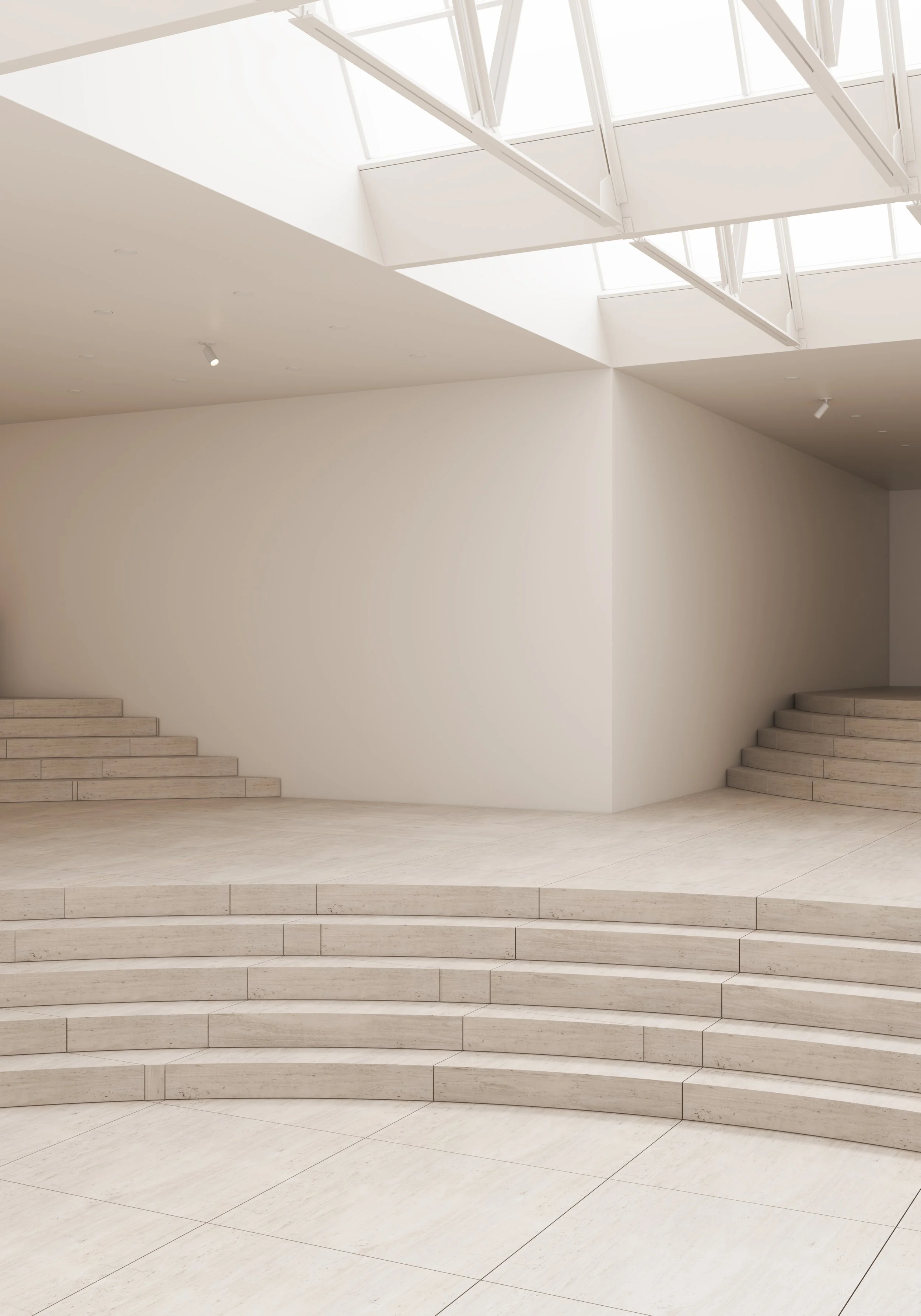
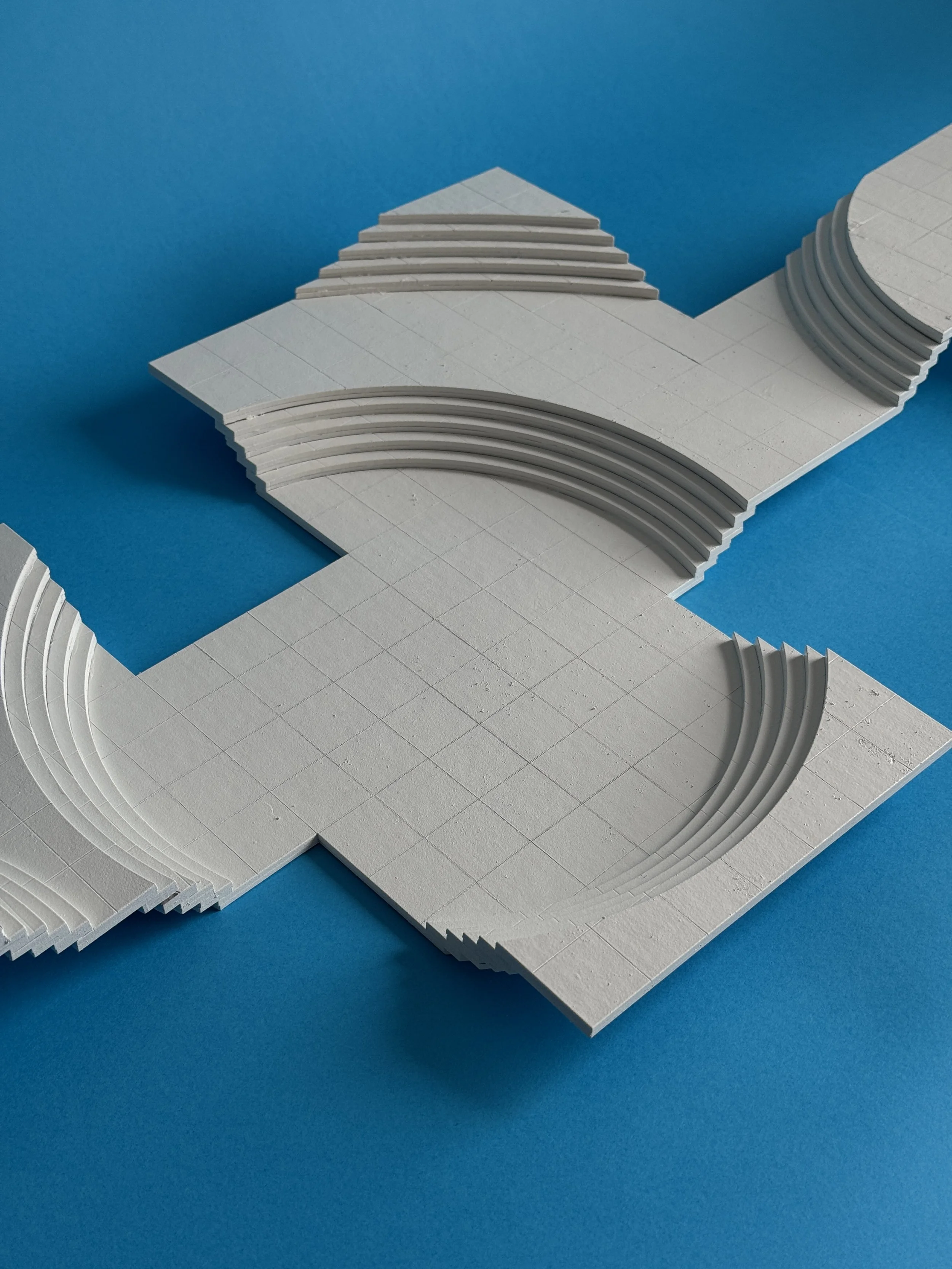
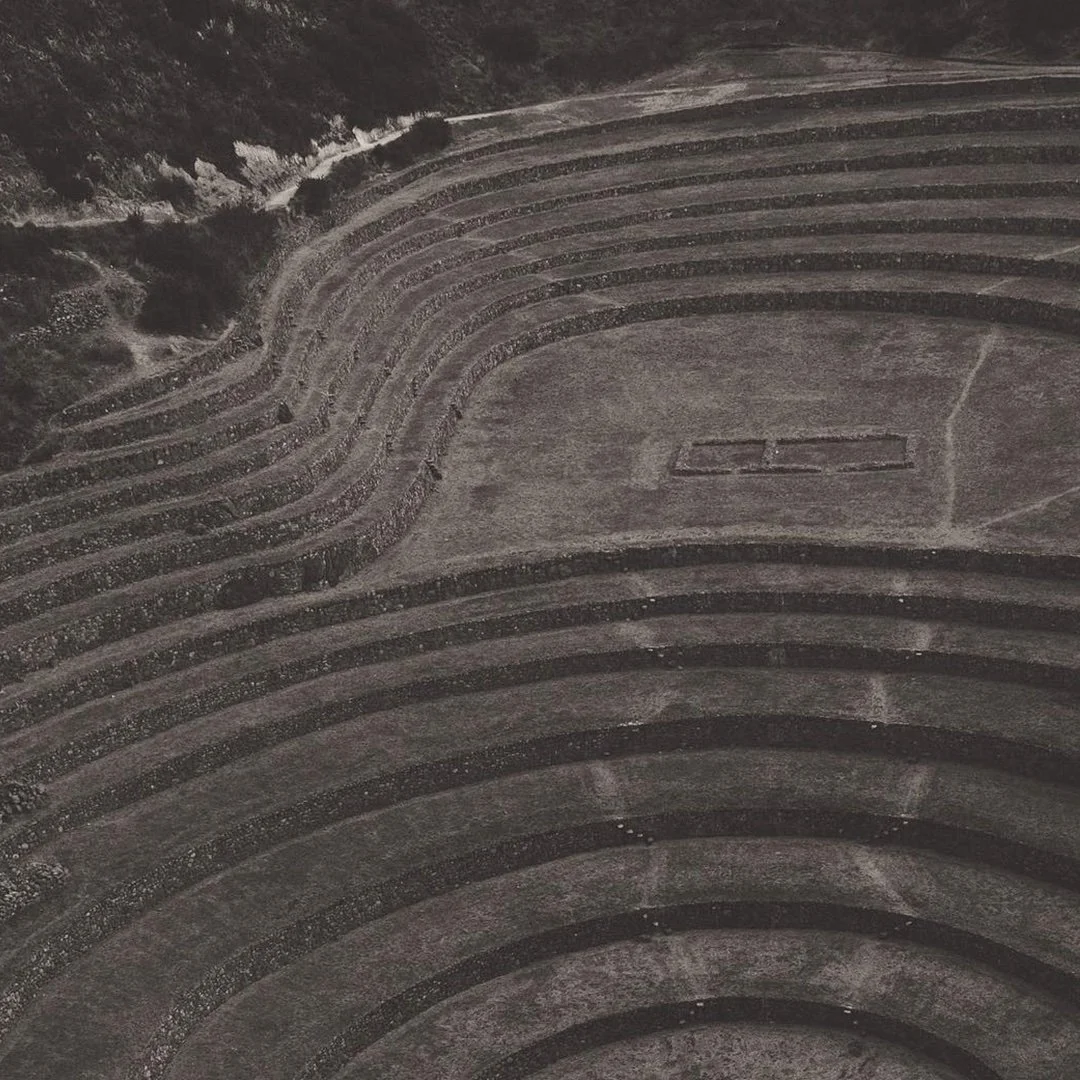
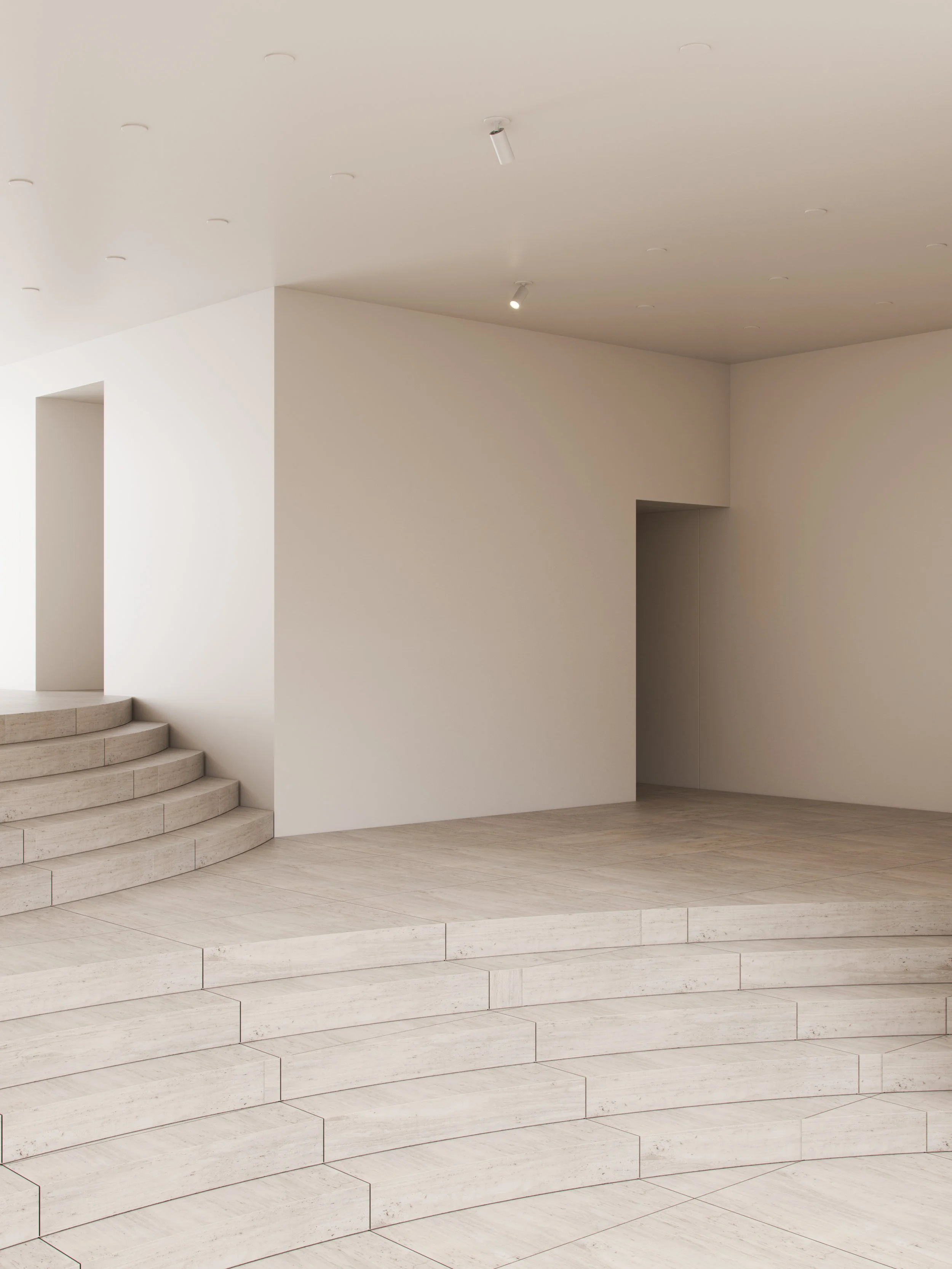
Diputación Art Gallery
Links
Website: depende.xyz
Instagram: @depende.xyz
Interview by Caroline Schulz, Photos and Visualizations by DEPENDE