
Annie Paxton
Annie, please introduce yourself:
I’m a designer of things - formally an architect, and informally a maker. I work between the disciplines of architecture, interior, research, and the applied arts.
I do a bit of architecture, a bit of teaching, and quite a lot of silk/metal/glass assembling.
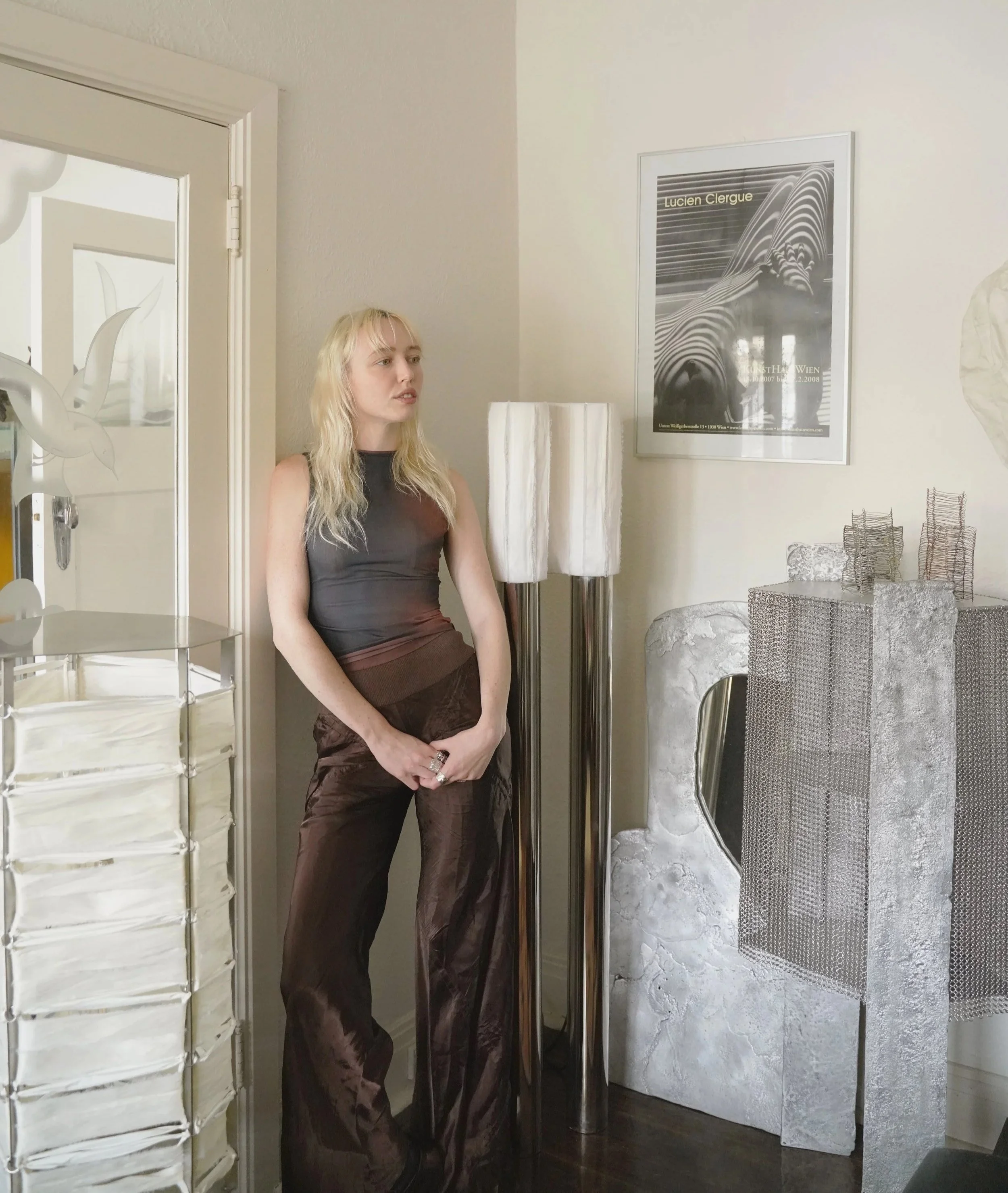
Annie Paxton © Elizabeth Kaye Campbell
#1 You grew up in Australia and are now based in Berlin.
How has this shift in place and culture shaped the way you live and work as an artist – from your everyday rhythms to where you find inspiration?
The idea of place is both in and of everything. My practice in all its forms is very much engaged with this idea of the reciprocal nature of experience - how we construct space as space constructs us. Where you are in the world is your immediate stimulus, immediate input. It’s in those patterns and rhythms of the ‘everyday’ that design seeps in, that it can resound effect. I am interested in the structures of perception - how memory, form, urban planning, architecture operate reciprocally and relationally. Architecture is a relational practice: it forms a lens through which we experience the world.
The resonance of things is so important.
It wasn’t until months after I made the first iteration of the portrait series that I came to realise the first portrait was an abstraction of the art deco stained glass window in the shower of my apartment - we absorb and reinterpret and reassemble constantly. That’s why it is so important to attune to what we are absorbing - visual, textual, the people that surround us.
So re-setting myself, I suppose, has been animating in all the ways.
#2 Your practice moves fluidly between art, design, and craft. Do you think of these as separate worlds, or do you prefer to see them as part of one continuous field of exploration?
Continuous - architecture/design has a lot of weight, a lot of edges, a lot of hardness within the actual act of architecture. Art and craft are a lot more transmutable, a lot more indulgent with experimentation, so when you hit an edge with an idea in an architectural sense, you can test it in a pivot toward the craft. Architects have historically used furniture to test and reinterpret ideas.
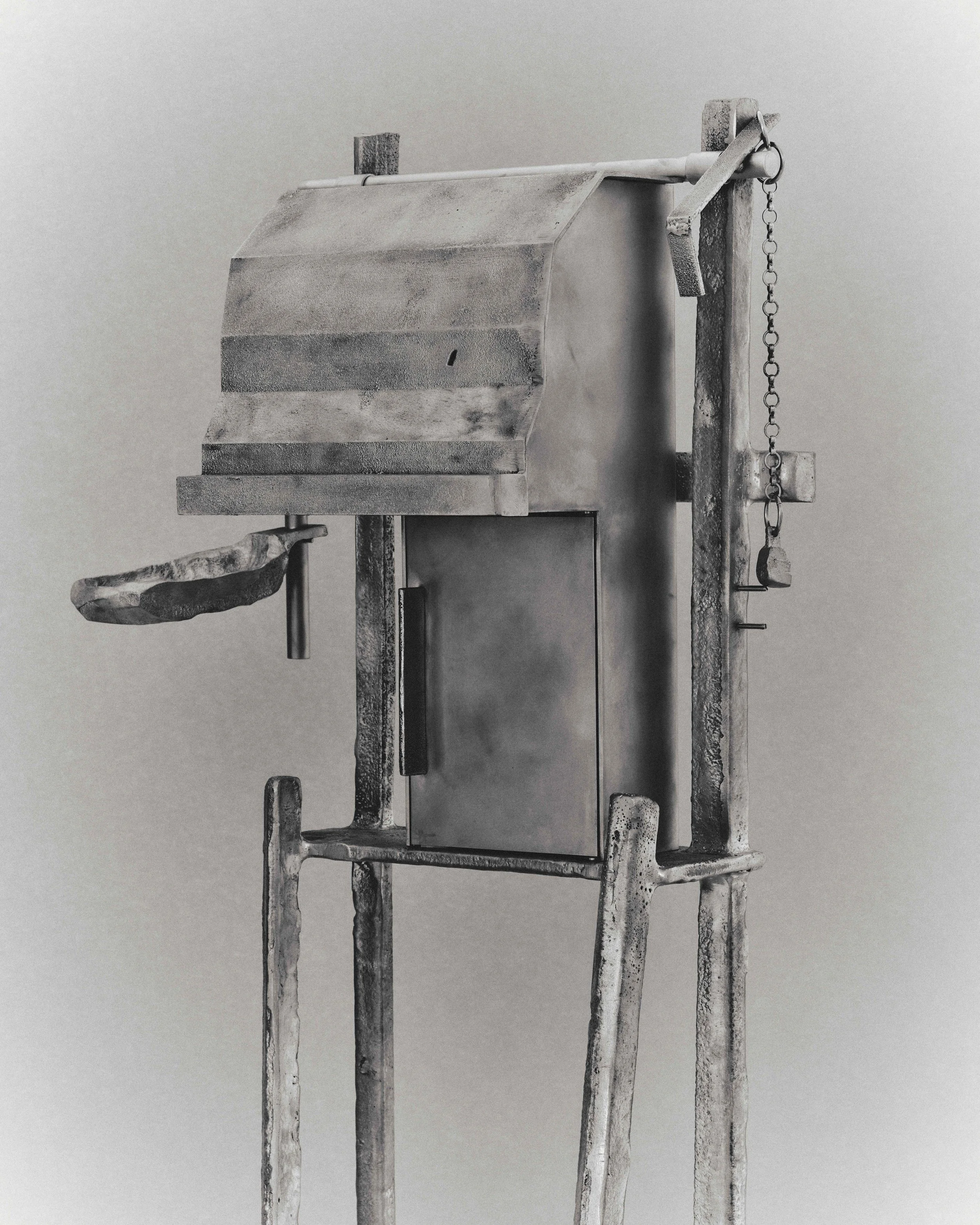
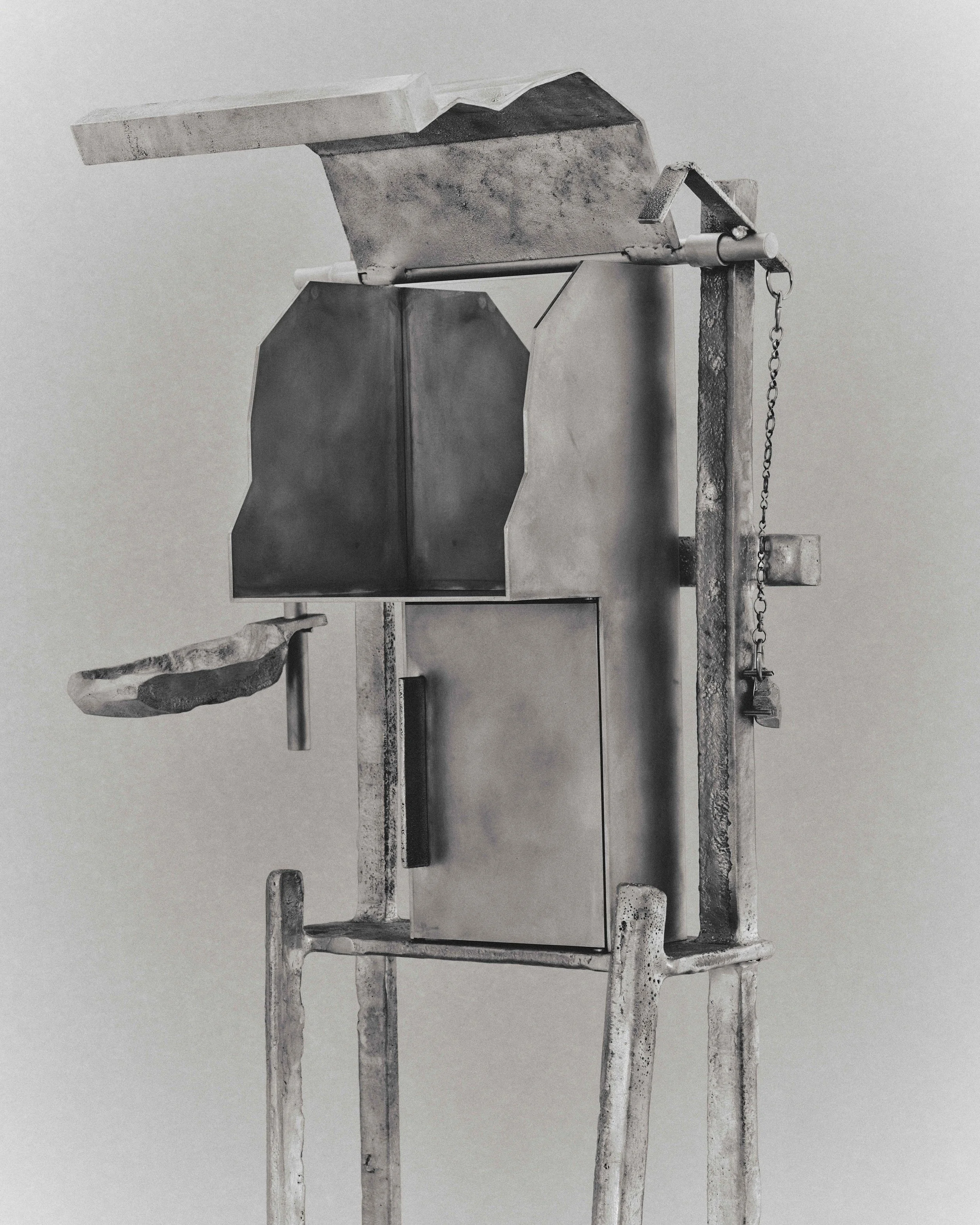
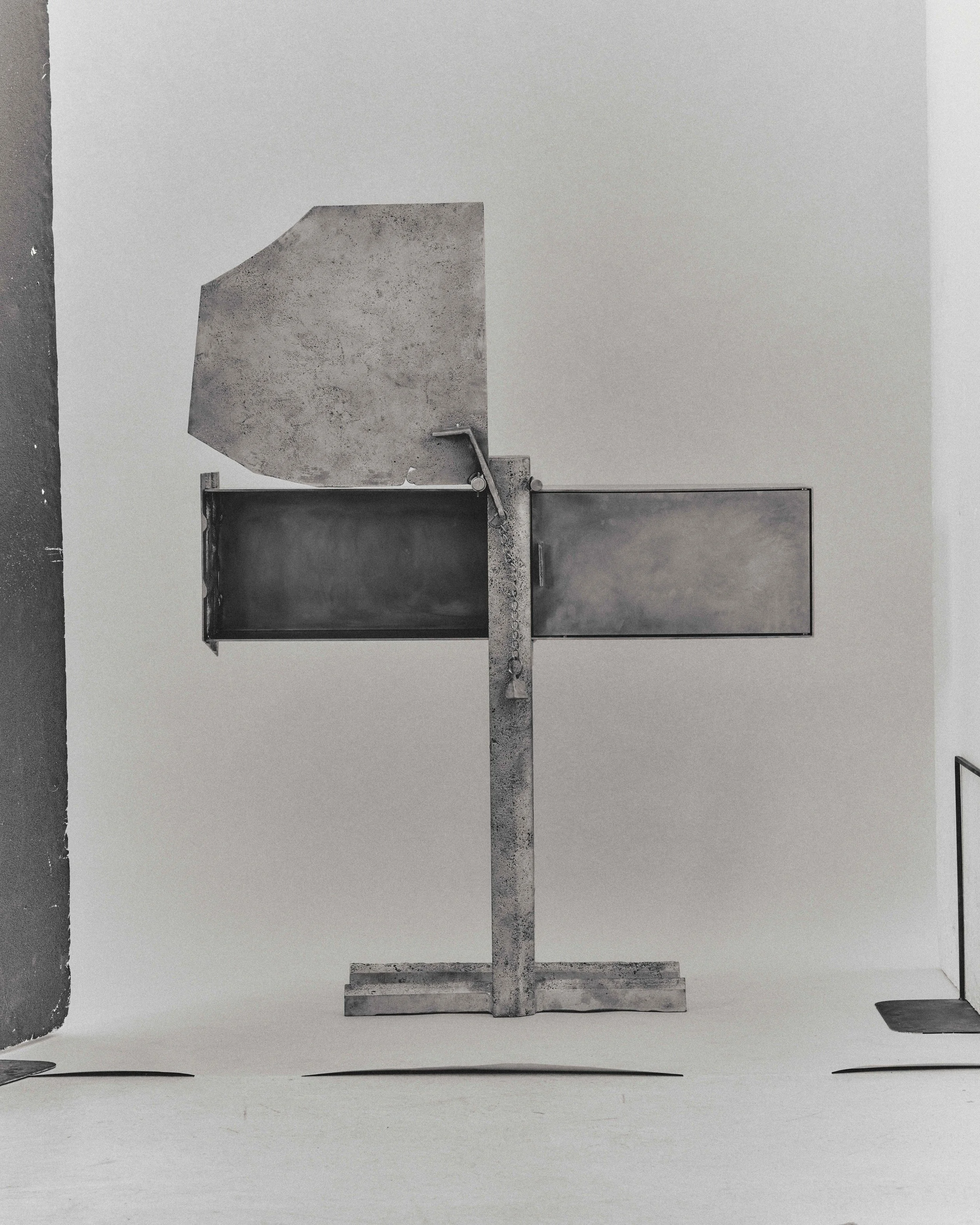
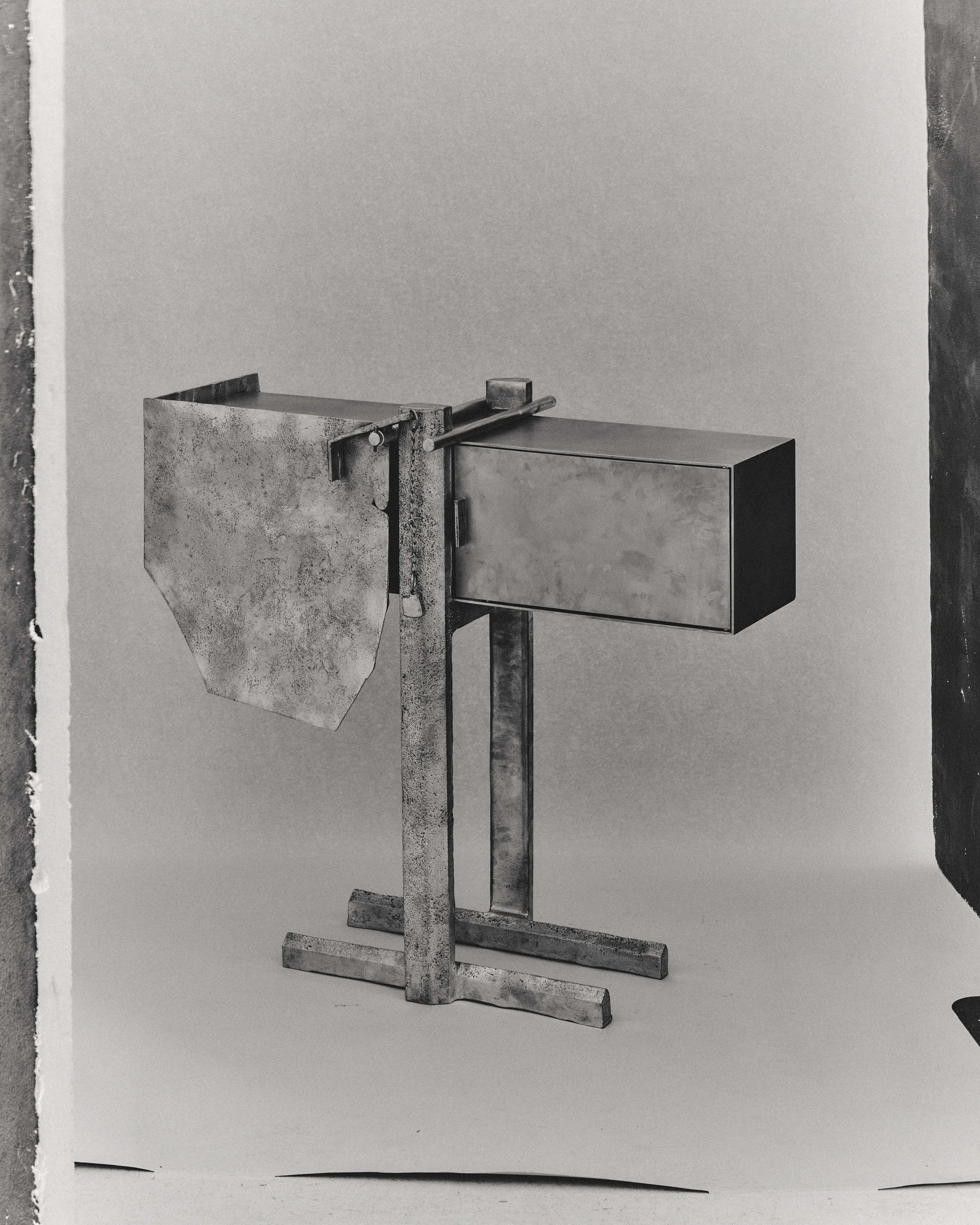
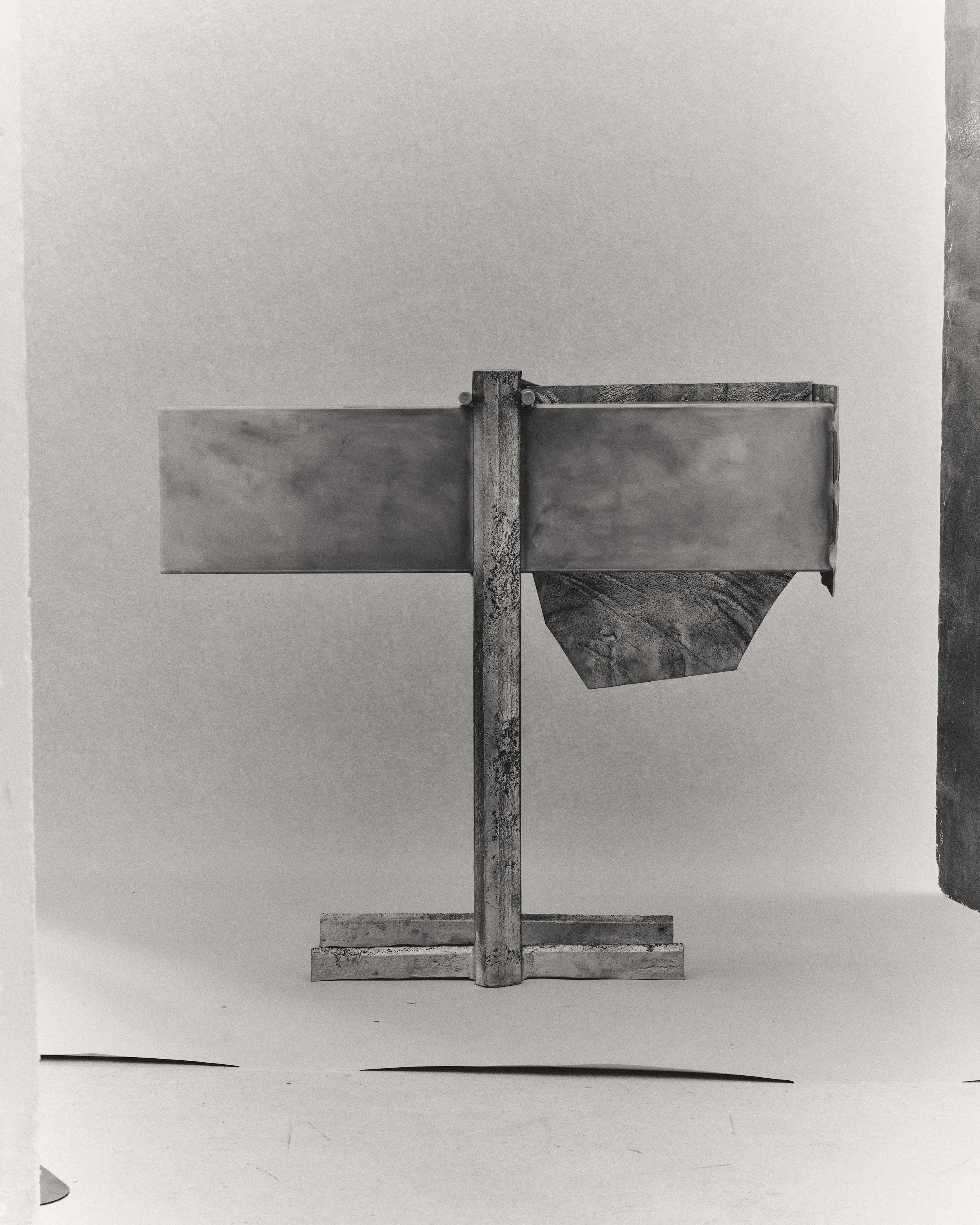
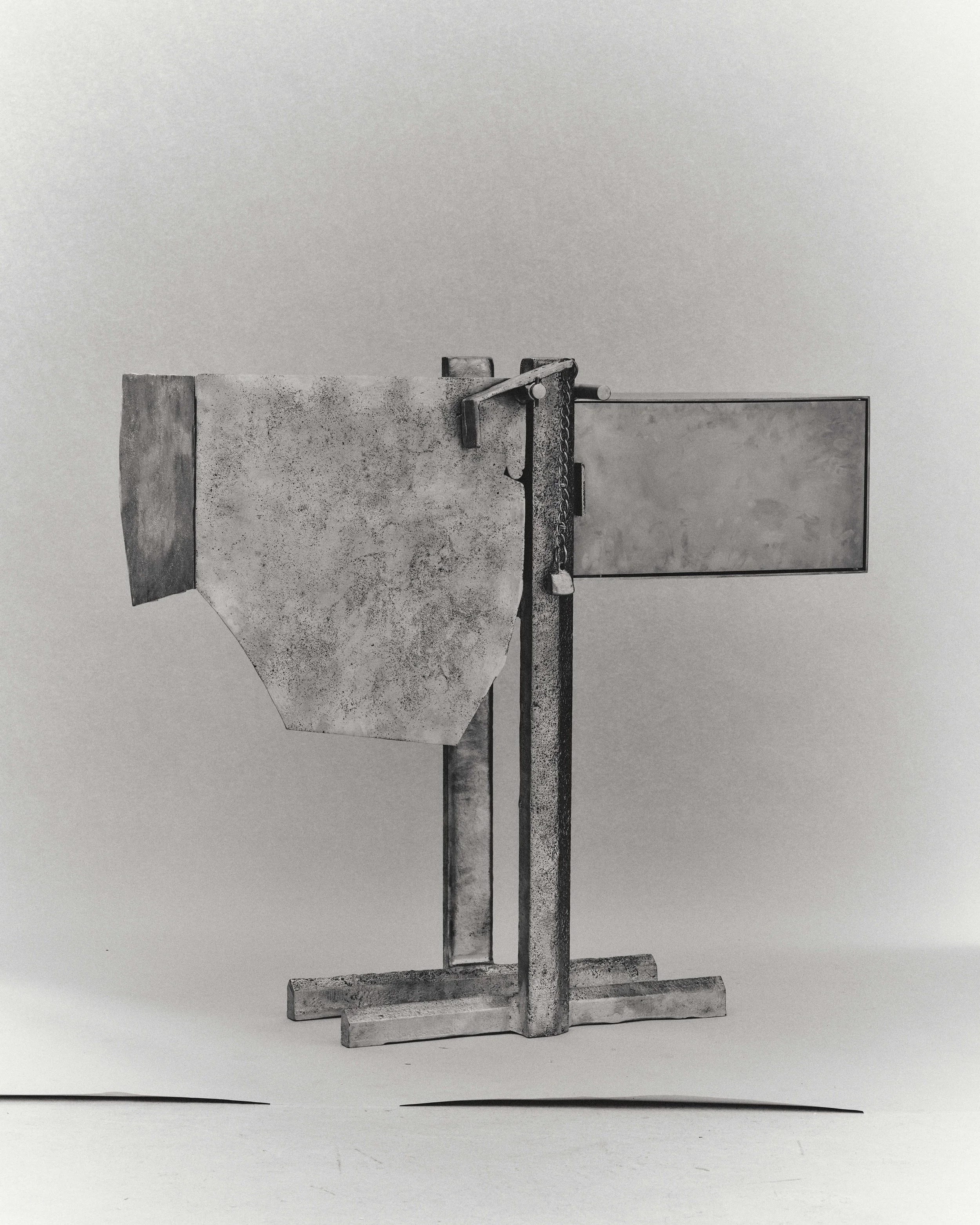
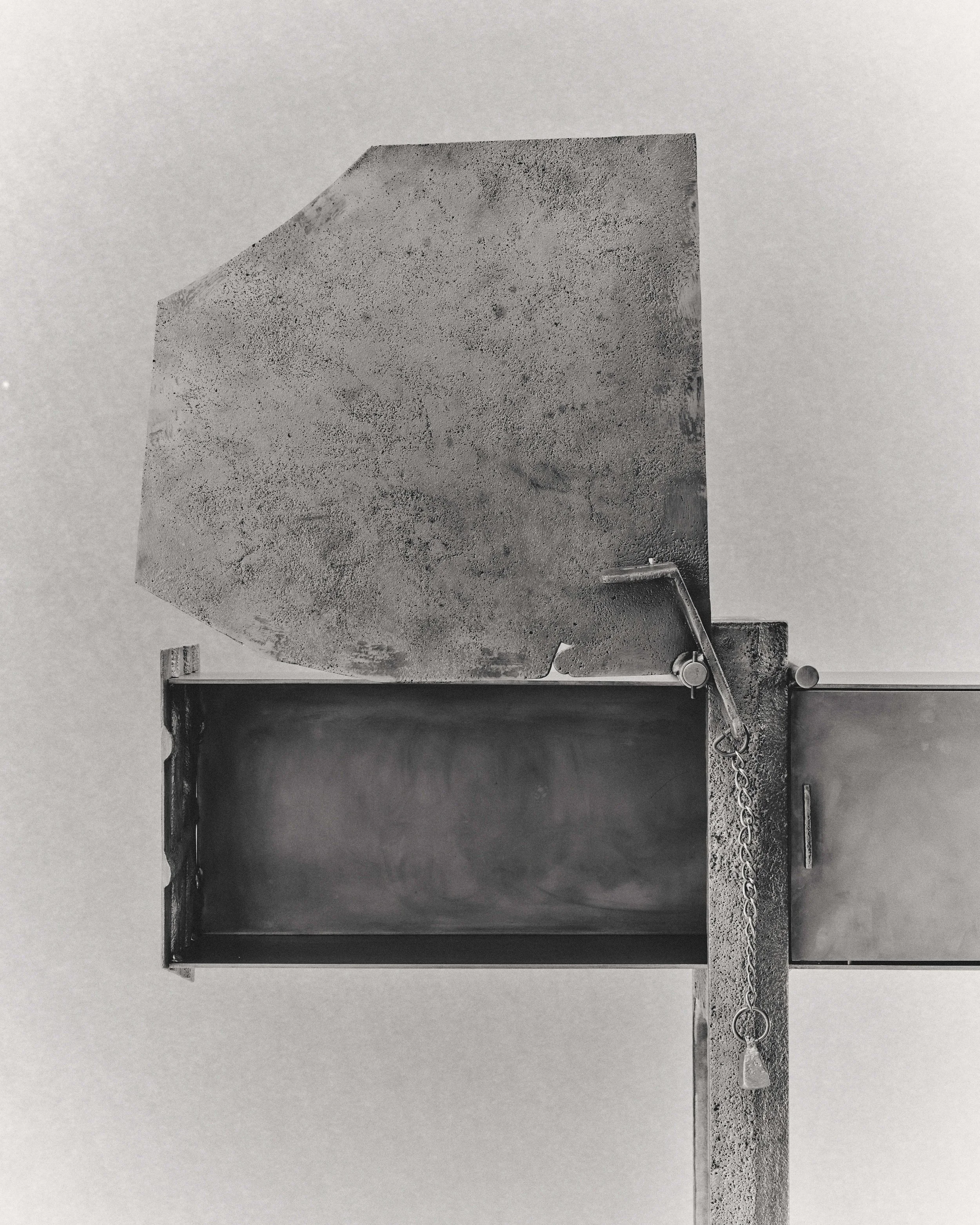
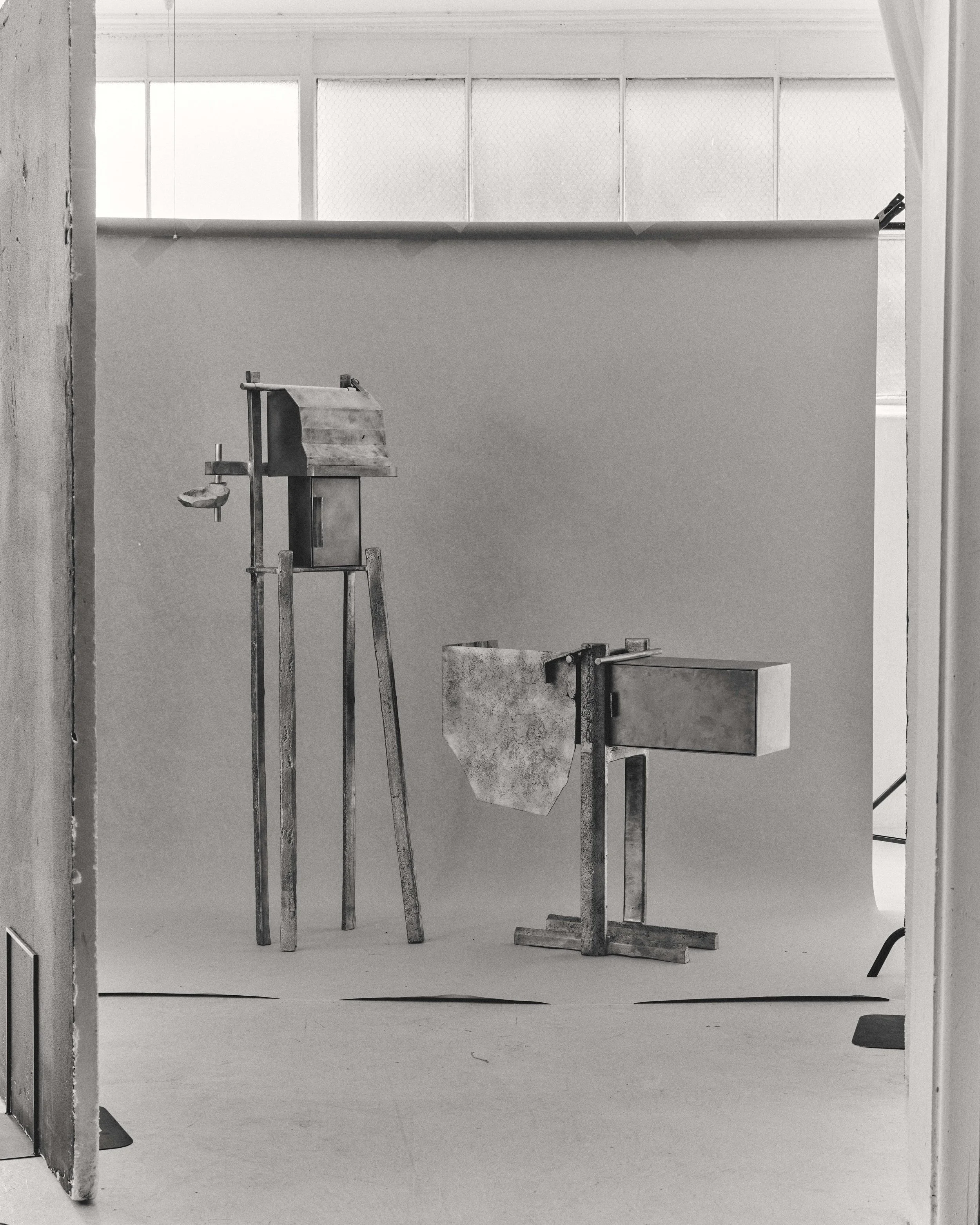
masque i, masque ii © Pier Carthew
#3 Looking back, was there a defining moment, experience, or person who encouraged you to carve out your own artistic path?
It’s a boring story but I suppose I can say the pandemic. Melbourne had a very extreme lockdown, and in that time I was finishing my Masters thesis. It was all-consuming, and when it was submitted I was left a bit lost and longing — for a more immediate expression of the ideas I had steeping. When you finish something that intensive, and are both burdened/gifted with a time surplus, there is a lot of residual creative energy that needs to find play. So I started playing with what was most familiar - a form of material memory I suppose - layering silk scraps I had discarded, and assembling them with crude fixings.
I had always firstly been a drawer, then a sewer, then became more of a sculptor. But more than these very tactile modes I was always just very interested in words, and how they can both limit and delimit an idea. I think I’m always testing some broader idea through making, through drawing, through composing. I originally wanted to pursue a career in writing to some capacity, but ended up in the world of architecture - a very liquid world in a lot of ways in how it blends mathematical pragmatism, with the critical lens of socio-spatial theory, and the optimism of the artistic project. It was a nice place to find myself.
#4 Your work often hints at the everyday – a chair, a vessel, a structure – but then twists it into something less predictable.
Do you enjoy creating that kind of tension, where recognition and surprise meet in the same piece?
So nicely put :) Yes definitely, it’s always that play on the familiar. I’m interested in how domestic space in particular harbours a lived experience - there’s this underlying play on memory, ritual, and interpretation.
I think that’s why I seem to be very preoccupied with cabinets. The human ritual of containment and collecting is so interesting, and when you couple that with an object that teases you with questions of purpose and utility, it reframes the how and what.
There is an innate, perhaps ineffable power that domestic space, and the objects and furnitures within it, have to shape and/or reflect the way that we think, feel, negotiate the world. Like art, design has the power to not only express ideas about the human condition, but actually shapes it in nuanced ways.
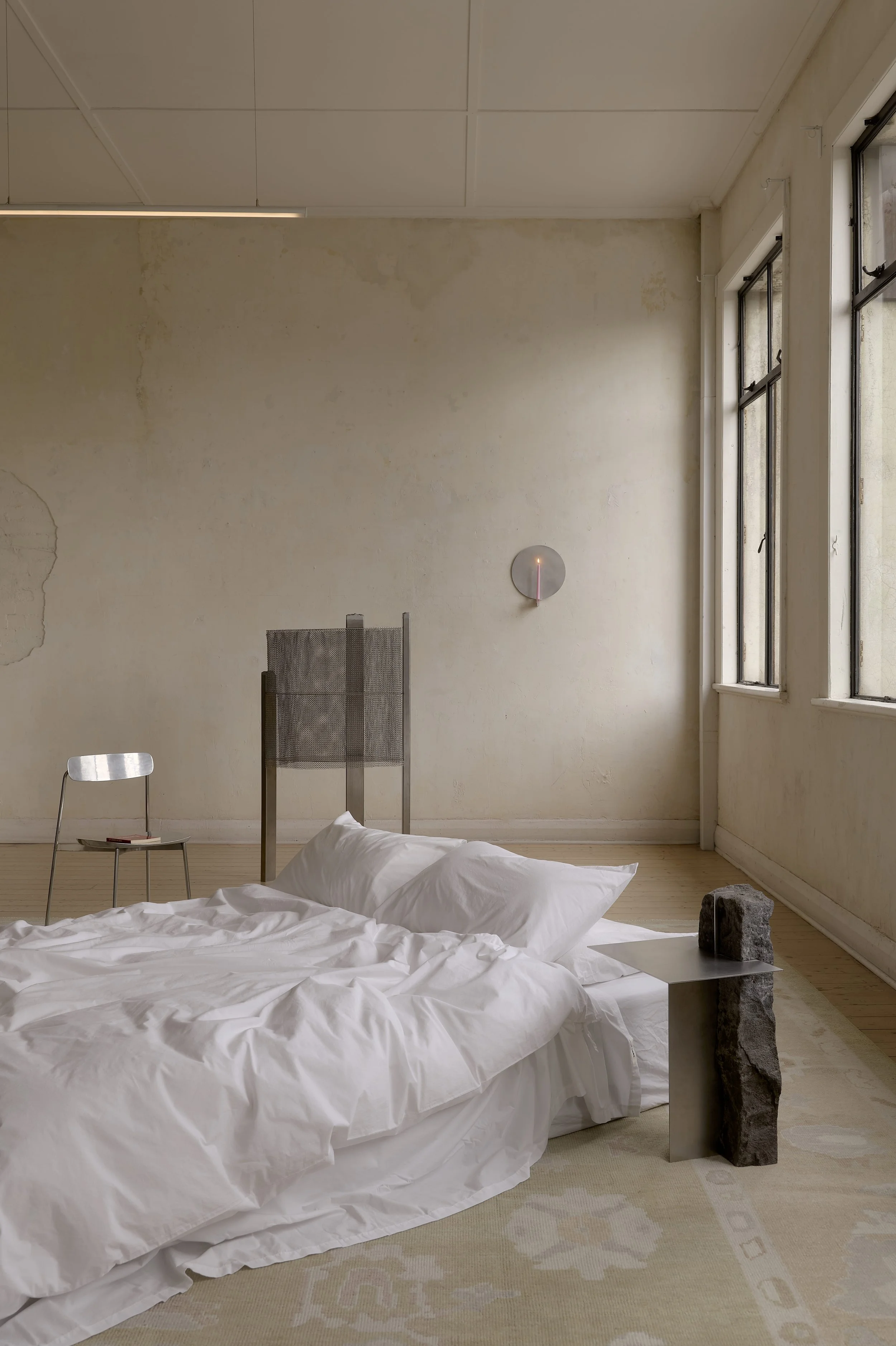
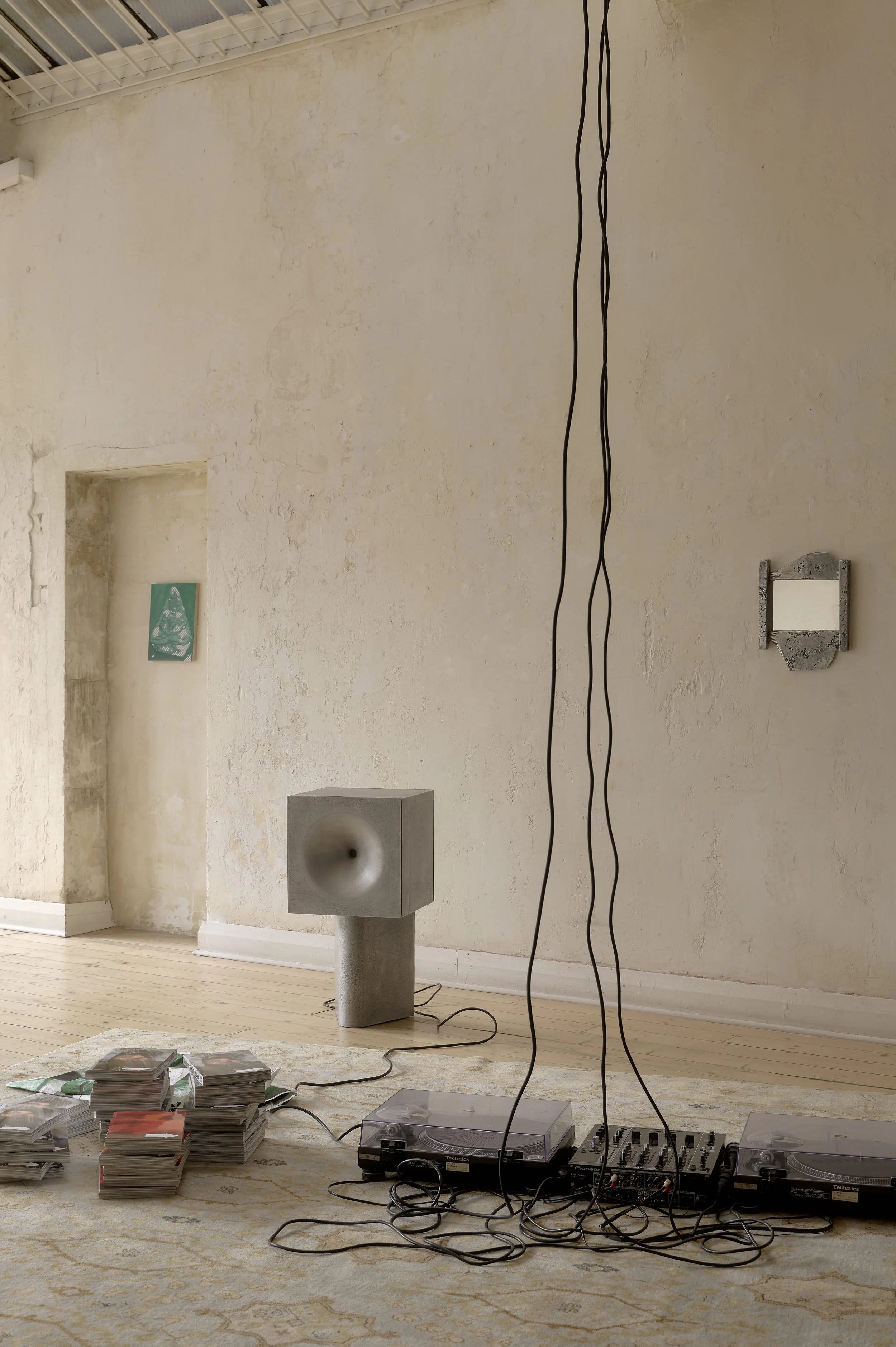
AT THE ABOVE - the ‘form i (veiled) cabinet‘ alongside pieces by @_daltonstewart and @tom_fereday ©Jack Lovel
#5 In your Vestige series, you highlight process and material in a very direct way. What drew you to create this body of work, and what story does it tell for you beyond the objects themselves?
I’ve always been interested in the way metal patinas, ages, shifts with time. It is so solid and rigid and final in its form, but fluid and expressive with its surface. I think that’s what eventually piqued my interest in casting - how to intensify the expressive nature of the surface and actually exhibit the process in the product.
The Vestige series is very much a keystone of my practice. My practice is preoccupied with material process, exhibiting the marks of making, the patina of time, and honest material states as ‘materials’ themselves. They were made at a time when I was particularly fascinated by material states; a material as performative, adaptable, able to embody multiple roles and personas. It was also a time when I was determined to craft with the relics and discards of practice, so scraps of aluminium were melted down, re-cast, re-conceived. So in the act of dissolving and re-forming, the process dictates the product. This is, I suppose, different to the more recent pieces which have a more active state - lamps with billowing silk bodies etc. They aren’t suspended in a stasis, instead adopting an active persona of their own.
A lot of my work is a critical interrogation of traditional materials and processes - how to riff on material memory, on our experience of history, memory, place.
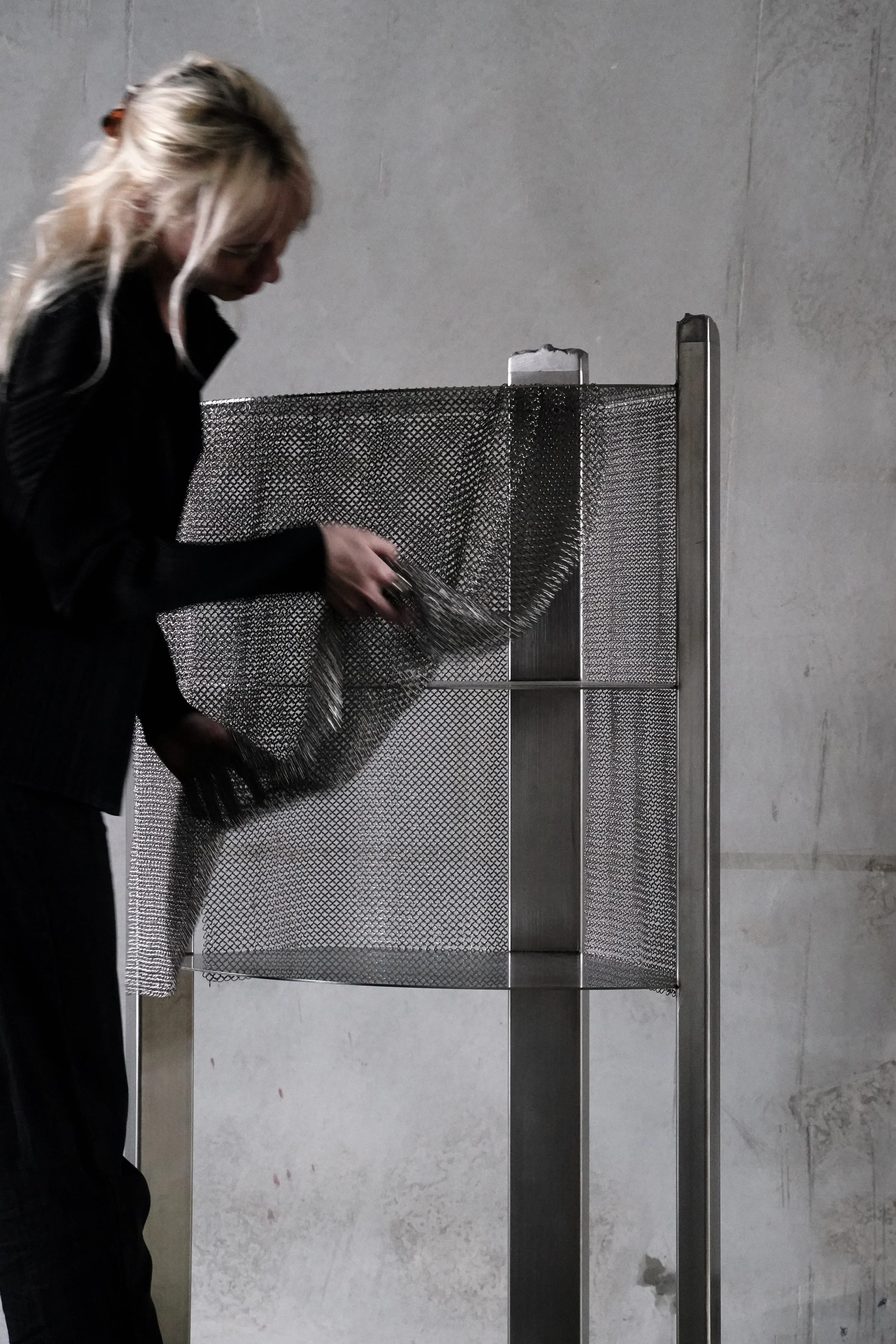
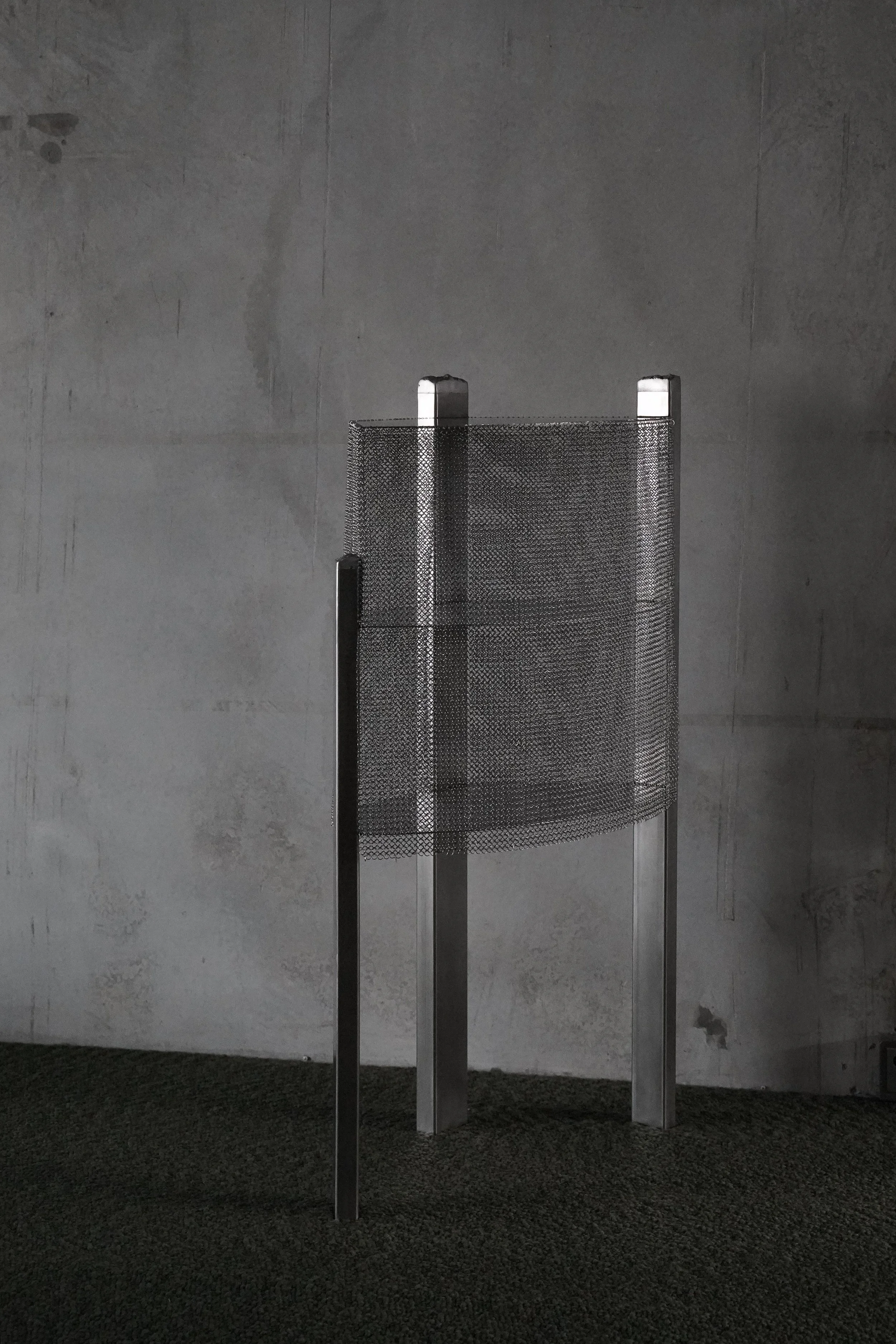
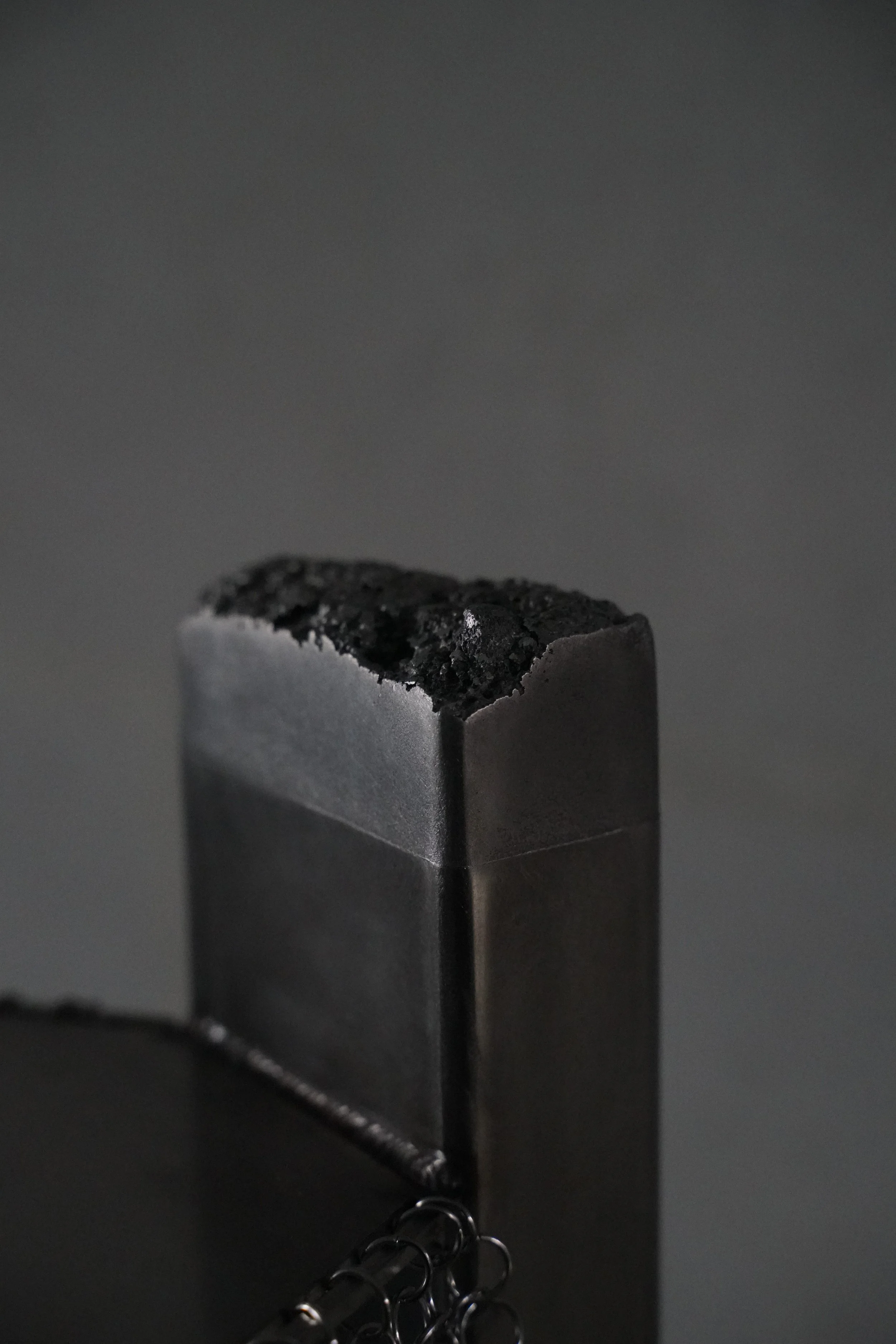
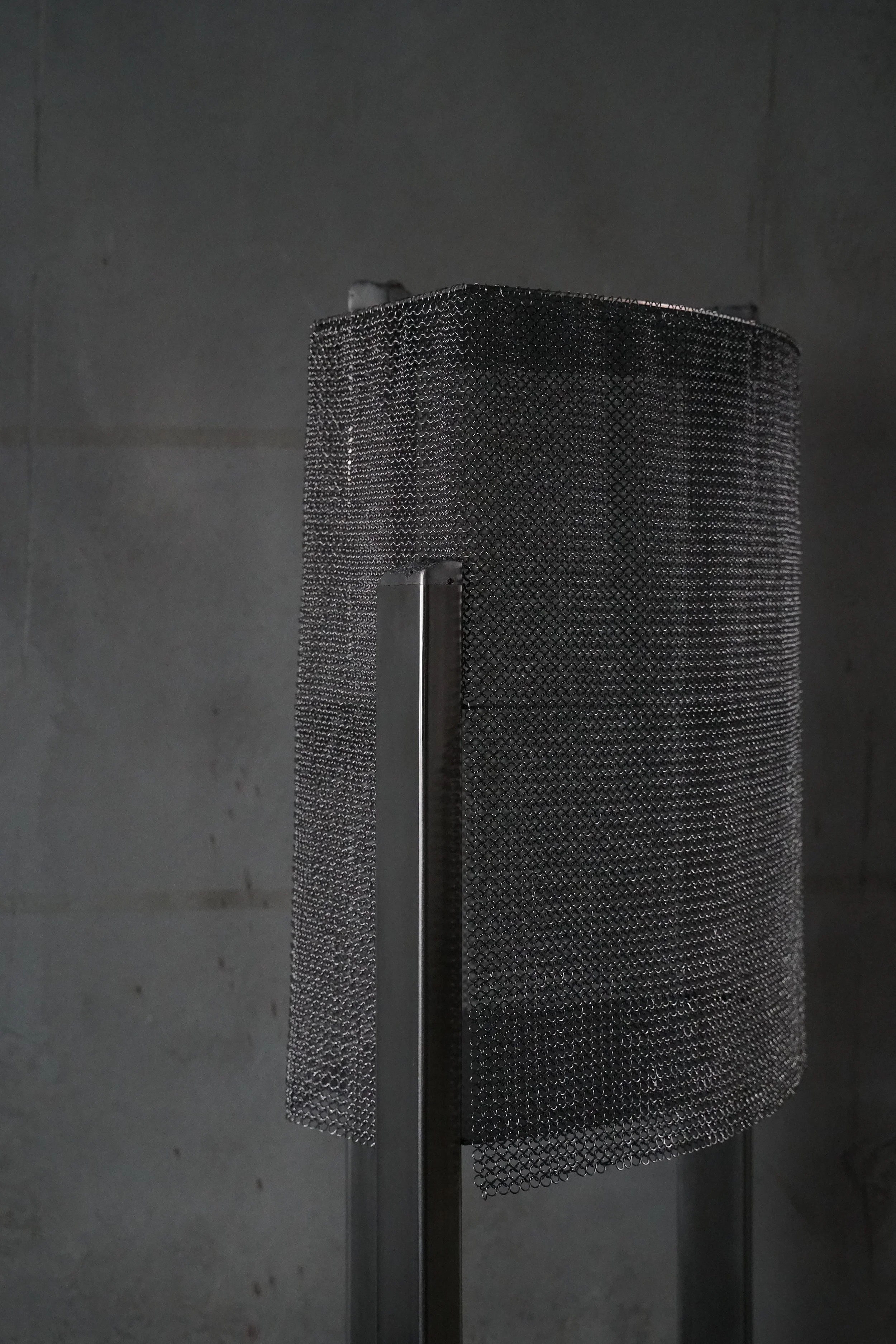
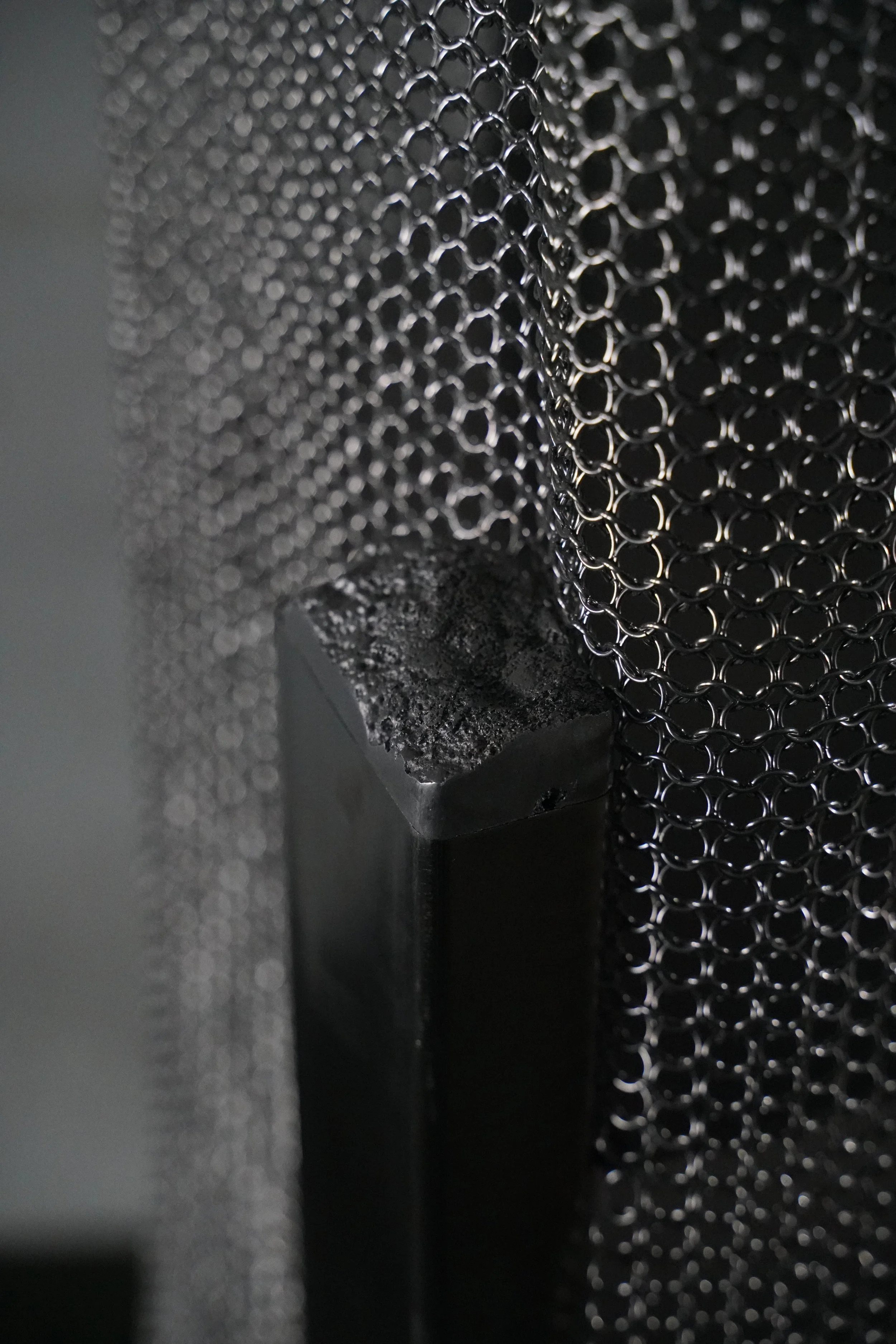
form i (veiled) cabinet cast recycled aluminium, stainless, stainless chainmesh 2023 © Elizabeth Kaye Campbell
#6 Beyond what you’re working on right now, are there themes or ideas that are quietly circling in your mind – things that might one day enter your practice in unexpected ways?
Always always. I am longing for time and a clear mind so I can give them enough attention. I have some processes I’m wanting to test ~ most involving melting metal onto other things, and weaving silk scraps into other scraps.
I would love to find a project to translate the more experimental material side of my work into an architectural project. It would be a feat to find a project where I could bring down the borders and do it all - the shell, the interior, the furniture.
#7 How do you see the role of an architect in today's society?
There is the reality of it where it is a very regulated profession, but then there is the backbone of it, where it binds together the reality of a spatial problem with the philosophy of a spatial choreography. It’s so steeped in critical interpretations of human patterns of movement, sociology, ecology… it teases everything. Today, I think a lot of that romance is hard to grasp, hard to hold onto. Everything is yield and regulation and this constant attempt to grasp onto any semblance of sustainability. But there is a bit of it there. Good architecture is so important - it holds us, it shelters us, it structures our experience of the world.
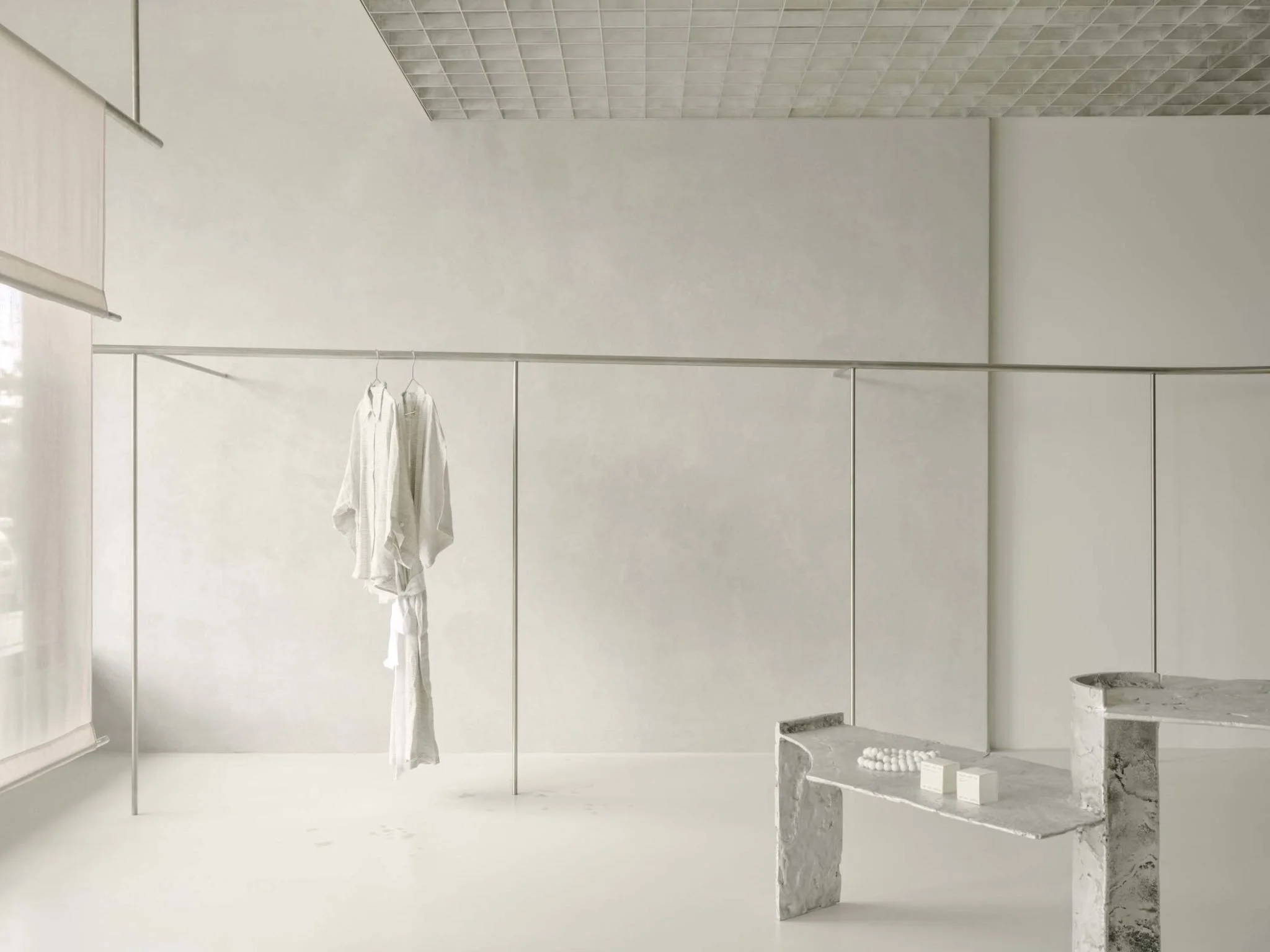
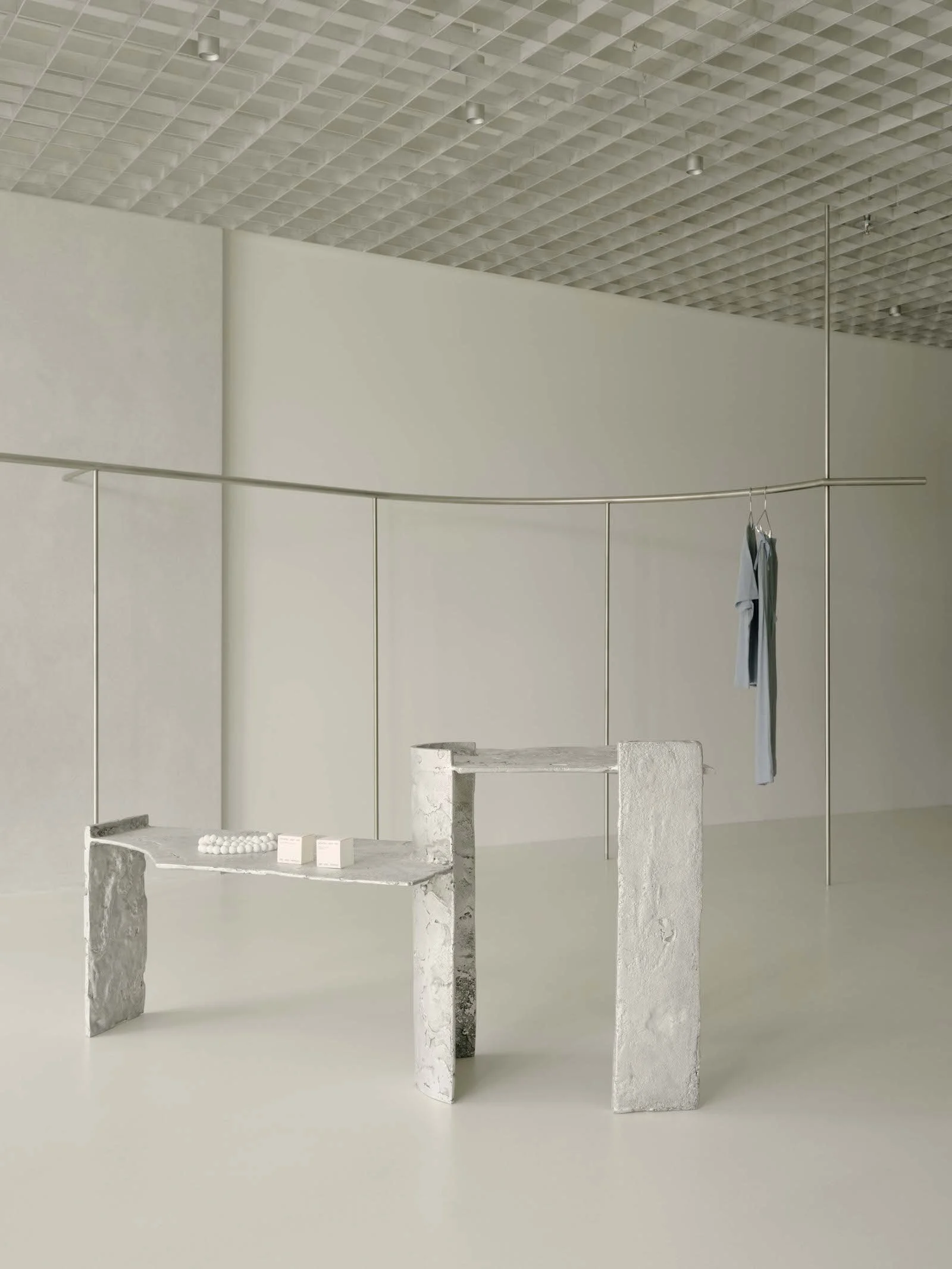
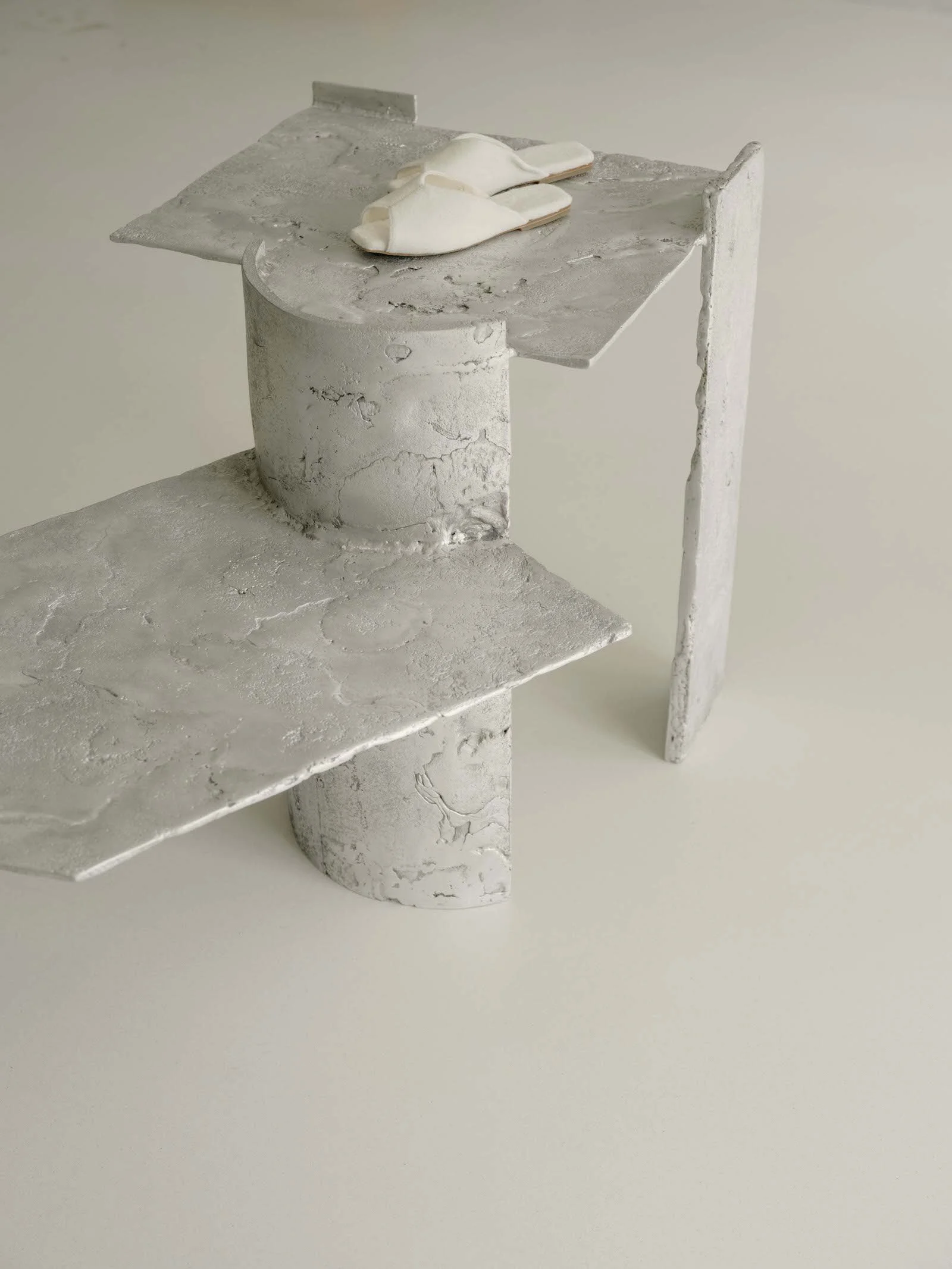
the custom XL 2-tier vestige table sitting pretty in her home at @deijistudios © Tom Ross
#8 How does your environment influence your work?
Eeeee I think I went into this in no.1 oops
#9 Three things that inspire you at the moment?
Burri, Doris Salcedo, Fausto Melotti, Marion Baruch, 17th C Dutch perspective boxes, Anthony Caro, Mia Gosset
#10 What do you currently read, watch, listen to?
Mmm the latest was a Sontag essay collection, a playful Calvino novella my friend amy gifted me, the distance of the moon, and in a recent abstract quest to learn german, a TS Eliot english-german translated compilation. That’s interesting.
My boyfriend is about to release a new album, so a lot of his very beautiful echos. I think you call them ear worms.
I feel like I’ve watched pride and prejudice four times this year…..
I recently rewatched Tarkovsky’s Solaris. Now that the cold is creeping, it’s fun to watch Eric Rohmer….. The sun lives on somewhere.
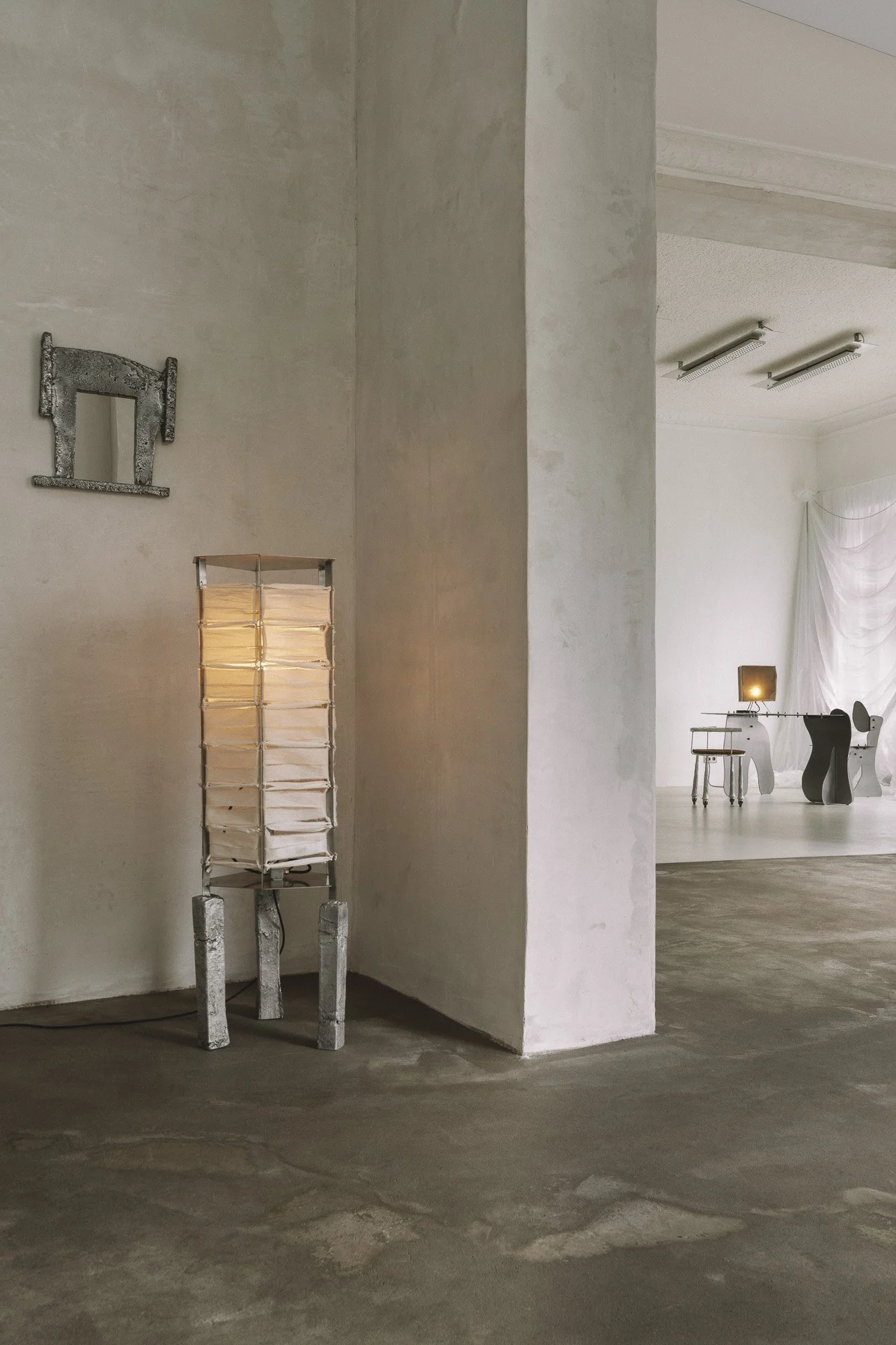
VAUST Gallery Berlin © Clemens Poloczek
Links
Instagram: anniepaxtonstudio
Website: https://anniepaxton.com
Interview by Lisa Puschmann