
No Longer Home, Not Yet Memory
Words & Visuals: Maria Medushevskaya
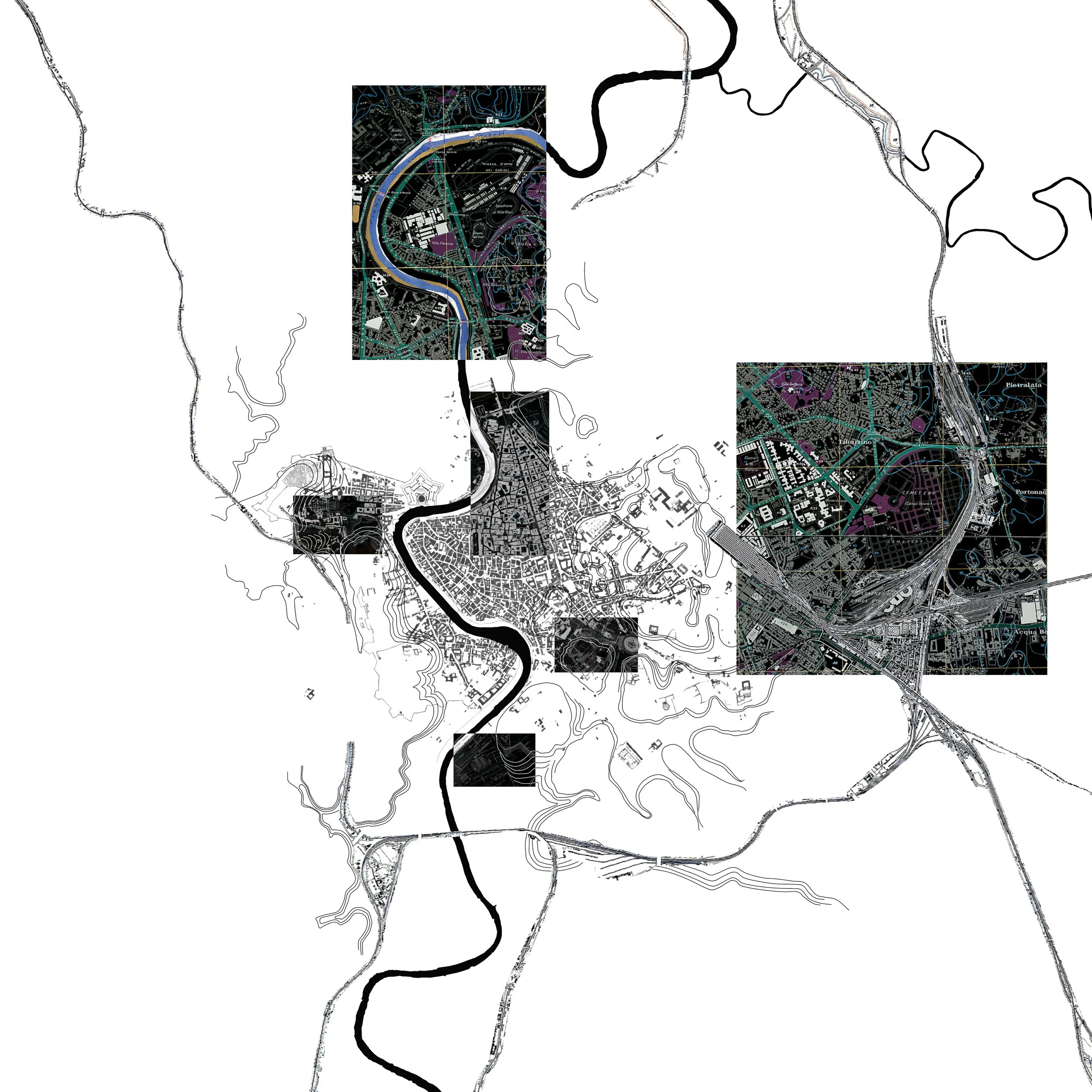
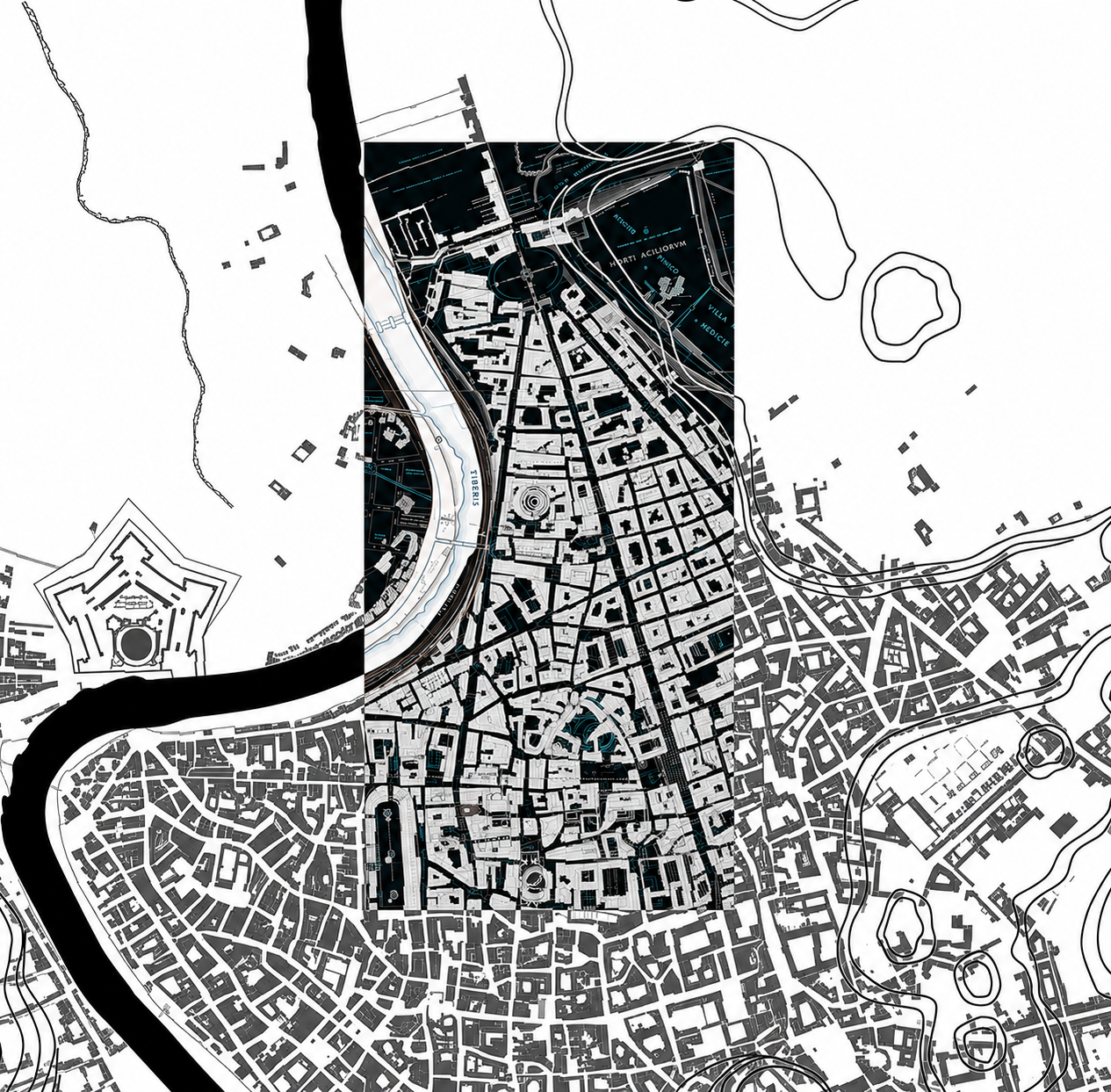
Places, like memories, are never held in a single moment. They accumulate. Some things fade, others return unexpectedly. Gestures, impressions, absences remain attached to space, like old lines beneath a newer map. They overlap and shift, like the layers of a city, until they form a palimpsest.
What looks continuous is often only the latest layer. Something can be overwritten without fully disappearing; an earlier image survives underneath, faintly legible, sometimes only as a fragment.
Transition happens somewhere within these layers: when something has already begun to disappear, but has not yet become the past. Most of the time, we move through these shifts without noticing them. Then something happens, and what had remained almost invisible suddenly comes to the surface. Everything seems to move “through the darkness:
things, places, years.” A place that has not changed at all becomes difficult to recognise.
Something breaks. Someone falls out of love.
And, suddenly, no map can tell you where you are. The landmarks are still there, but they stop making sense.
Sounds become too loud, streets too wide, the heat suddenly unbearable. You feel small and out of place. Yes, perhaps that is the right expression: out of place. The familiar turns strange in front of your eyes. You are lost. Completely lost.
Falling out of love is a fast transition. It changes us, but it also changes the way we move through space, the way we see it. A room, a street, the sea have no idea that a small universe has just come to an end. They stay exactly where they are, indifferent. And yet they become part of what happened. They carry its traces.
No longer home. Not yet memory.
1 Marcel Proust, Swann’s Way, trans. C. K. Scott Moncrieff, in In Search of Lost Time: “Everything would be 1 moving round me through the darkness: things, places, years.”
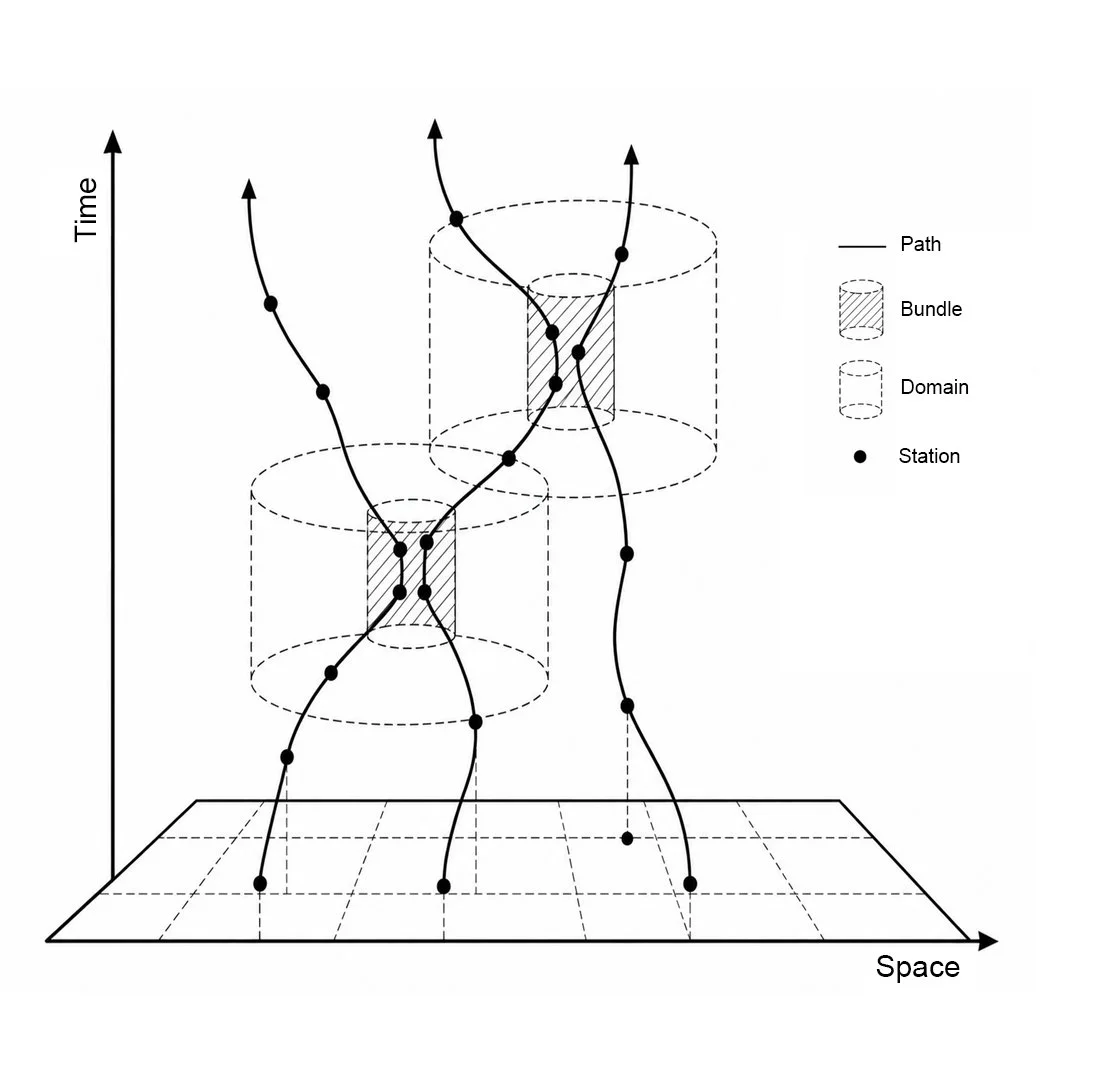
Right: Fig.1 - The Web Model of Time-Geography. After Torsten Hägerstrand; redrawn from Derek Gregory, Geographical Imaginations.
Perhaps because our relationship with places is never only spatial. A place is also made of what we attach to it: habits, expectations, memories, imagined futures. To inhabit a place is not simply to be there, but to become part of it.
A street walked together. A square where someone was expected. A stretch of sea tied to a future that, for a moment, seemed possible. A place can become familiar in a matter of days, and strange again in a matter of minutes. When someone falls out of love, it is not only the relationship that shifts. The geography built around it begins to come apart.
The genius loci, the spirit of a place, and everything attached to it, is still there. Just non accessible.
The place turns foreign.
Until, slowly, it does not.
Colour comes back. Not bright, exactly. More like pastel.
Melancholy.
Pain changes texture. It becomes softer around the edges, but also harder to name.
Melancholy is difficult to locate: an emotion, a mood, a disposition, an affect. Perhaps also a way of seeing what remains.
It gathers around traces of what is no longer there: a person, a gesture, an expectation.
What remains has “occurred only once,” and yet continues to return. For a while, it seems to take up all the space.
Then it becomes one layer among others.
A room is a room again. A street, a street. The sea, the sea.
Not innocent. Not untouched. They still carry what happened, and perhaps what we
wanted to happen. But they are no longer entirely defined by it.
And perhaps this is the moment when what was no longer home finally begins to become memory.
This, too, is part of the transition.
2 Roland Barthes, Camera Lucida: Reflections on Photography, trans. Richard Howard (New York: Hill and Wang, 1981), 4.
Words & Visuals: Maria Medushevskaya