
Please introduce yourself:
Some Place Studio Architecture works across buildings, interiors, and exhibitions for institutional and cultural clients. With a focus on social wellbeing, the studio combines conceptual rigour with thoughtful design and practical implementation. Founded by Bika Rebek in 2018, it operates from Berlin and Vienna, where Sophie Schaffer leads the Vienna projects.
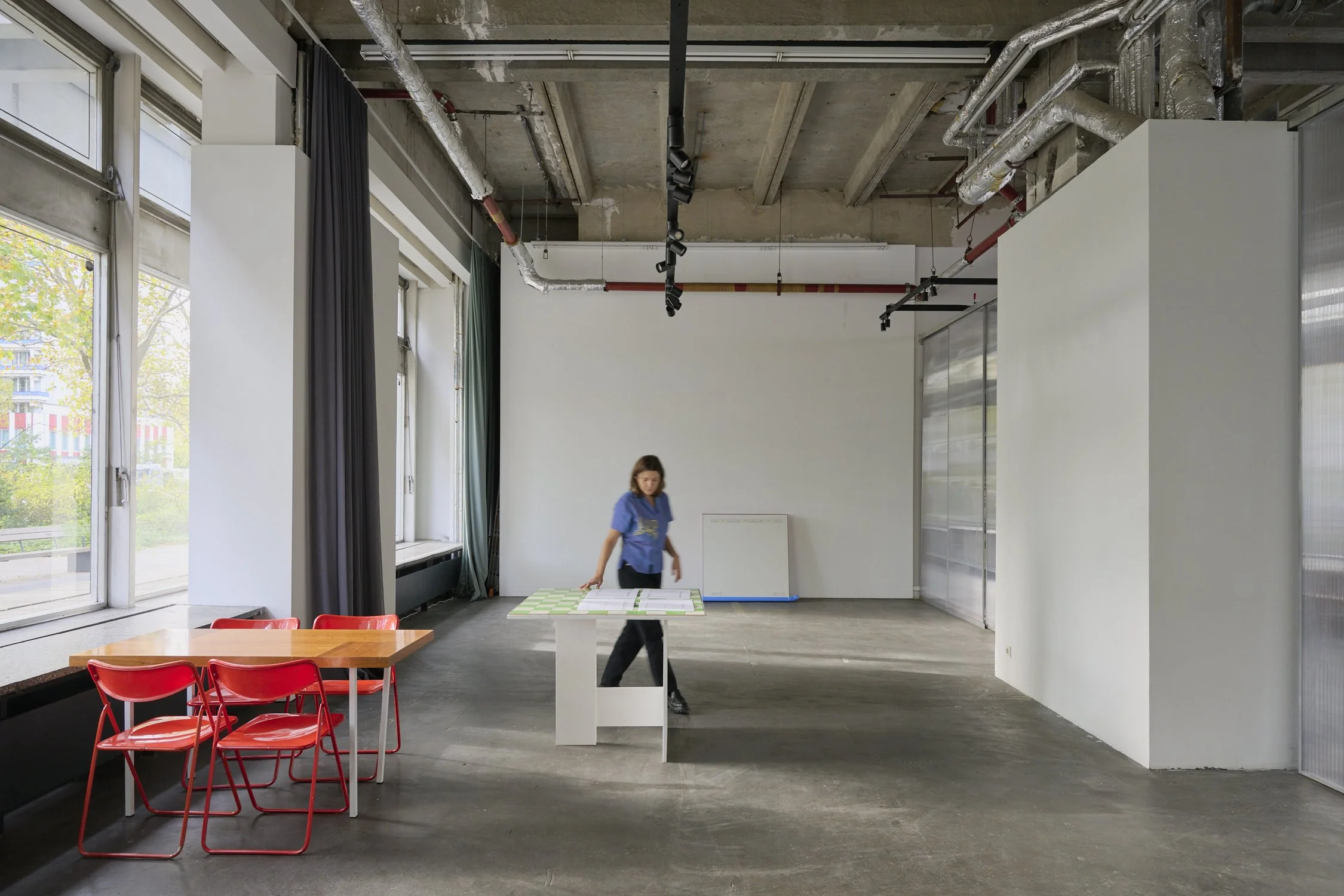
Some Place Studio Office © Kyle Knodell
PS: Sophie (Pio) Schaffer
BR: Bika Rebek
#1 What led to the founding of Some Place Studio, and what are the key ideas that shape your practice?
BR: The founding was a gradual process that started as a side hustle back in graduate school and continued on the side next to other professional work. In that sense it has developed slowly and step by step. Since I moved to Berlin 2021 I have been focusing on the practice full time.
Our values are creativity, sustainability and empathy. Creativity is at the core of what we do but also needs to constantly be cultivated - in architecture it's easy to get caught up in the rules and budgets and so we consciously foster play, curiosity and exploration. Sustainability is important to us both in how we ourselves work and in our relationship to the finite resources of the beautiful planet we call home. Finally, empathy is something we feel is often overlooked in our profession, and we want to demonstrate its value through our own way of working. At work things can go wrong so easily so focusing on empathy helps us to understand the other person we are interacting with.
#2 Biofabrique Vienna temporarily transformed a former railway hall at Vienna Nordwestbahnhof into an urban laboratory. How was the space adapted for its new function, and which design principles guided the intervention?
PS: This was the first project I led for Some Place Studio, and it was a particularly exciting challenge to work on such a unique and complex space. The Nordwestbahnhalle carries many layers of history, from the former landscapes of the Danube floodplains to its transformation into a logistics railway hall. With demolition approaching, the project became an opportunity to give this place one final chapter. With very resource efficient elements such as reused furniture, objects that are easy to dismantle and move, the main Clip that holds it all together was colour. Industrial blue referenced the hall’s past while connecting to Biofabrique’s identity, a platform for exhibitions, workshops, and conversations around material innovation. We developed a kit of parts made from blue elements that activated the space: painted columns, a tension-strip signage system, blue wheels on reused exhibition shelves, and ready-made table legs. Small interventions created a strong spatial identity without overpowering the existing architecture. The project shows how temporary spaces can be activated in a resource efficient way but at the same time giving it identity.
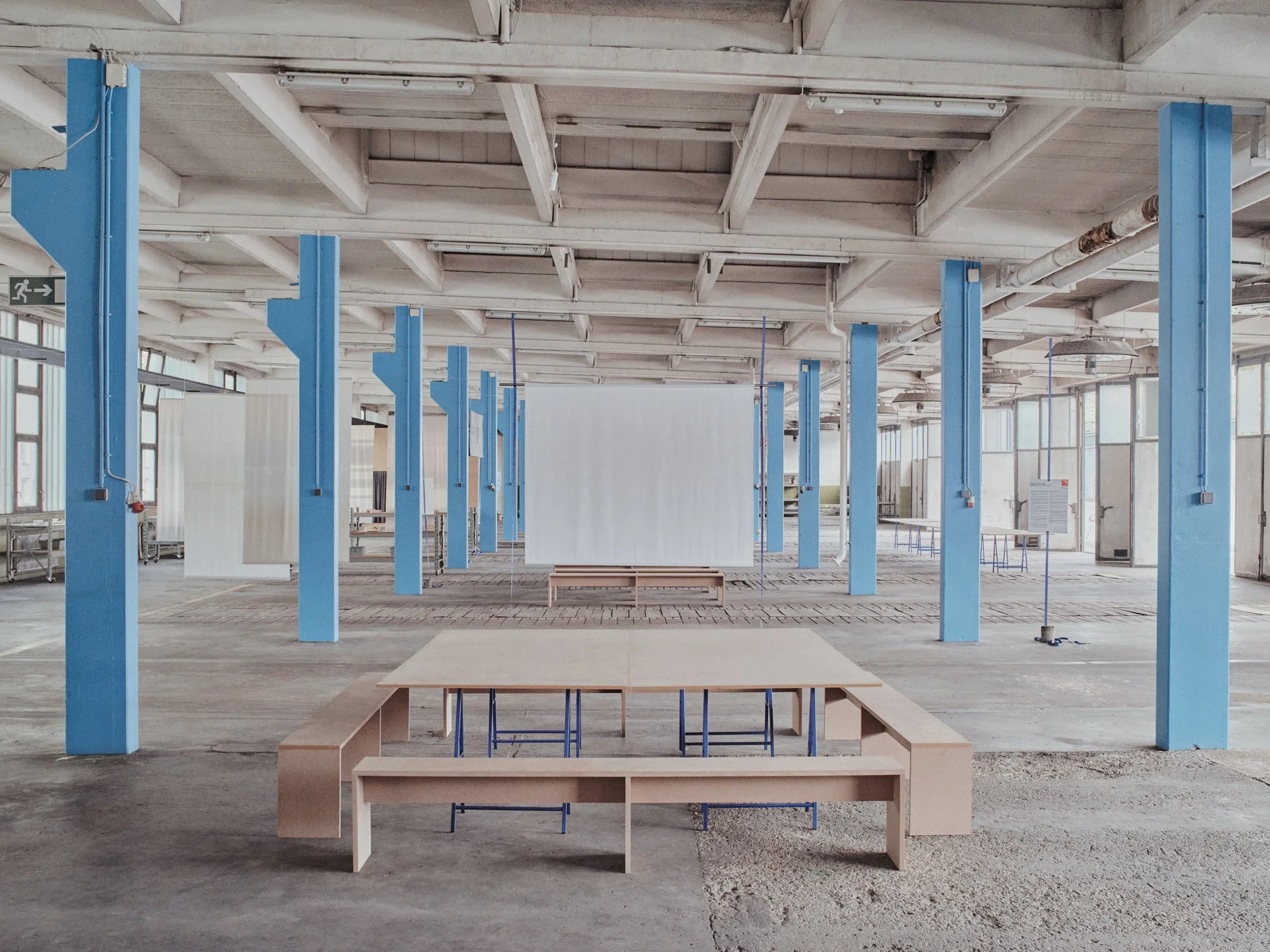
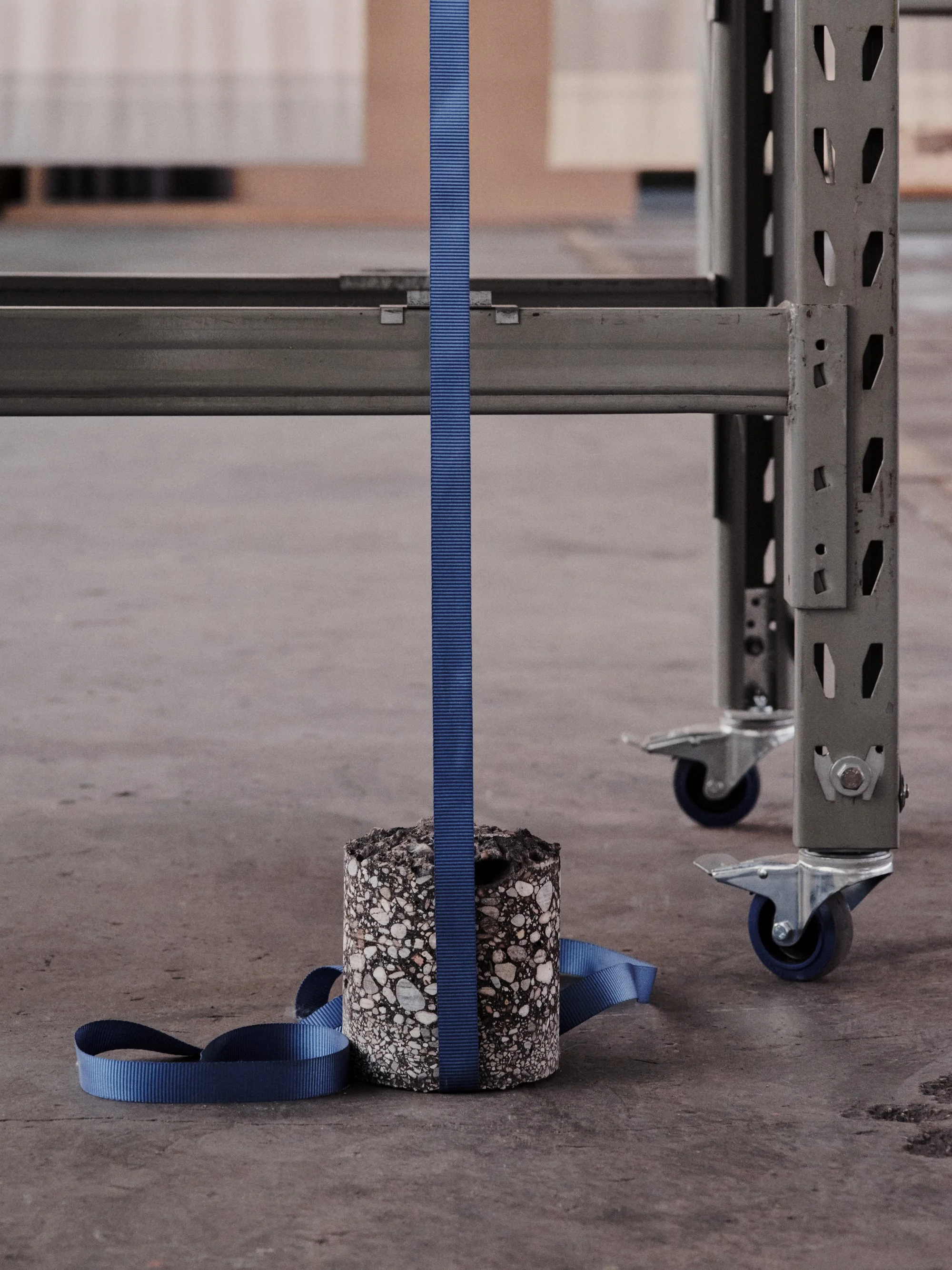
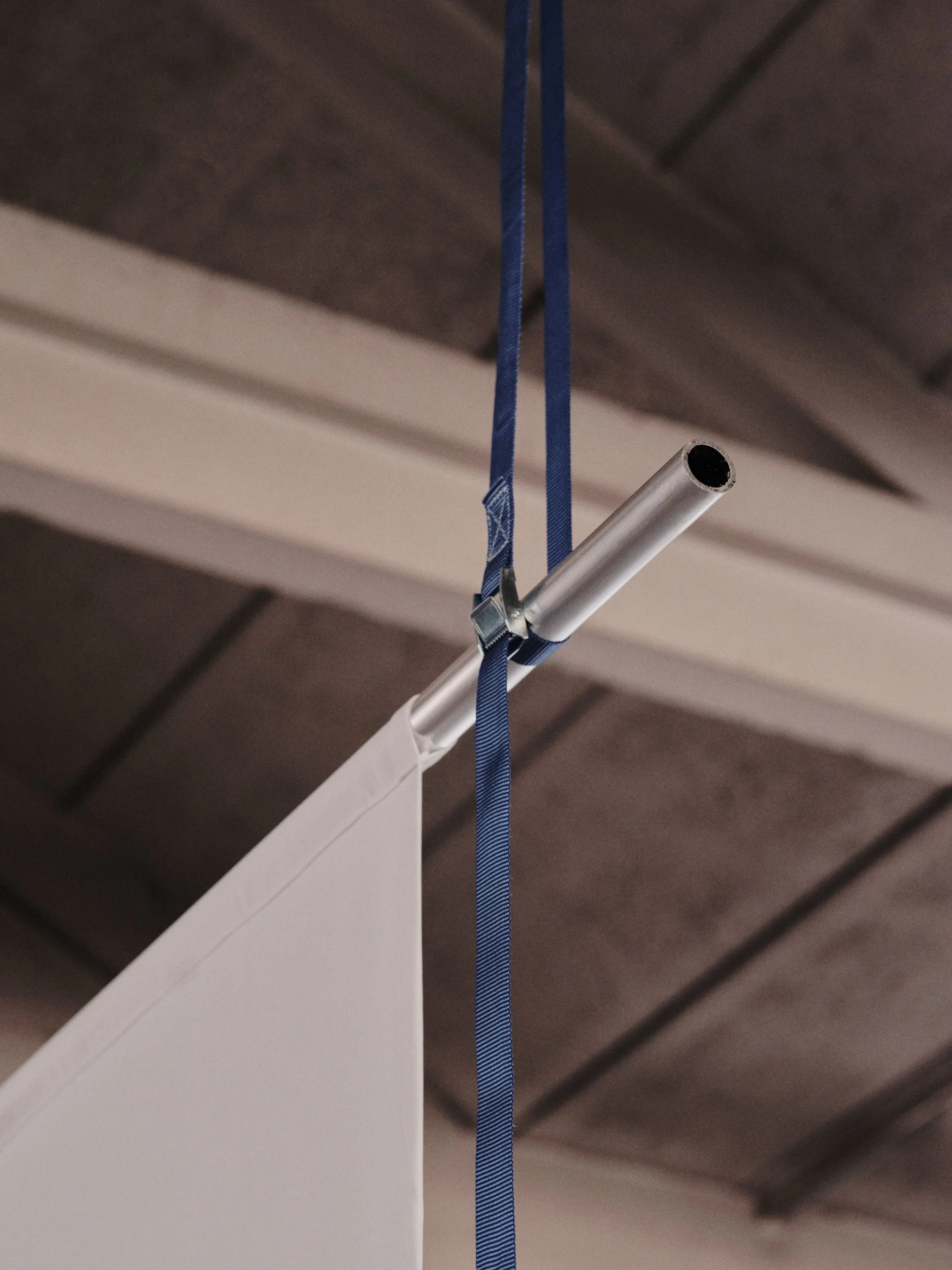
Blue Clip © Lisa Edi
#3 What are the main goals of Biofabrique Vienna's temporary use of the hall, and how are these reflected in the project's design?
Biofabrique Vienna works with a really inspiring approach to material cycles. They collect local waste streams and explore how these materials can be transformed, reused, and brought back into circulation. Their headquarters at Blue Clip reflects this hands-on mindset, it is not only a space to exhibit their previous work, but also a place to test, build, and exchange knowledge.
The space combines an exhibition, a co-working area that can transform into a workshop space, and a flexible event setup with a long communal table, lectures, and gatherings. We wanted the design to support this constant change and make the enormous hall easy to navigate and adapt.
The blue elements became the thread connecting everything together. In such a vast industrial space, they act almost like anchors, helping visitors immediately understand that this is Biofabrique’s territory while creating a clear identity. It also reflects the idea of a resource efficient and sustainable design, that Some Place Studio as well as biofabrique embodies.
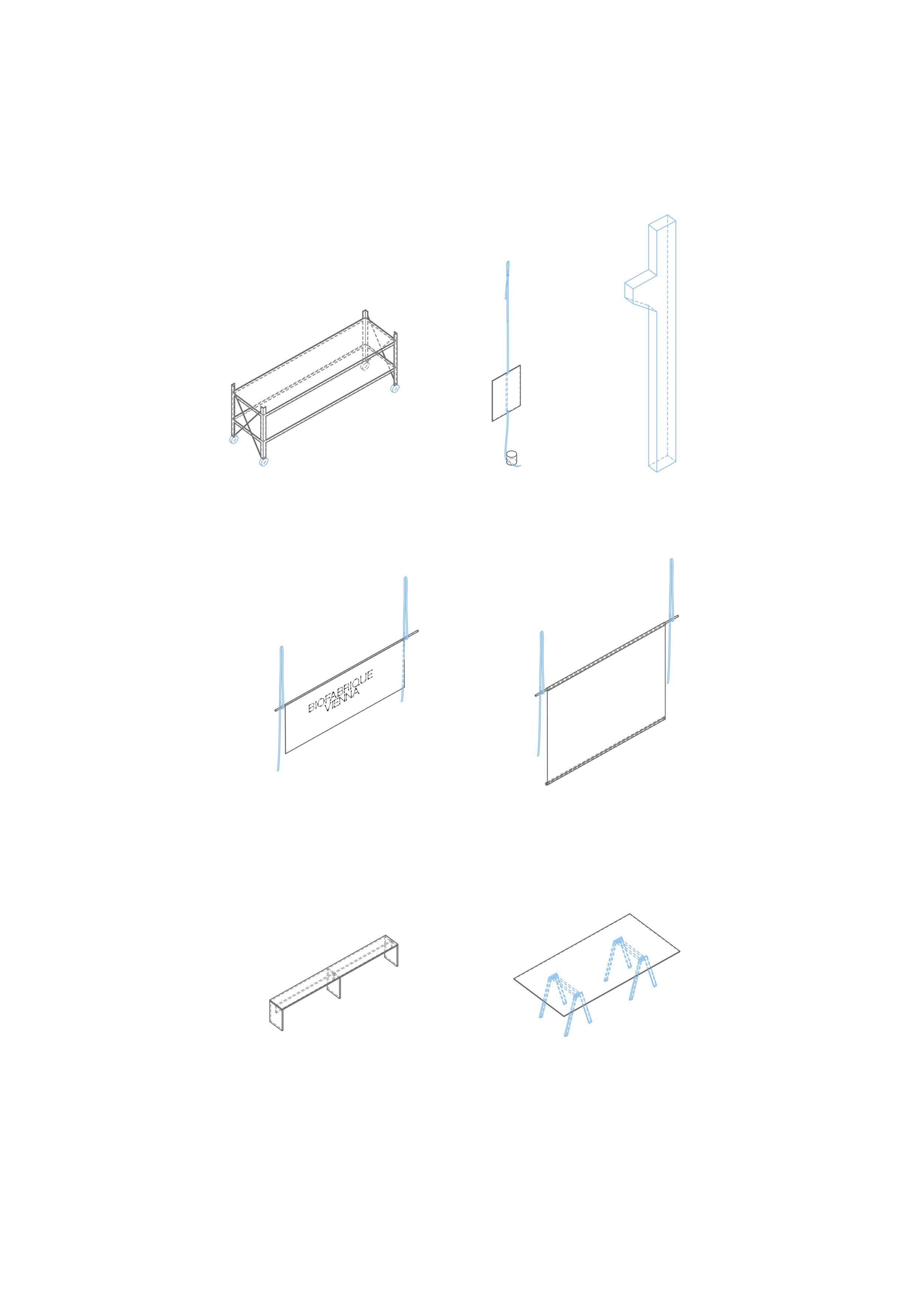
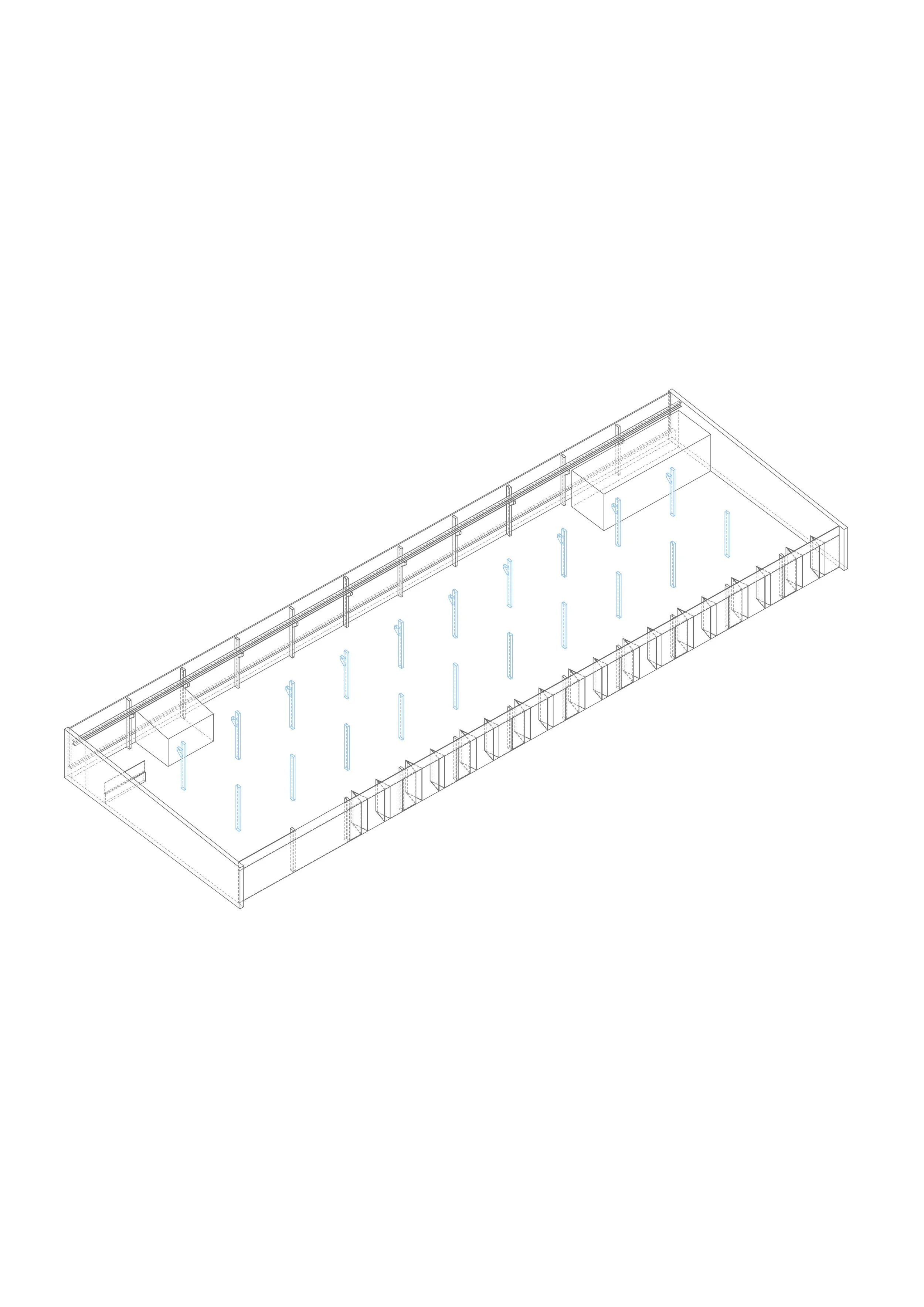
Blue Clip © Some Place Studio
#4 In the project Sonnenhaus, you carefully stage the transition between the existing building and the new interventions, as well as between the interior and the surrounding landscape. What was your intention behind creating these layered spatial experiences?
It is always important to us to deeply understand an existing building before adding anything new. We sometimes describe this as forensic work, as we study the building's materials and history. Our intention was not to compete with the existing structure, but to uncover its hidden qualities and extend its story through carefully considered new elements. Therefore we created a continuous dialogue between the existing building, the new interventions, and the surrounding landscape. Through carefully positioned openings and framed views, the landscape is revealed from different perspectives. The layered spatial experiences were designed to blur the boundaries between inside and outside, allowing the architecture to gradually merge with nature.
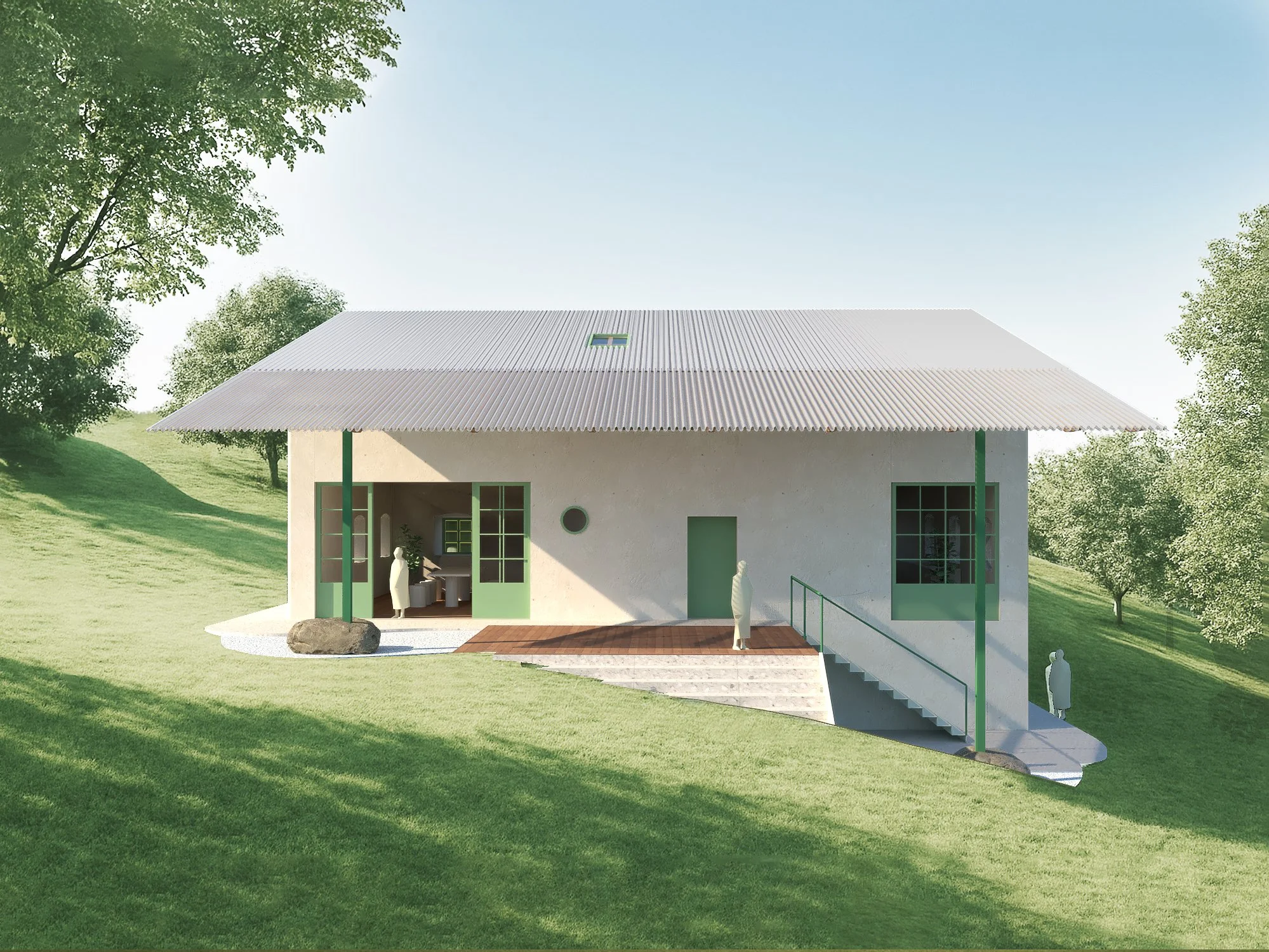
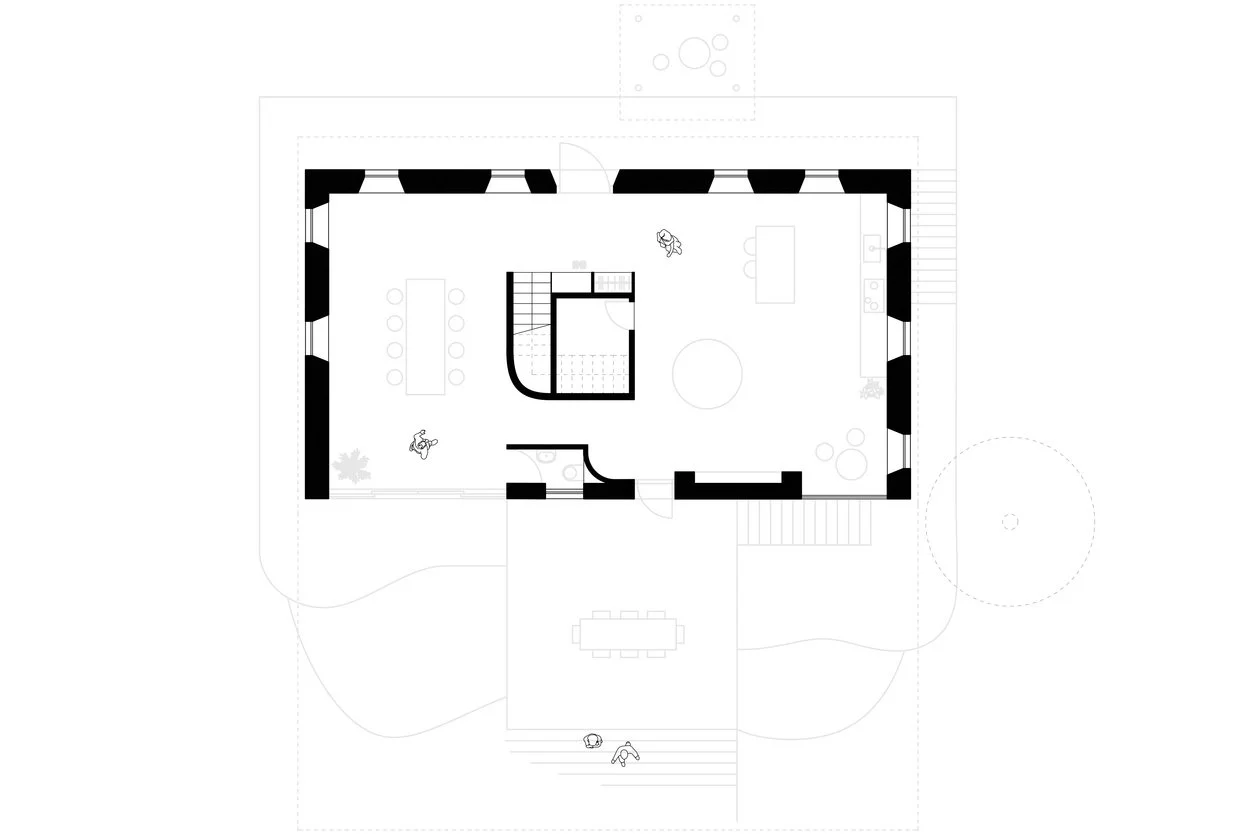
Sonnenhaus © Some Place Studio
#5 Original Feelings Yoga Studio is one of your most recognized projects. What do you think is the key design idea that makes the project stand out?
It is the collaboration with artists that made this space stand out. We worked very closely with Yasmin Bawa to realize the hempcrete fountain and reception desk and Denise Rudolf Frank contributed the painting on the screen in front of the changing area.
Also the way it combines various programs into a connected space seems to resonate really well. The initial brief listed a separate office and changing rooms, multiple yoga classrooms. Instead we folded all these things into a single, flowy space.
Finally, in Berlin, it's also just a very popular studio with great teachers, and we often meet people who have been there and just intuitively felt good. It photographs nicely but the real qualities emerge when you are there in person.
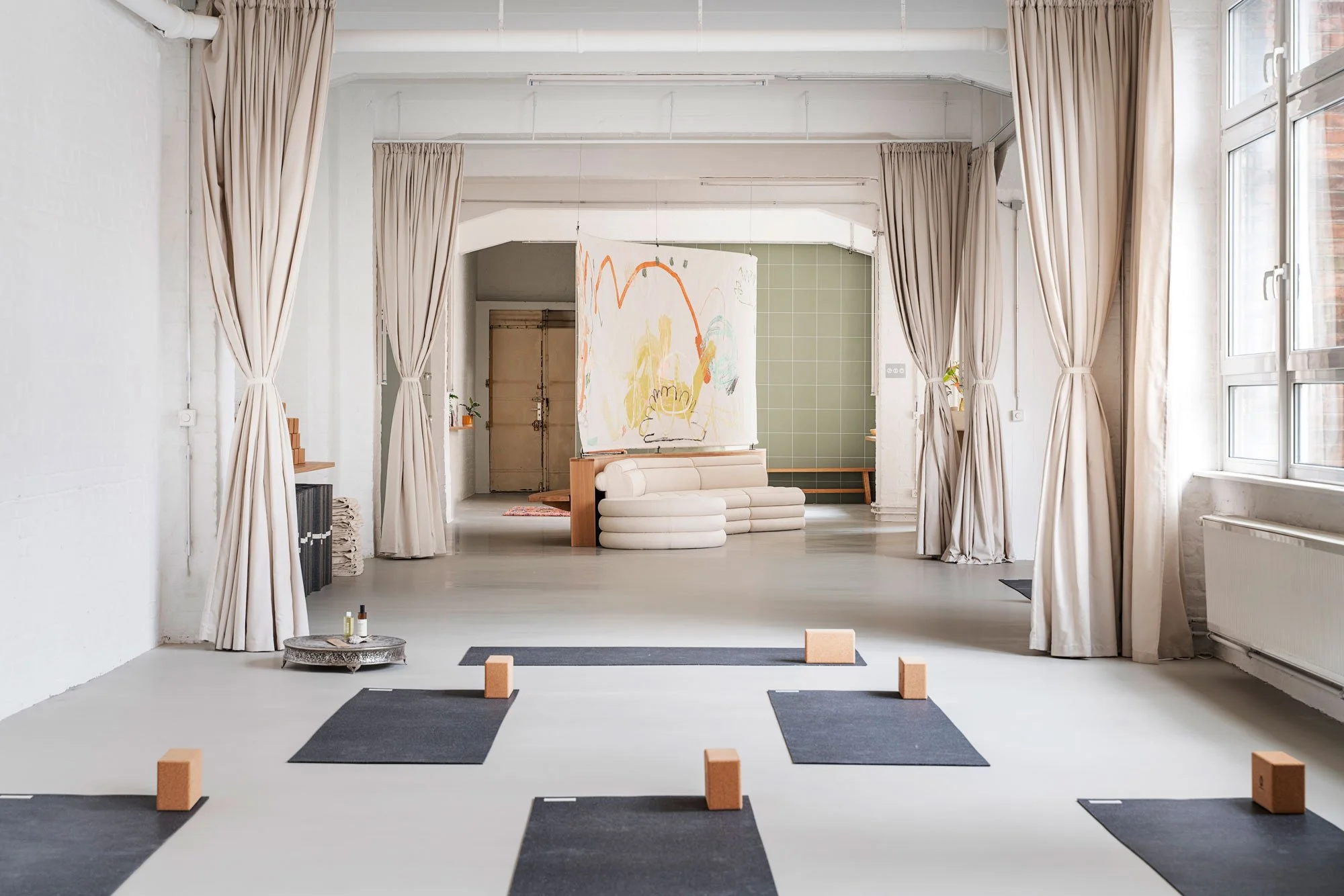
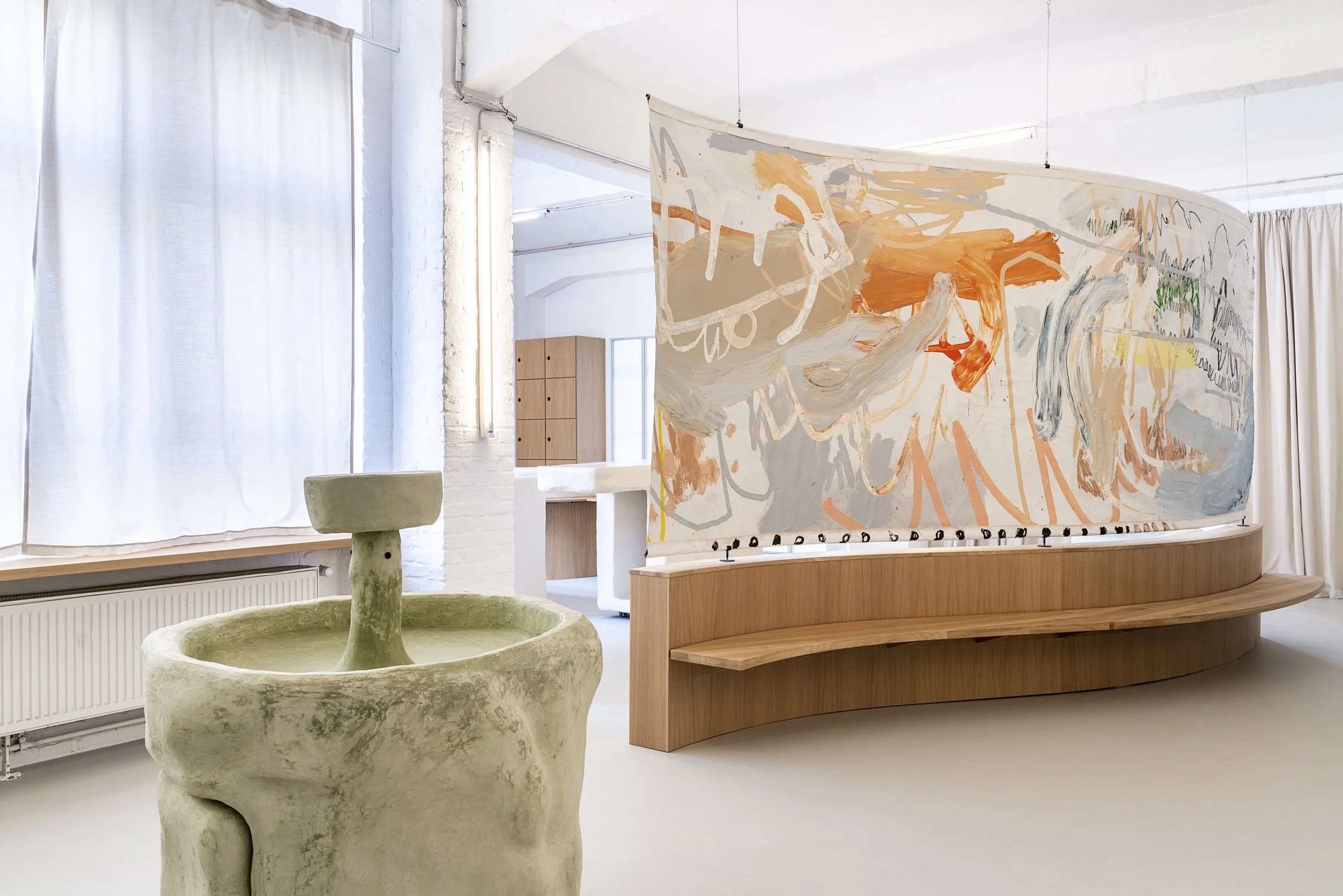
Original Feelings Yoga Studio © Linus Muellerschoen
#6 What are you currently working on?
We are currently focusing on social wellbeing in our practice and as a research topic. Watch out for some upcoming events and publications! In this area we have some very interesting projects in the pipeline that deal with the question of wellbeing not as singular optimization pursuit but as community based care.
Our second focus is cultural spaces and we are now working on a community and education space for a cultural institution that will open next year.
The third pillar is renovations. Here we are working on the conversion of a large residential villa on the Mediterranean and a music studio here in Berlin.
And finally we are editing a publication about our winning proposal for Tempelhof Airport. A pdf version can be downloaded online, but now we are working on making a beautiful book out of it.
Right now it's such a fun balance of projects!
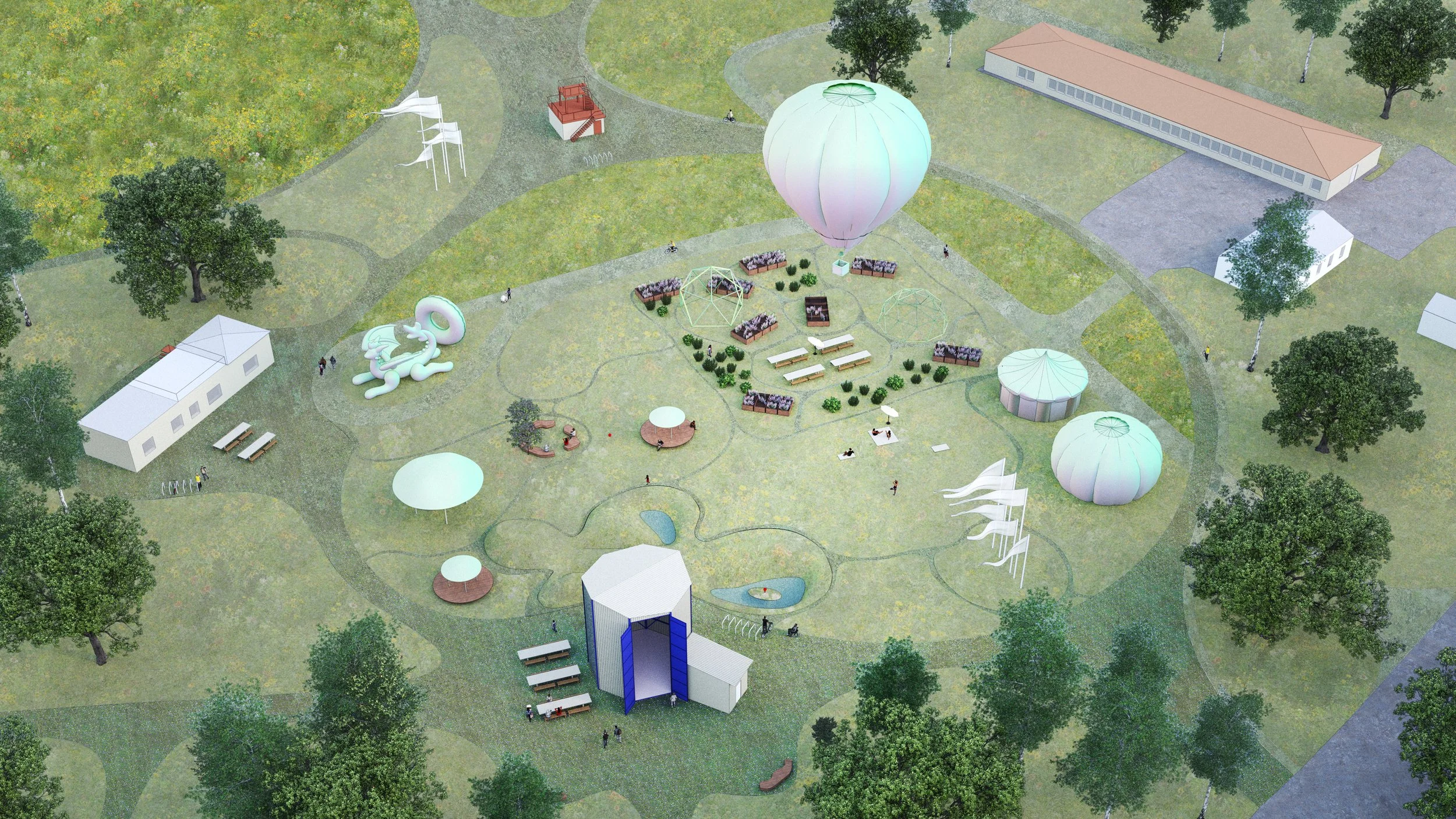
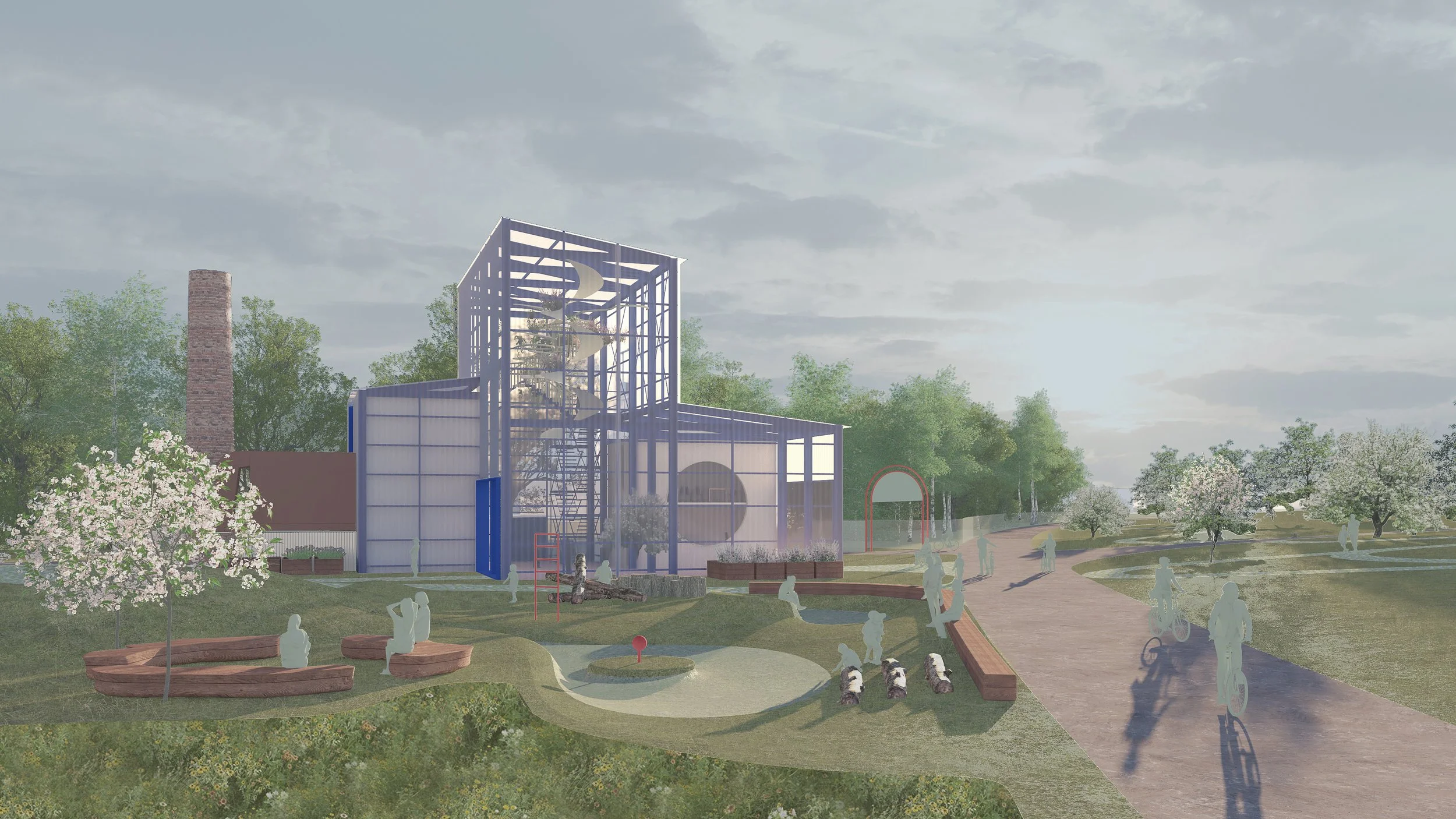
Tempelhofer Feld @ Some Place Studio
#7 How do you see the role of an architect in today's society?
BR: The role of the architect is shifting away from the egotistical subordination of global resources towards stewardship of the environment, particularly in a local way. A lot of creativity, collaboration and care is needed for this new type of work. While this focus on reuse and circular design is new in a sense, it also brings us back to traditional building techniques as well as ancestral wisdom that has been lost. This is also where AI will not replace jobs anytime soon as they are so bound up in contextual and social conditions.
PS: Architects, in an increasingly complex world, are becoming more interdisciplinary, making collaboration with different fields essential to create meaningful spaces. I find this evolution incredibly exciting. At Some Place Studio, I feel there is a genuine openness to exploring these emerging roles with the projects we make but also in the way we work.
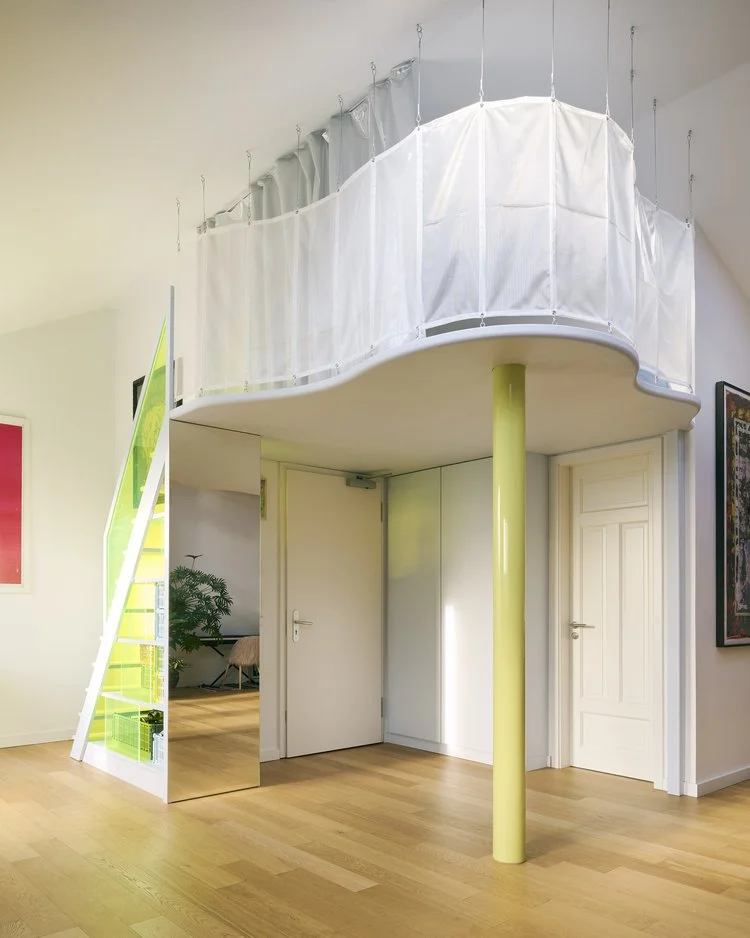
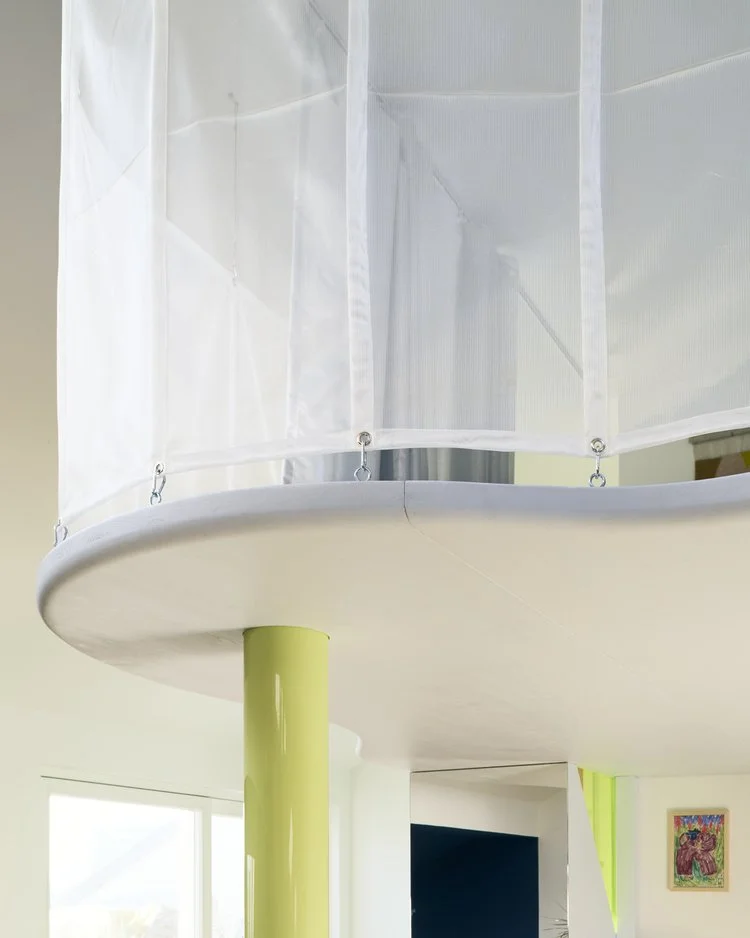
Treehouse © Kyle Knodell
#8 How does your environment influence your work?
PS: My environment influences my work constantly. I am based in Vienna, while Bika works in Berlin, and we often move between those places or even meet somewhere else. I believe that changing environments shifts perspectives, sparks new ideas, and brings fresh inspiration.
BR: I am originally from Slovenia, and have lived in Vienna, New York City and now Berlin for extensive periods of time. I find each of these places inspiring in their own way. Berlin gives me lots of space to breathe and at the same time a fabulous creative scene that I find nourishing. People come here to be what they want to be on their own terms. I feel like Some Place Studio has been able to develop a distinctive voice here and also get involved in local topics, in particular with our Tempelhof airport competition project.
In terms of our work environment we are currently in a shared space in Berlin Mitte. We are constantly tweaking our space, but also dreaming of moving to our own space at some point where we can try out even more and really make it our own.
#9 Three things that inspire you at the moment?
Interdisciplinary Collaboration
Informal Learning
Social Wellbeing
#10 What do you currently read, watch, listen to?
PS: When I work, Bika sometimes sends me a mix to listen to. I always feel that it somehow captures her mood, it's these small things that make us work well together, even from different places.
BR: I recently enjoyed reading Antifascist Architecture by my friend Daniel Jonas Roche and Andrew Santa Lucia. The book casts a critical lens at the existing architectural canon and attempts to identify new precedents. It includes some of my personal heroes like Montenegrin architect Svetlana Kana Radević or Austrian architect Margarete Schütte-Lihotzky. I am currently also really enjoying Spike Art Magazine, they host good events around Berlin and timely topics.
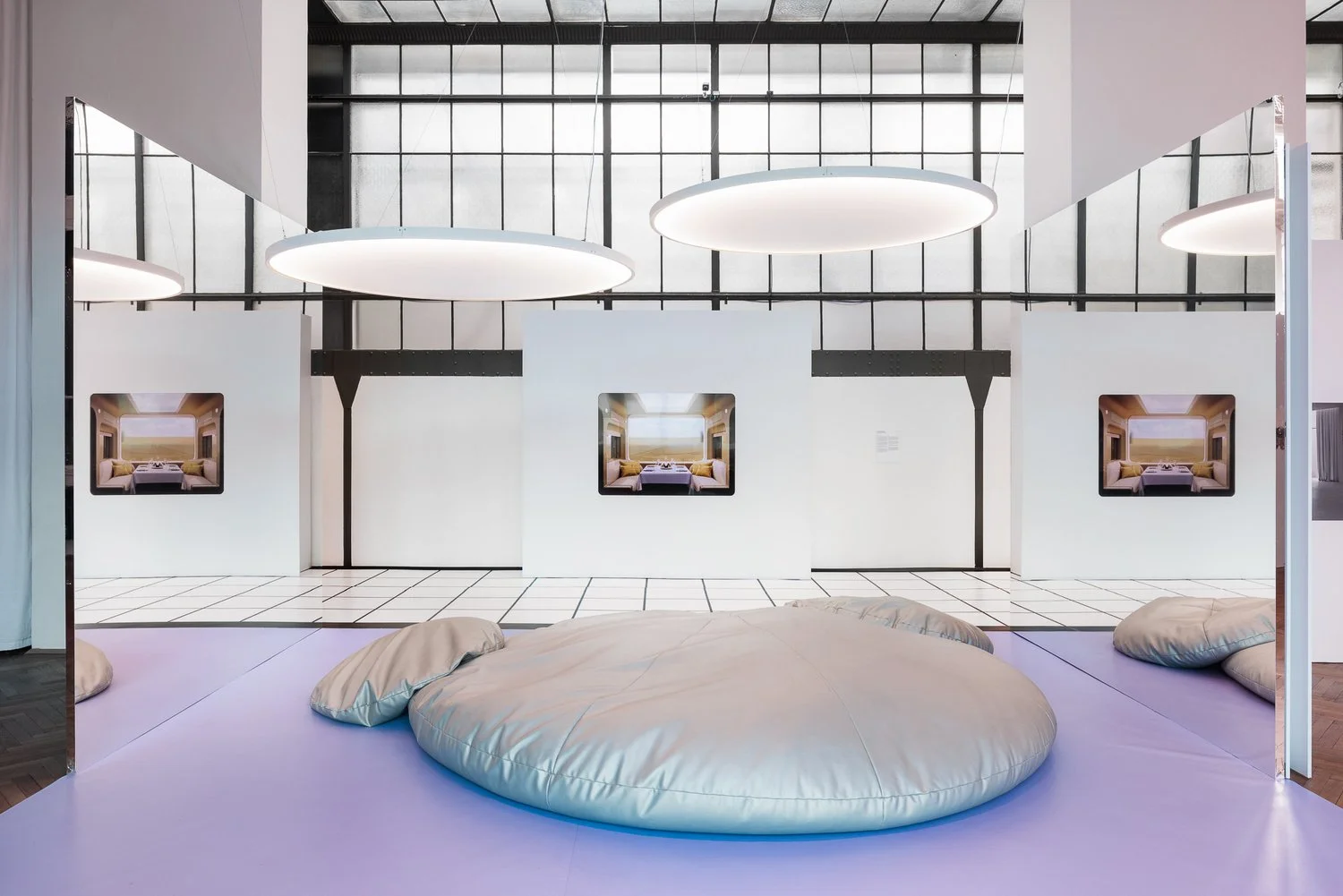
/imagine: A Journey into the New Virtual © Kunstdokumentation.com
Links
Instagram: @someplacestudio
Website: someplace.studio
Interview by Caroline Schulz