
Giovana, please introduce yourself:
I'm Giovana Matsuda, a Japanese-Brazilian architect by training, born in Pantanal and based somewhere on the train between Porto and Lisbon. My practice revolves around origami and paper at many scales, from fashion, to objects and set design, bringing the technique and the power of the handmade into every field I touch.
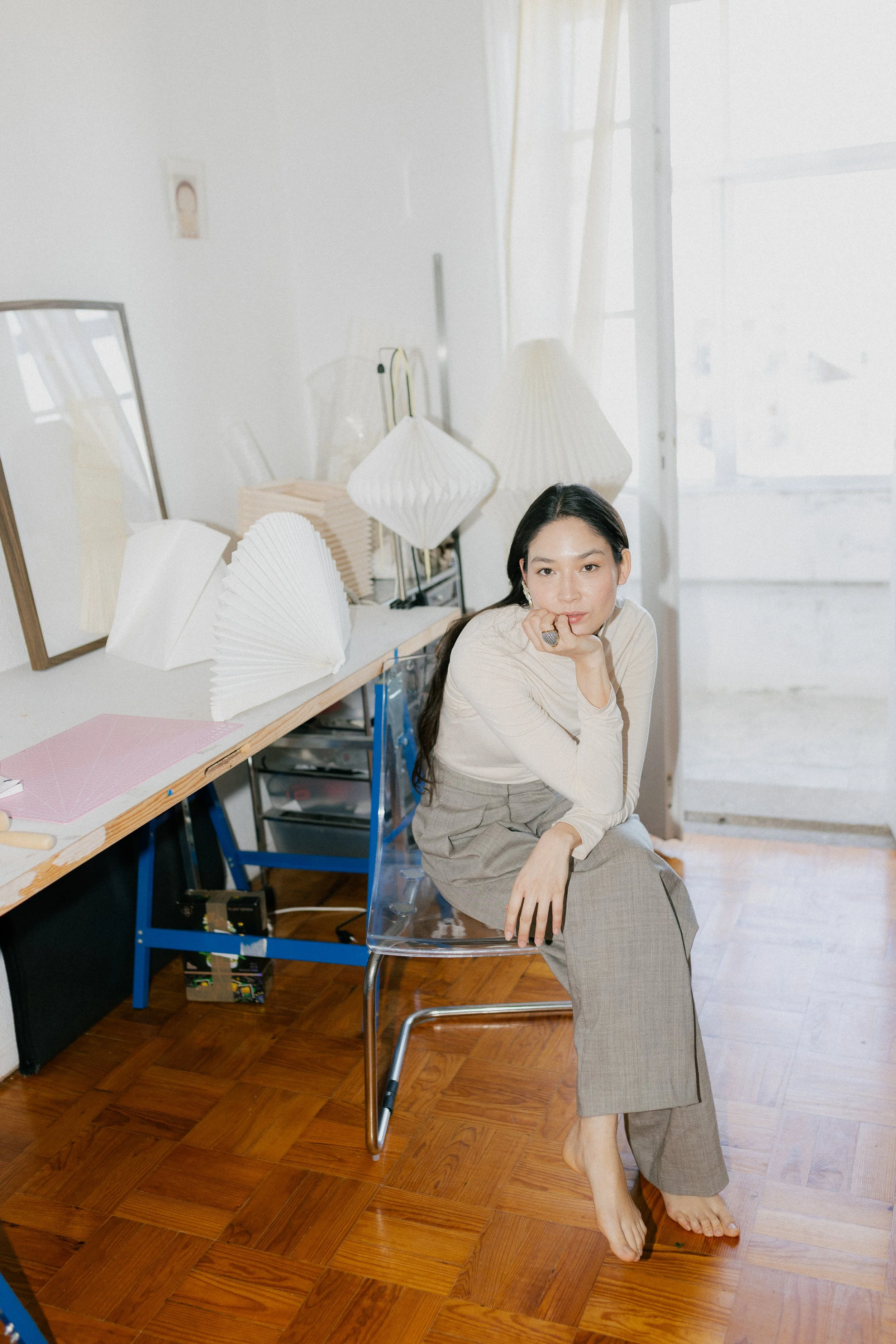
Photo © Melissa Rocha (@phmellissa) for So-le Studios, 2026.
#1 You describe yourself as an architect, model, origami artist, and designer. How do these different disciplines intersect in your practice, and how does your architectural background influence the way you approach paper structures and spatial design?
I was always good at making models, at working on the scale closest to the human body. As a model, my own body often becomes the scale for the clothes. And as much as architecture starts from the human, it can be cruel, everything takes so long, and the drawing and the building often drift far apart. At a smaller scale, that rarely happens. In origami, the model is the work, and that is enough.
#2 You have created remarkable origami work for major fashion brands like Mango. How do these collaborations usually come about, and what is your process for translating a brand's aesthetic into handcrafted paper art?
This part of my work is always closely tied to art direction. Sometimes the idea arrives already sketched, and my role is to make it possible, giving input and finding ways to get where they imagined or, even better, somewhere they never imagined. All my clients have found me through Instagram, from big brands to PR and production agencies. I think today it is the biggest portfolio an artist can have. Fashion clients usually come with a very clear code, and my job is to translate paper into that language, sometimes quite literally, to tell a story. For Mango, we built an entire set design around origami. We developed a series of folded shapes from the cutting pattern of a trench coat, and folded origami with the trench coat itself. It was beautiful.
Video: © Mango, © Gerard Patriz
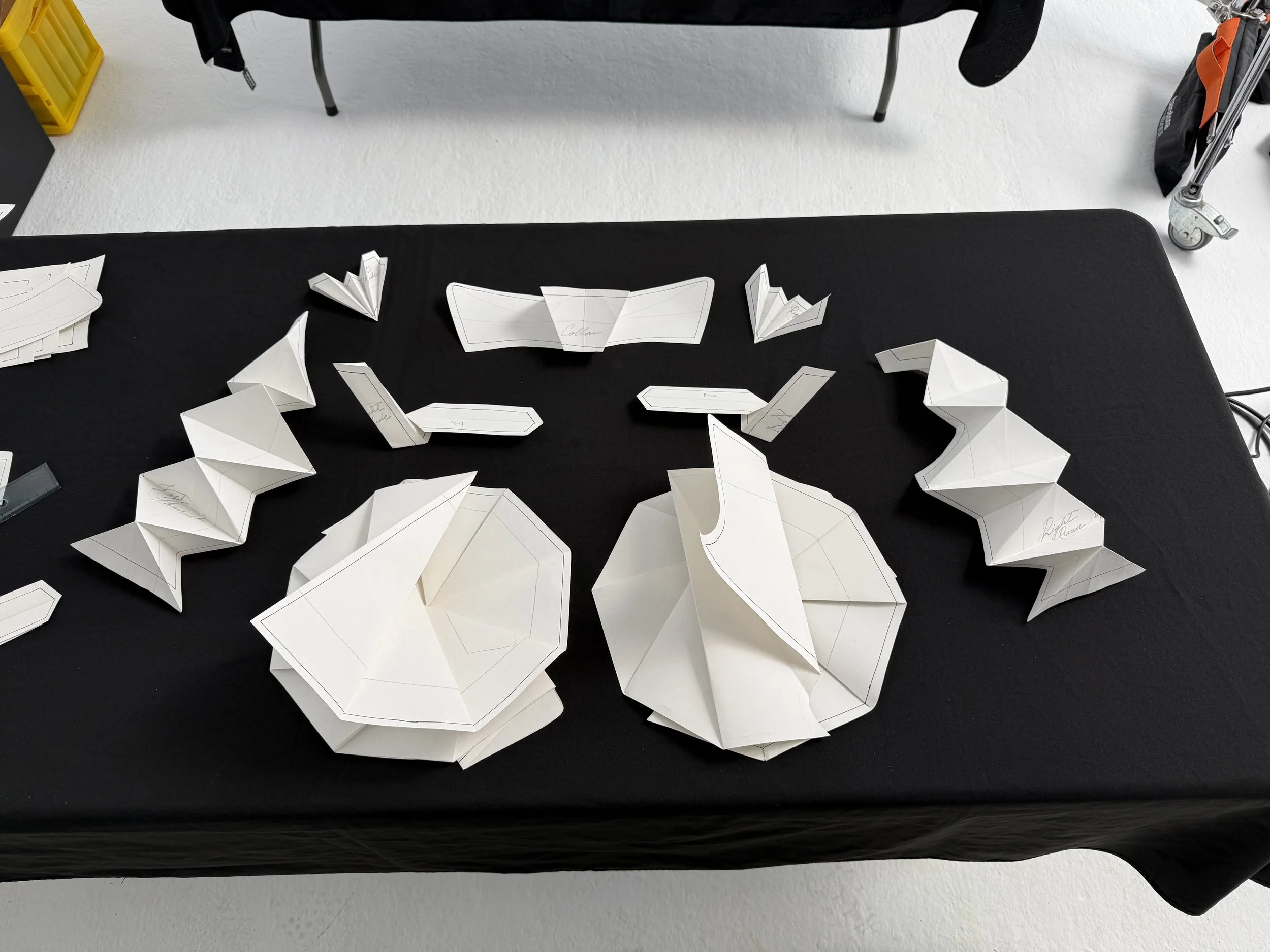
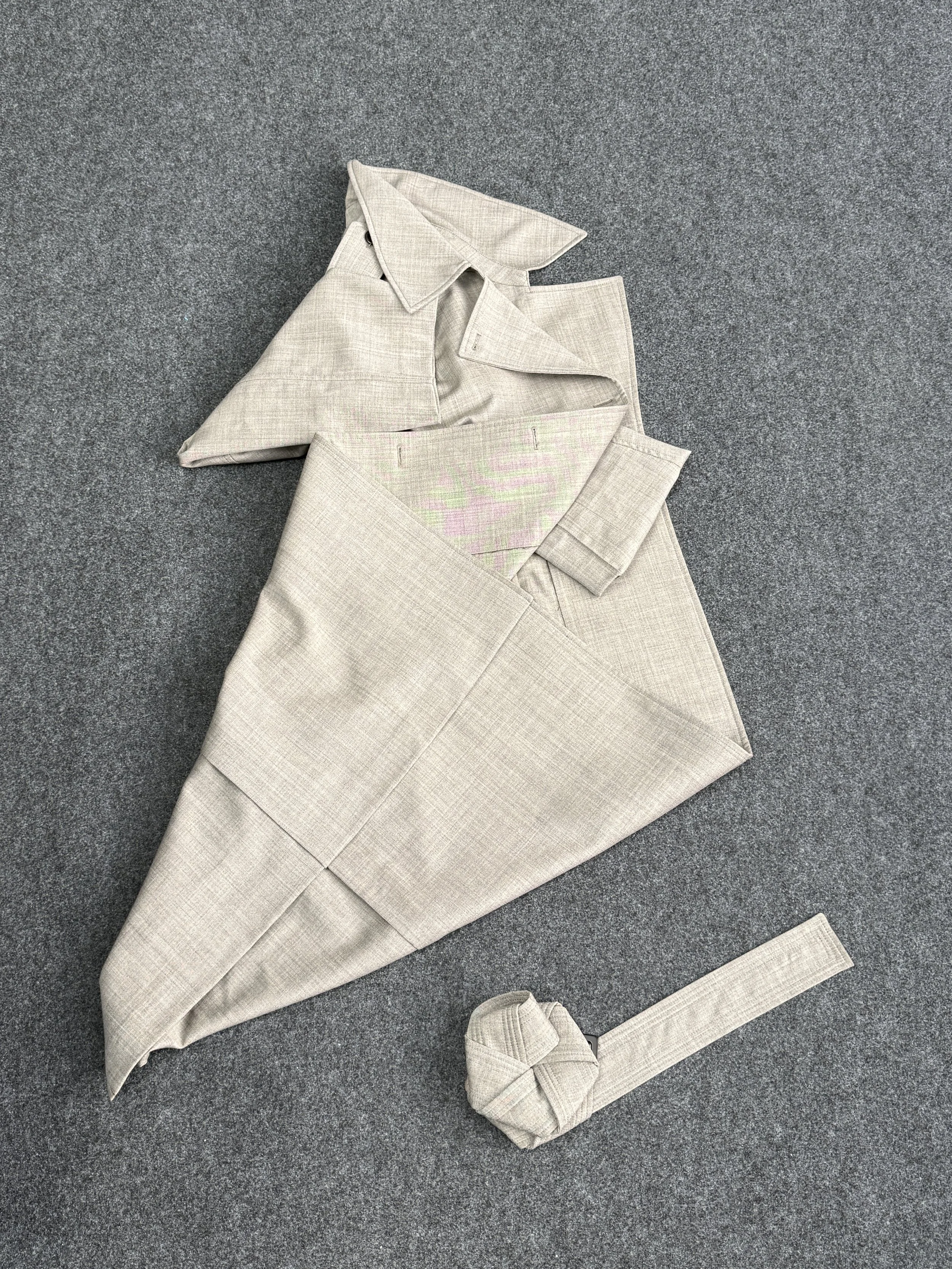
Left: Trench Coat Pattern, 2026. Folded shapes developed from the cutting pattern of a trench coat, Mango. Right: Trench coat folding for Mango, 2026.
#3 A big part of your work involves producing content on demand. How do you balance the slow, precise nature of origami with the fast-paced demands of fashion content creation?
I would love to make more stop-motion. It is the slowest way to produce the fastest format! But I also feel that slowness is part of the content. People want to watch the process, only extremely sped up, which to me is surreal, and the viewer stays glued to the screen. I like the idea of letting the material lead, almost like a conversation. In origami this is literal. Paper has memory and resistance, and it decides with me how far it can go. And although paper is now such an ordinary thing, it is an incredible material. Because it is both rich and ordinary, my first models are quick and precise, so I can test before I even think. Maybe that’s the balance.
#4 You have noticed a growing demand for handcrafted work right as AI is on the rise. Why do you think brands are seeking out tangible, human-made art at this specific moment?
I think brands are increasingly looking for a kind of proof of work that only handmade things carry, a silent authorship that doesn’t exist in a prompt. Walter Benjamin once wrote that reproduction takes away a work’s aura. I think we have gone even further. We are no longer only reproducing, we are generating things that never had an original, and that has given the handmade even more soul. When everything can be generated, proof that someone was actually there becomes rare. People recognise it in a handmade object, even if they can’t explain it. And origami also comes from a very human place, the gesture of folding something to give to someone. A brand that chooses that is choosing to give something too.
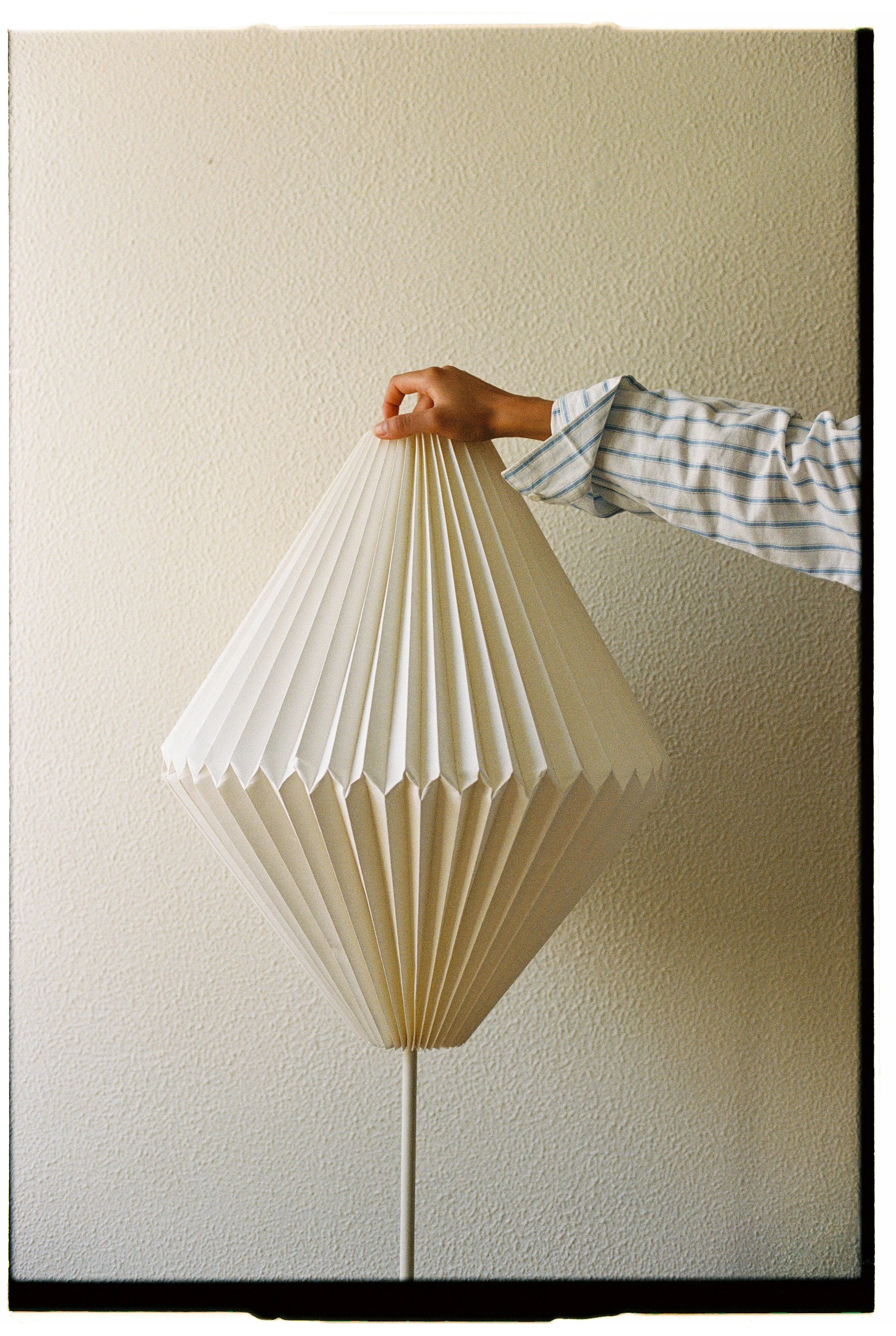
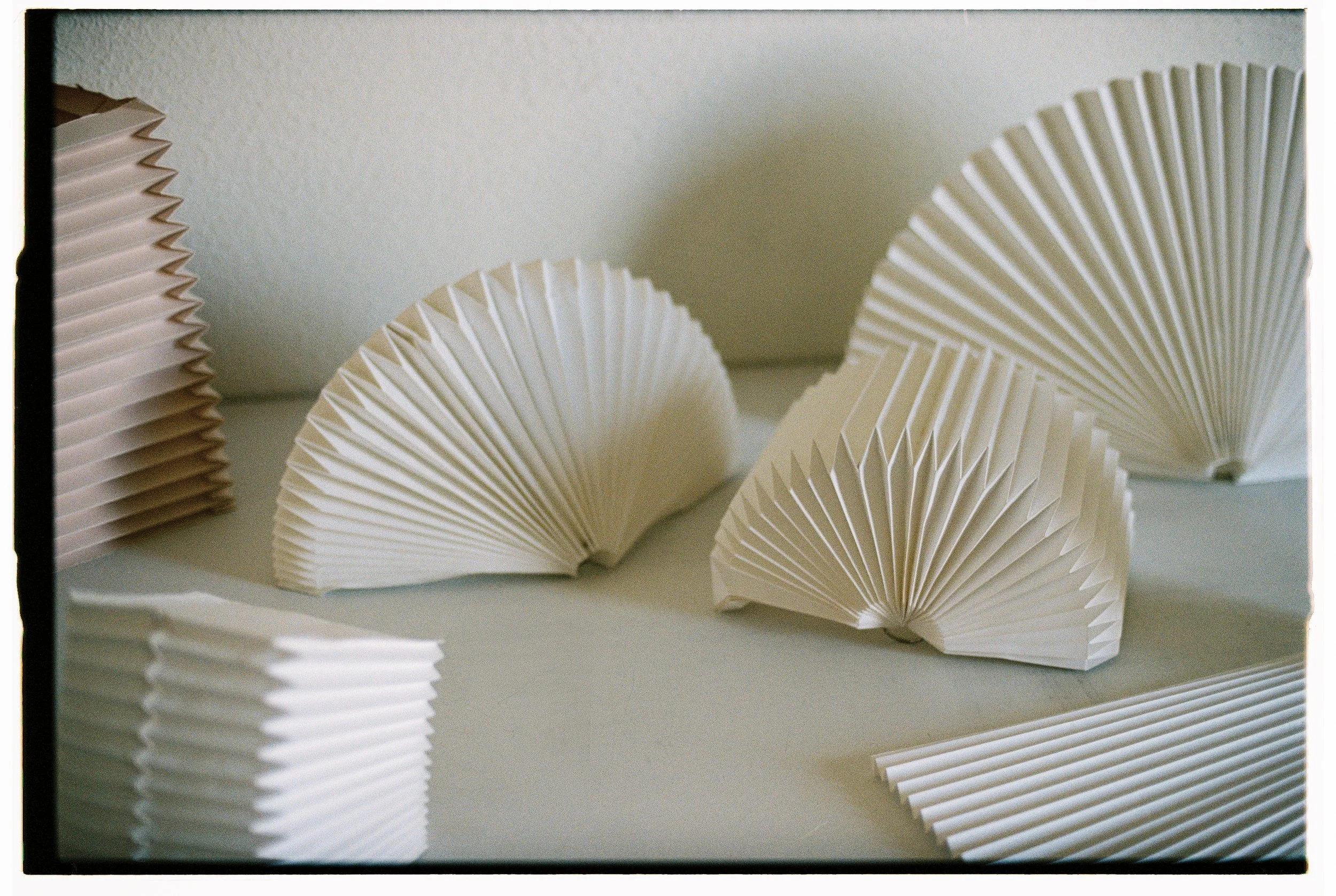
Photos © Julia Amaral (@juliapamaral) for Nayu, 2025.
#5 How do you personally navigate the tension between the handmade and the AI generated? Do you see AI purely as a contrast to tactile craft, or is there a space where they might coexist?
For me, they already coexist. I’m not a purist at all. I use a lot of AI in my process, mostly before the fold, and to present ideas to clients. I see it as a hard skill that already cuts across everyone’s work, and will do so more and more. It also gives me back time for what matters, which is folding. But I don’t think a prompt can compete with a centuries-old practice like origami. An origami folding itself on your screen can be impressive, but never as surprising as the preciousness of something someone made with their hands.
#6 Looking ahead, where do you see your architectural background taking your future creative work, and what kinds of projects would you love to explore next?
I think the natural direction is scale. I loved developing a series of lamps with my dear friend Linnea Ek Blaehr, a process that gave us beautiful results, which we hope you’ll be able to see next year. But more and more I see my practice moving beyond the object, towards set design and entire spaces made of paper that make people laugh. I like it when my work makes people laugh! My dream clients would be Hermès or Rimowa, houses where craft is the language itself, from the object to the space around it. I’d also like to expand my practice through workshops. I don’t know yet exactly what shape it will take, but I’m drawn to the sense of community that forms around a table of people folding together.
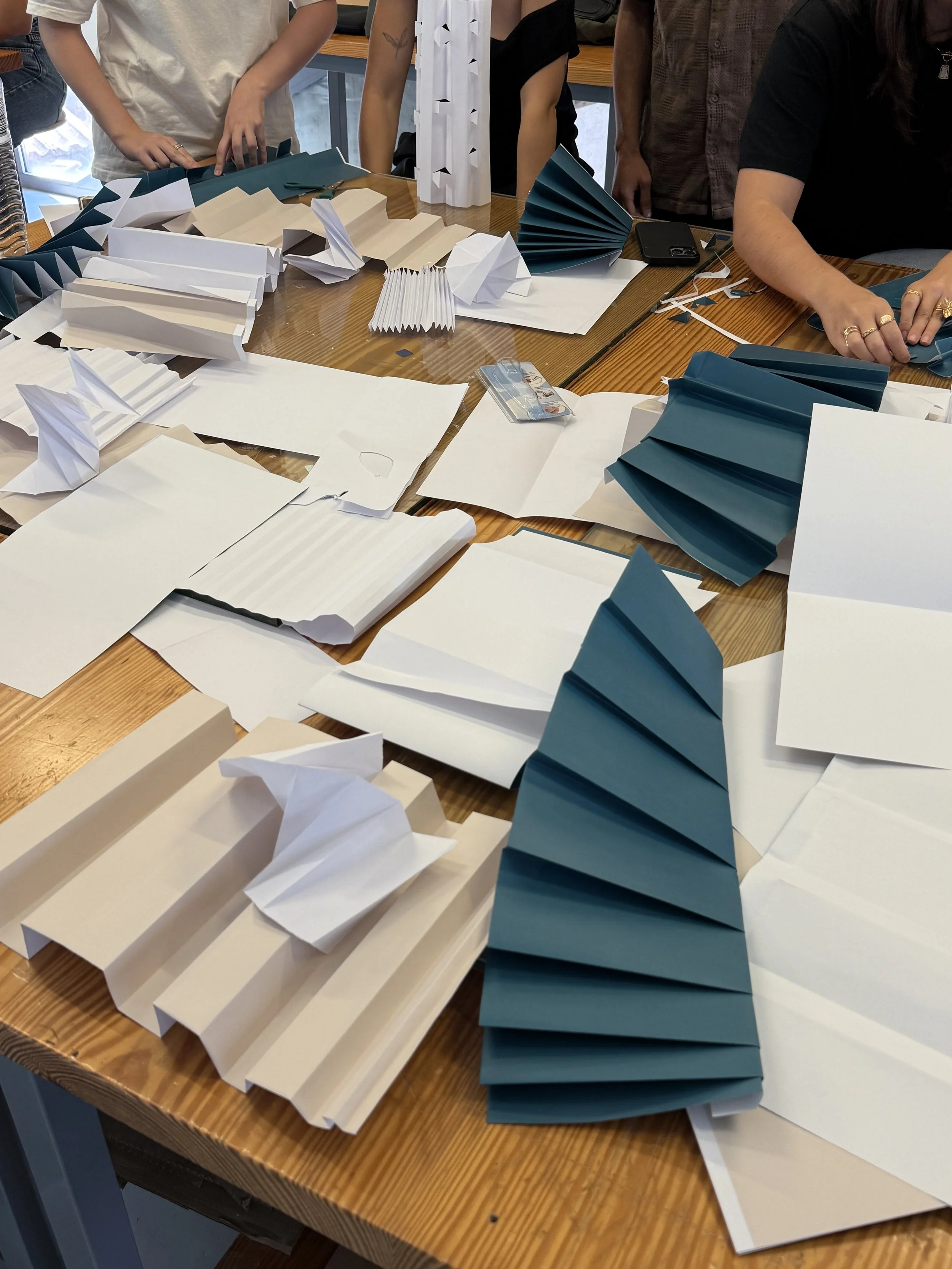
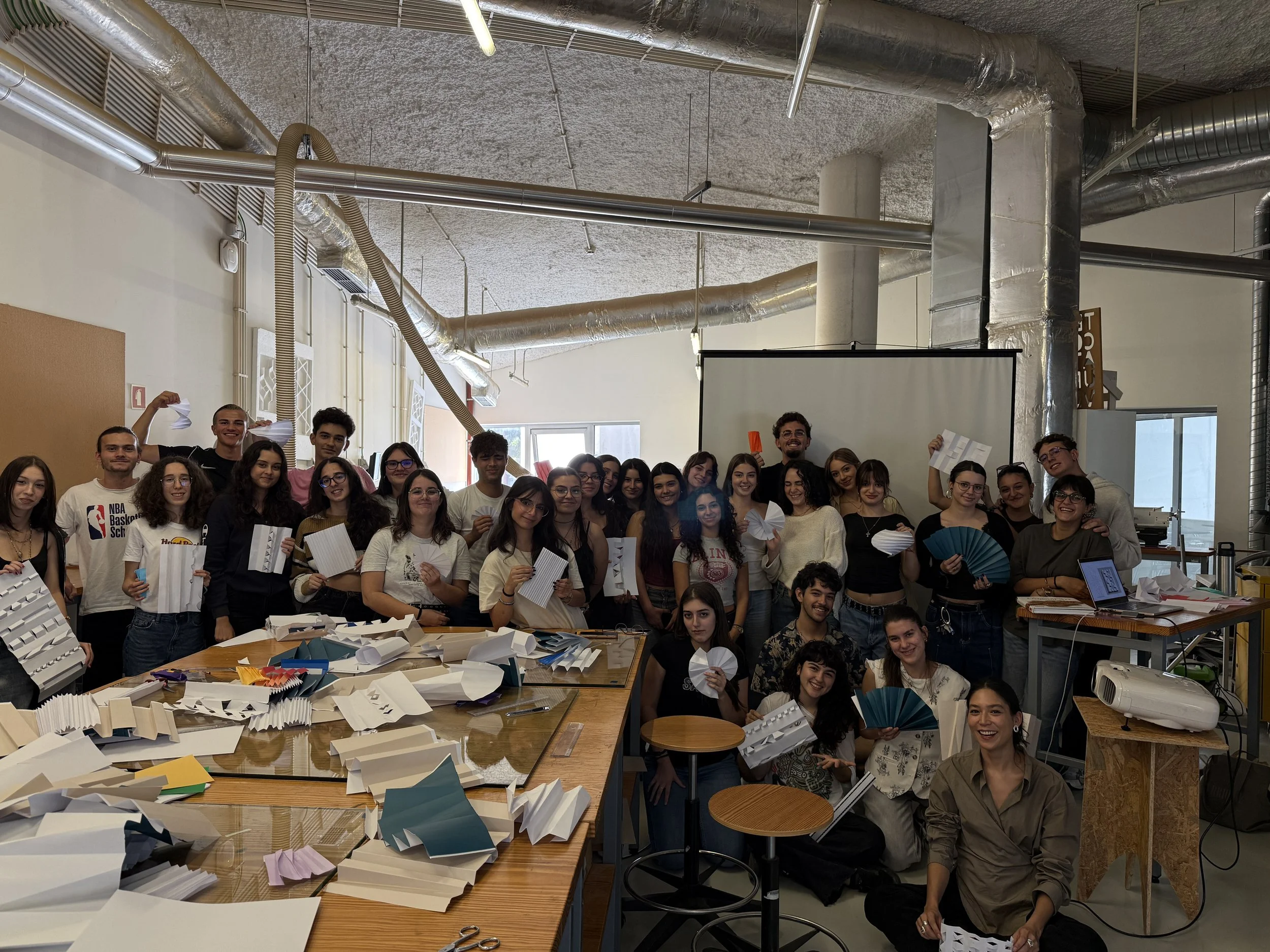
Possibilities in Paper, workshop for first-year Industrial Design students, Instituto de Design de Guimarães (IDEGUI), University of Minho, 2025.
#7 How do you see the role of an architect in today's society?
A problem maker, but also the one who solves other people’s problems. Building is always heavy. It consumes a lot and it stays for a very long time. I hope we find more solutions to the problems that already exist than new problems to solve. And maybe part of the answer lies in learning to build in a lighter and more temporary way, like paper.
#8 How does your environment influence your work?
I get moody in winter, so I go back to Brazil to live summer on a loop. My environment is a kind of thermometer for my work. I need a space where I can fold properly, with good light and a large table, but most of all I need silence to fold.
#9 Three things that inspire you at the moment?
Persimmon season, Porto in autumn, deep foggy days.
#10 What do you currently read, watch, listen to?
Reading: On Women by Susan Sontag. Watching: Interview with the Vampire, the series. Listening to: Popstar, Tinashe’s new album.
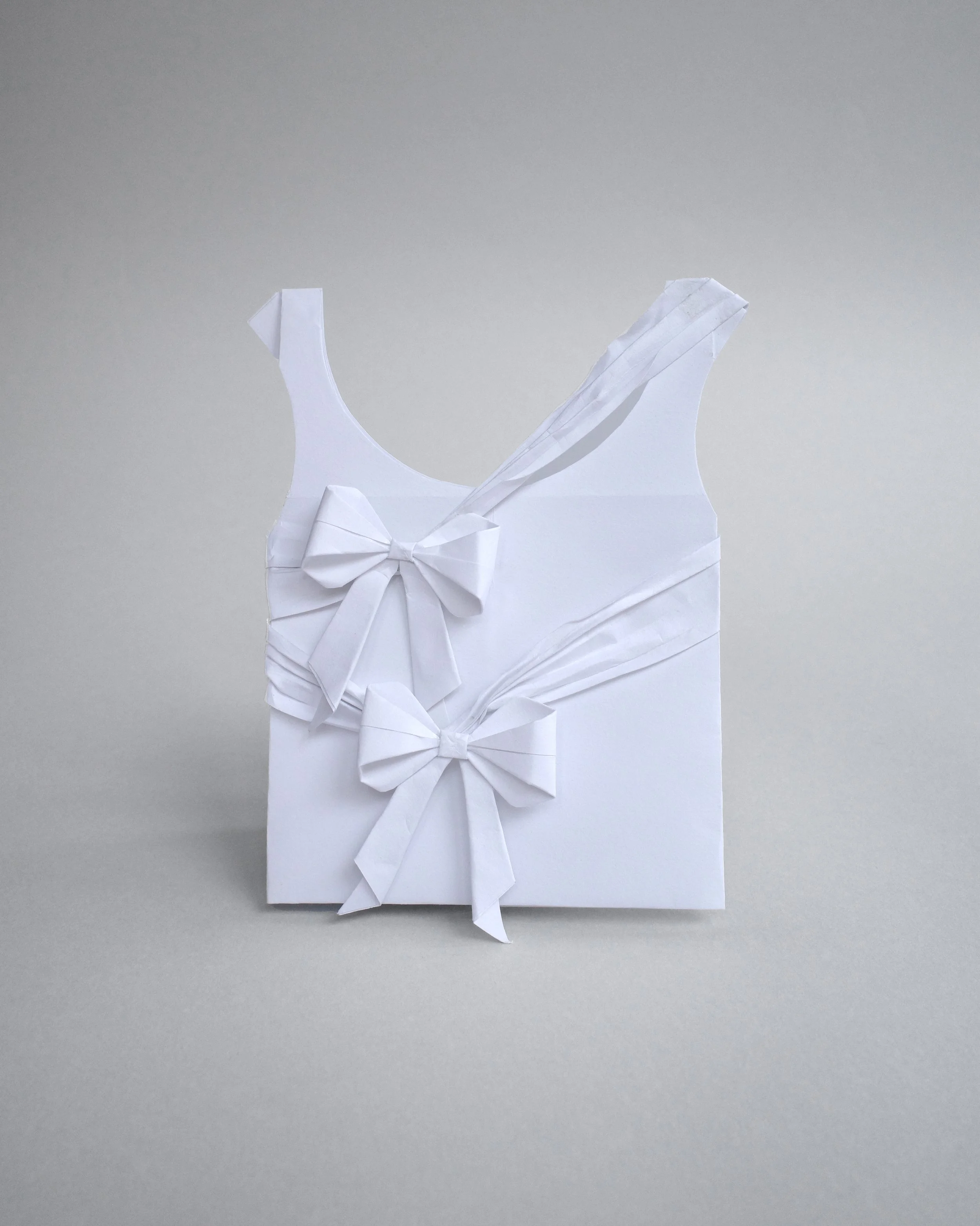
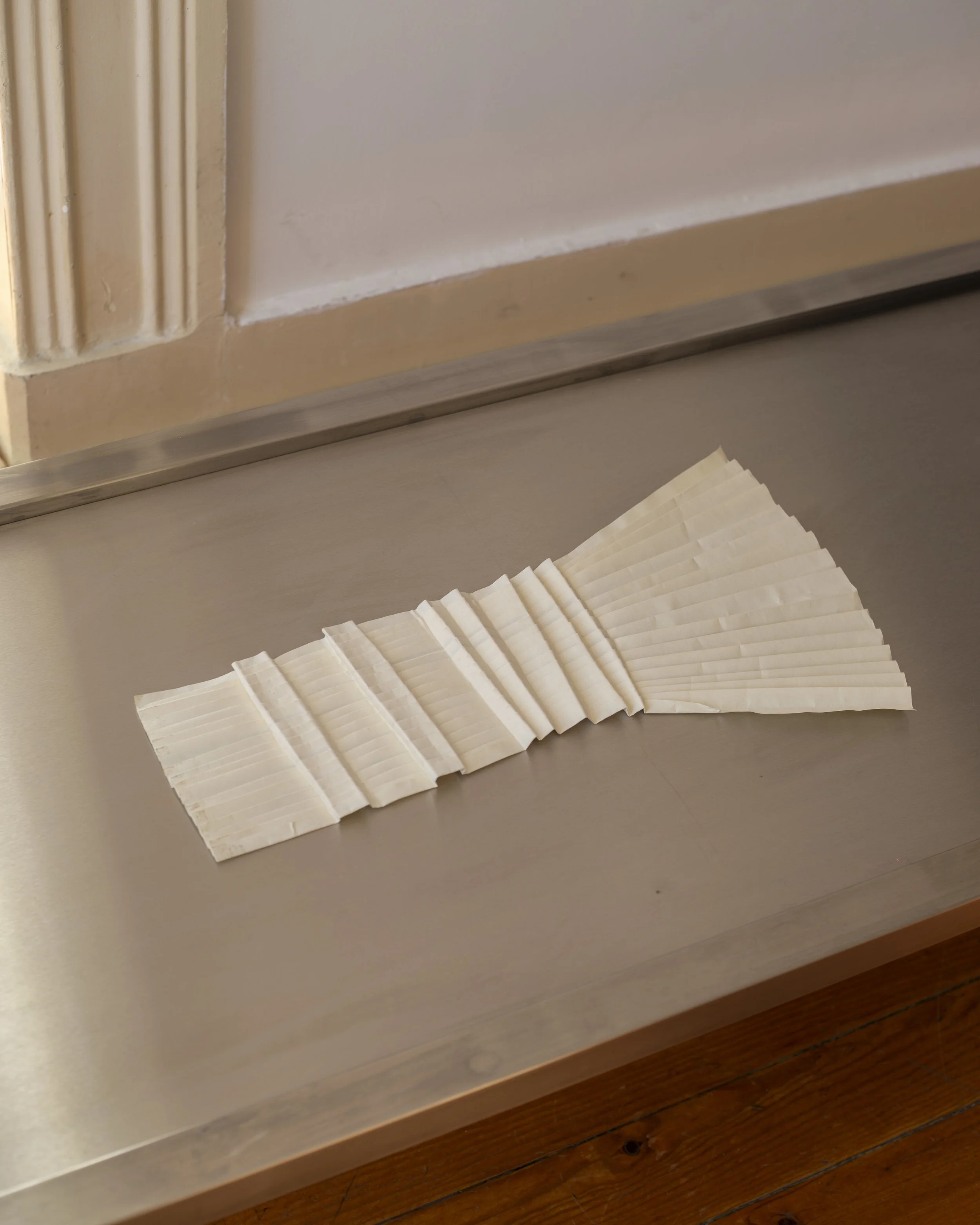
Left: Paper replica of a Gimaguas top, made for the brand's London pop-up content, 2026. Right: Folded piece exhibited at ModaLisboa Fashion House, Lisbon, 2025. Photo © Luis Gala (@galagalinha).
Links
Instagram: @giovanamatsuda
Interview by Caroline Schulz