
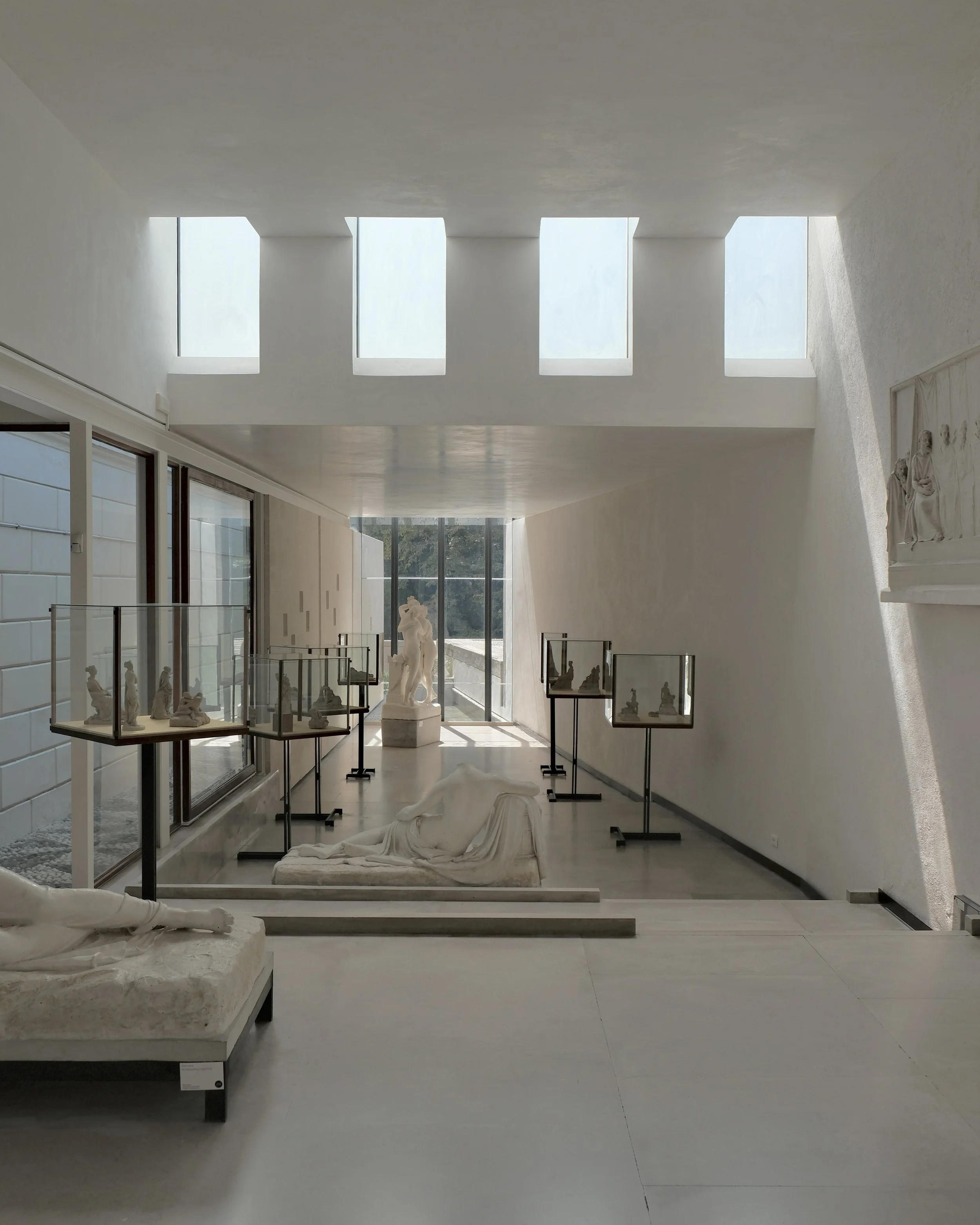
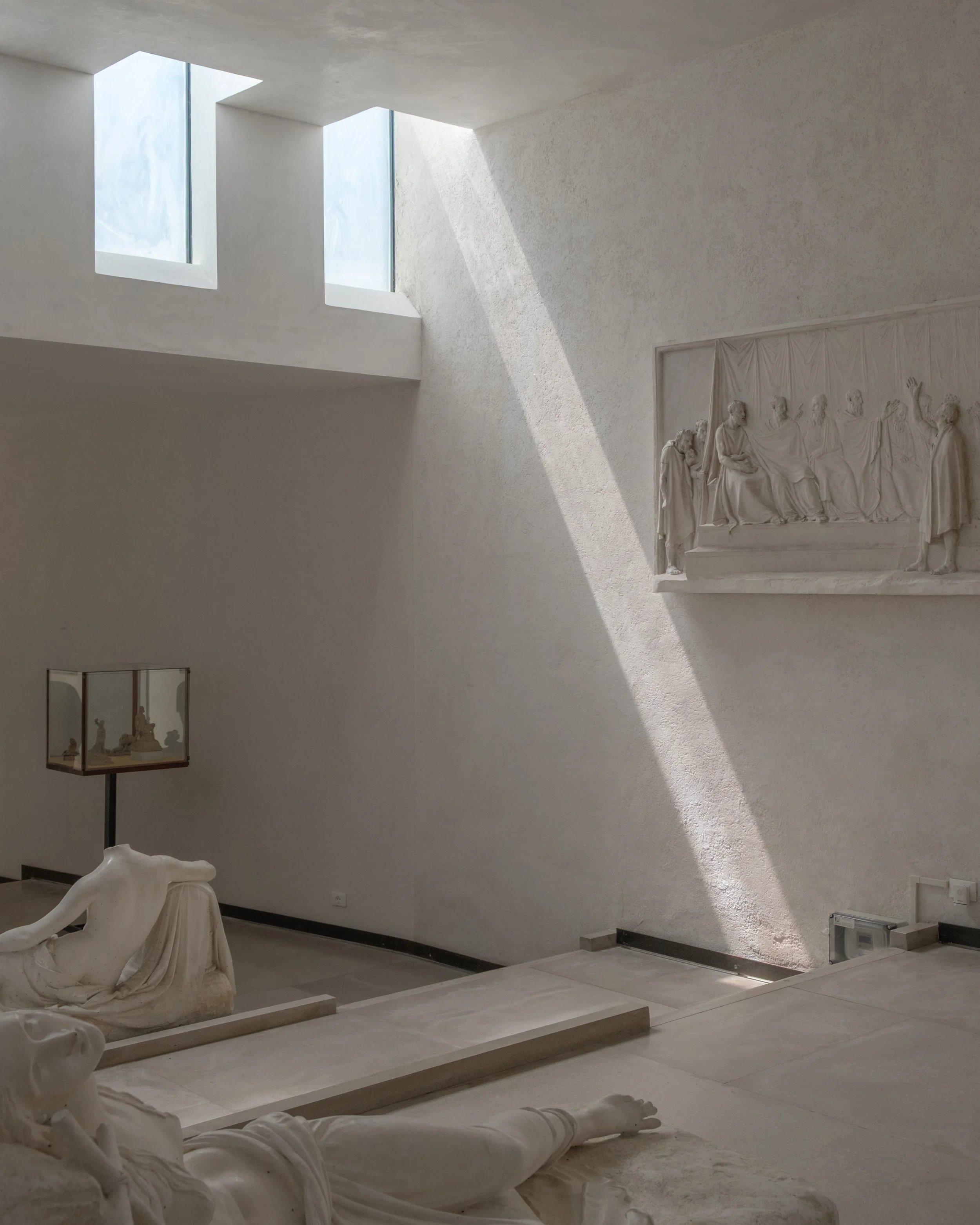
Left: Main perspective of the Scarpa Wing, Right: Sculptural light interacting with the space
A July summer’s day in Possagno, Italy.
An incredibly sensitive Carlo Scarpa museum housing Antonio Canova’s plaster statues.
A journey of stillness, quiet, order and beauty.
Completed in 1957, the Scarpa Wing of the Museo Gypsoteca Antonio Canova, is one of the great projects of the Italian architect, and an extraordinary place where the dialogue between Art and Architecture is made tangible.
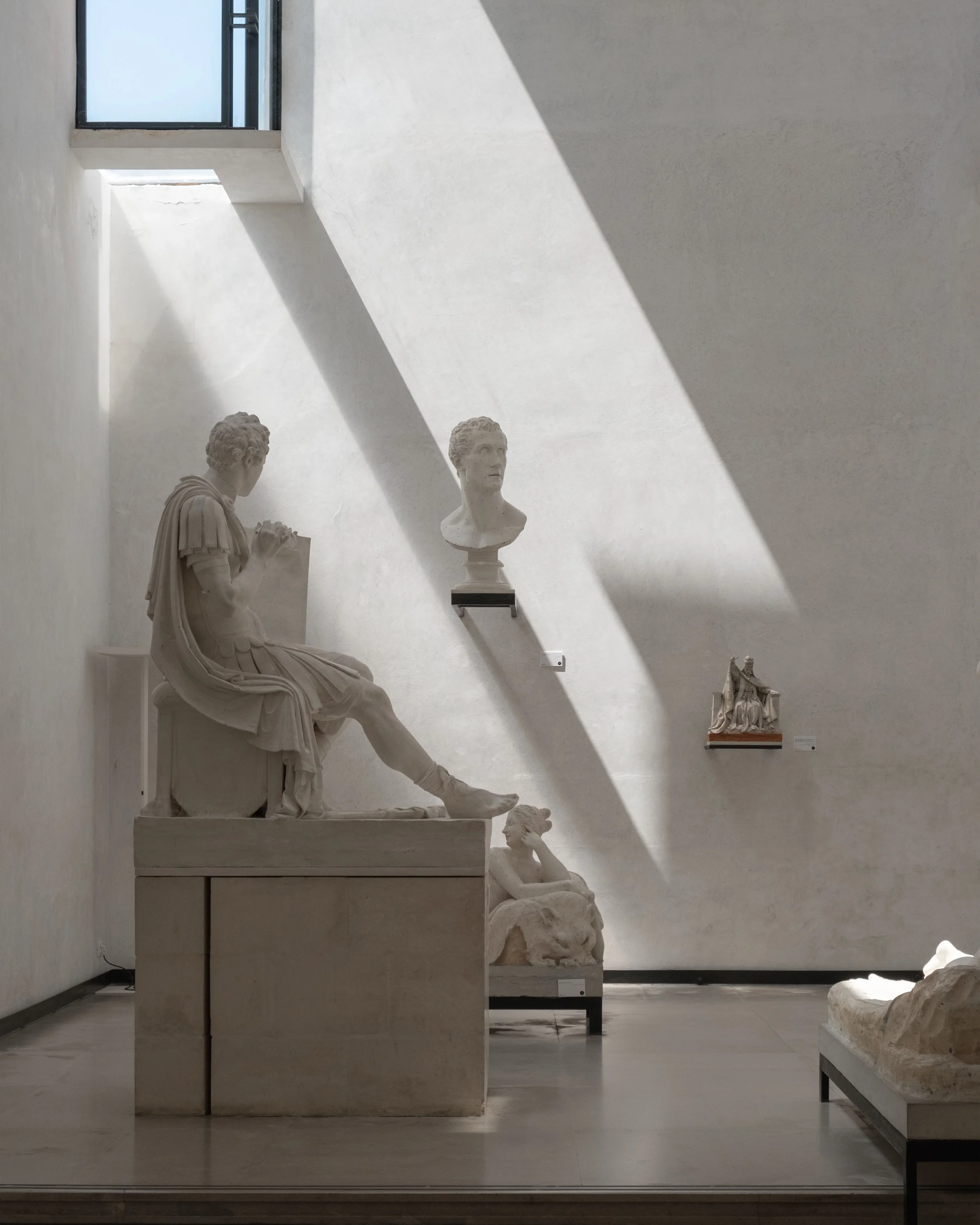
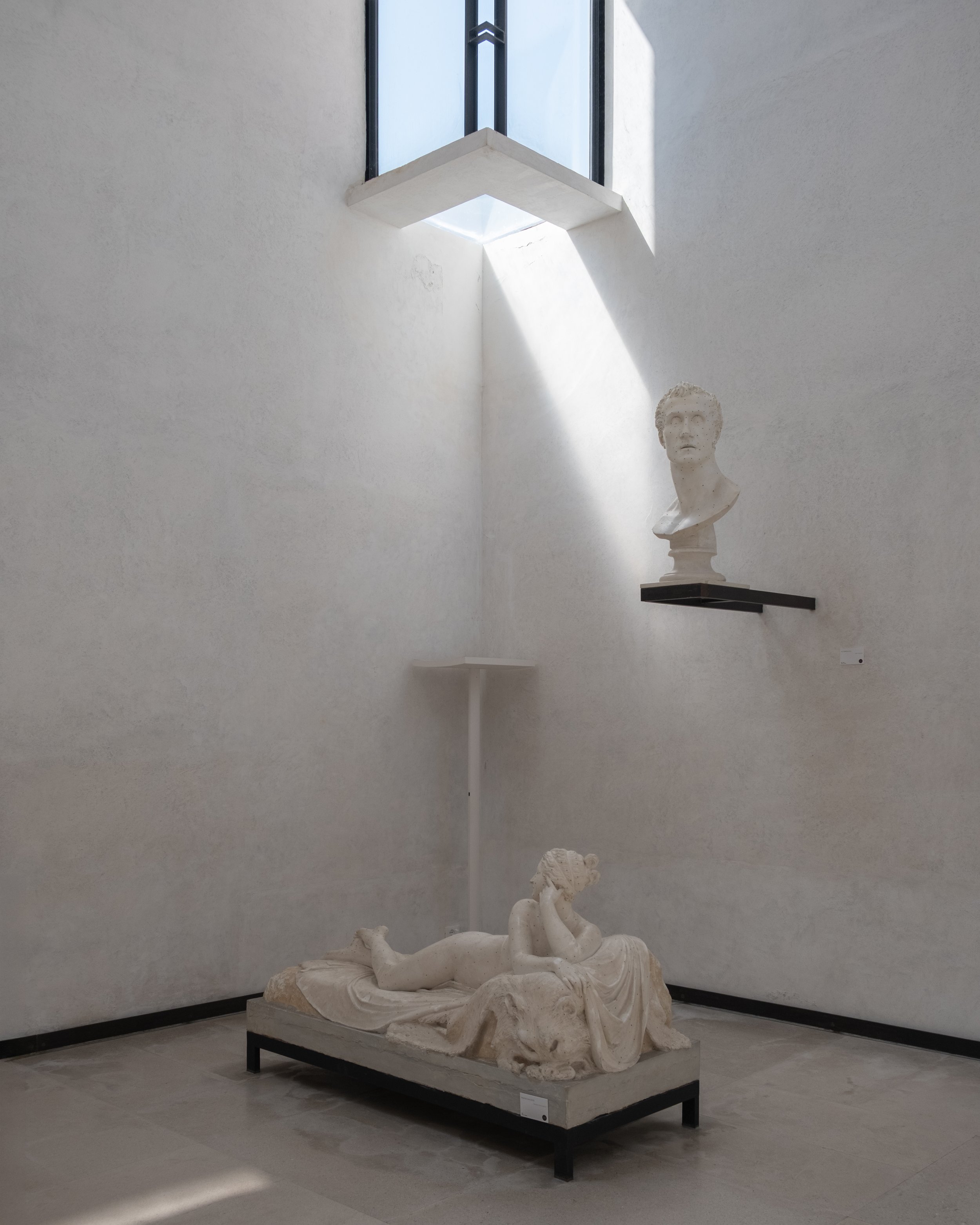
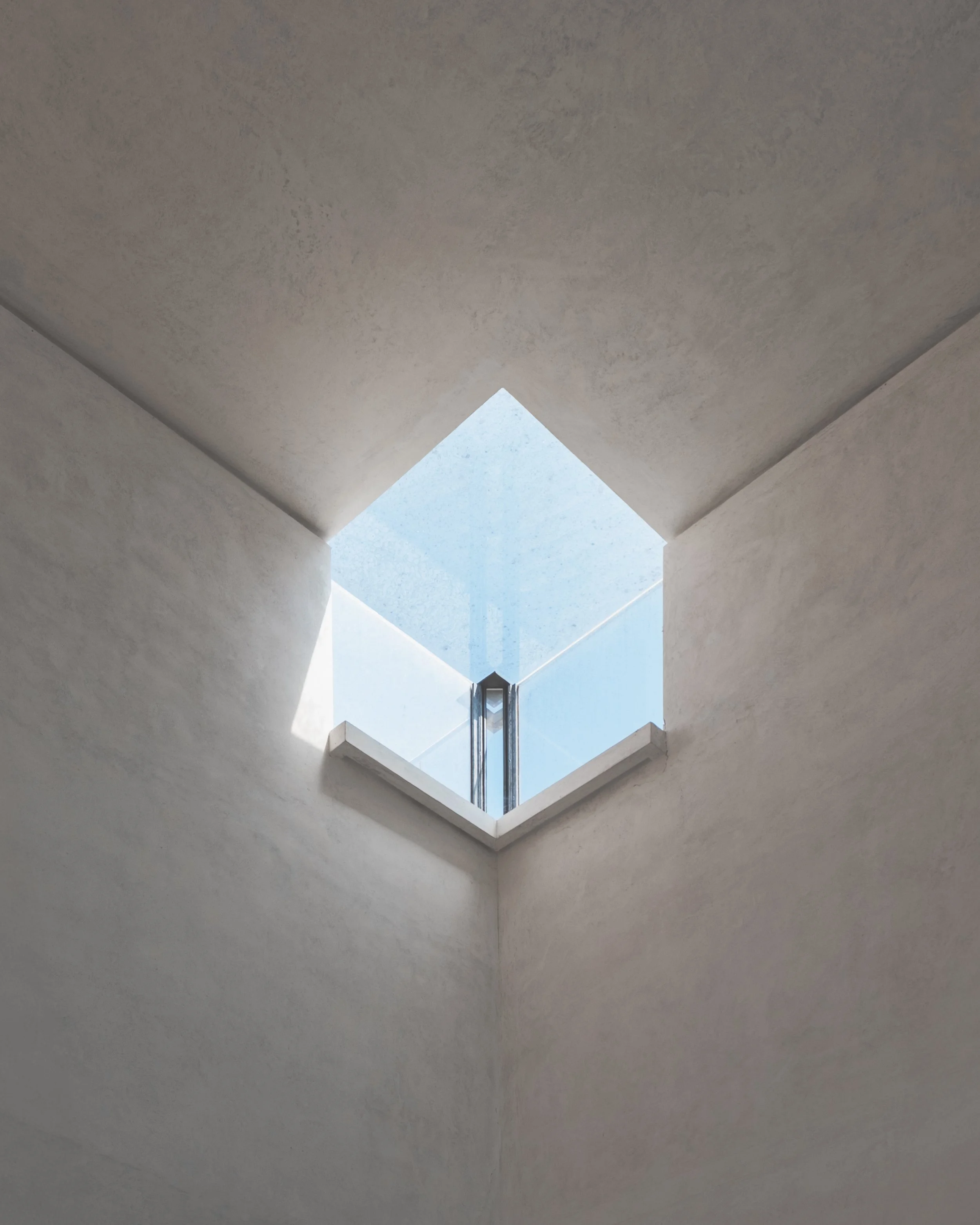
Left: Light contributing to the richness of the exhibition, Middle: Artworks exhibited on multiples architectural planes, Right: Dematerialised corner solution
Carefully designed openings create a subtle tension between the statues and their constantly changing illumination, suggesting movement where there is none. As the lighting conditions shift during one’s visit, the statues acquire an almost imperceptible, metaphysical sense of movement. Life is being breathed into the plaster.
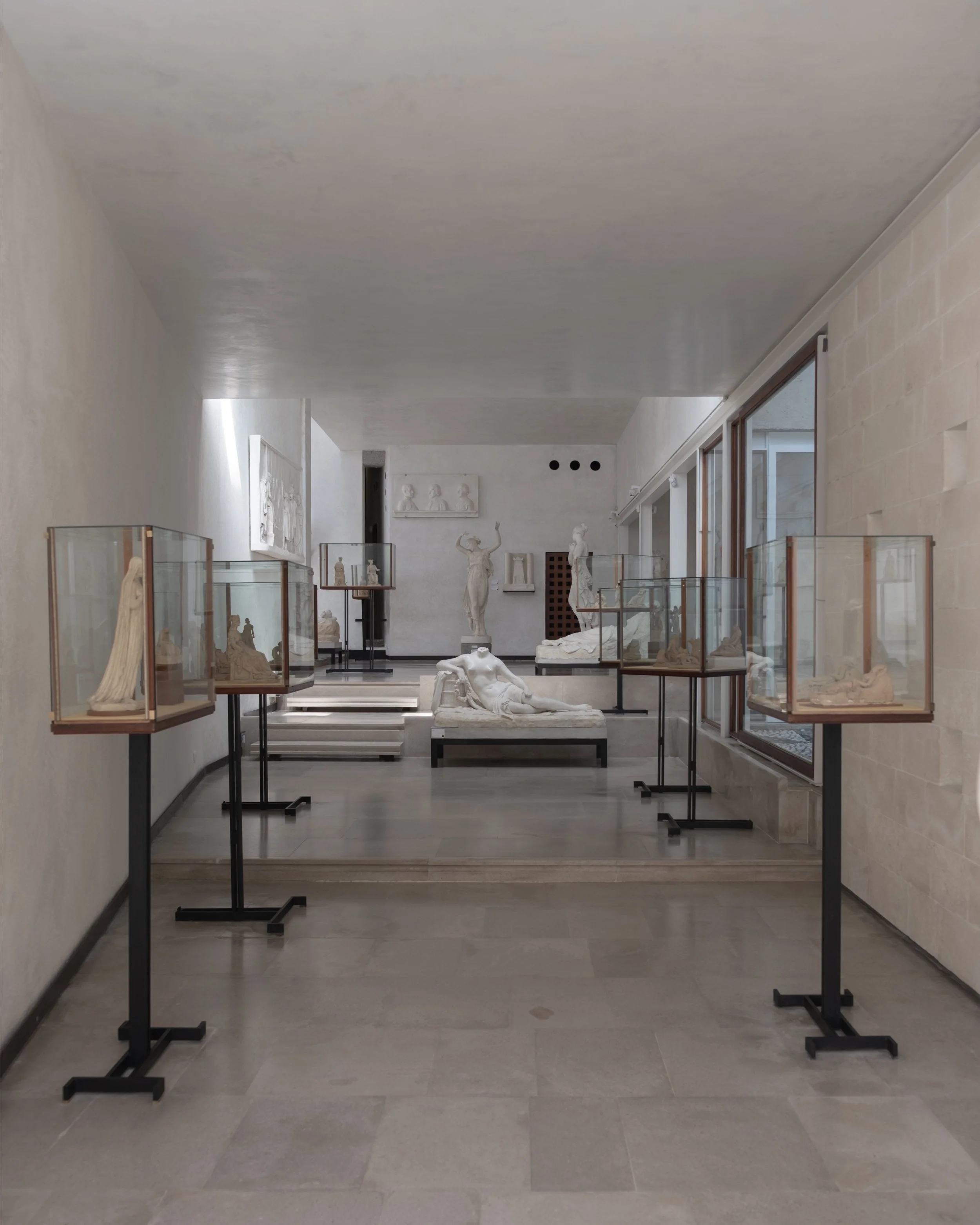
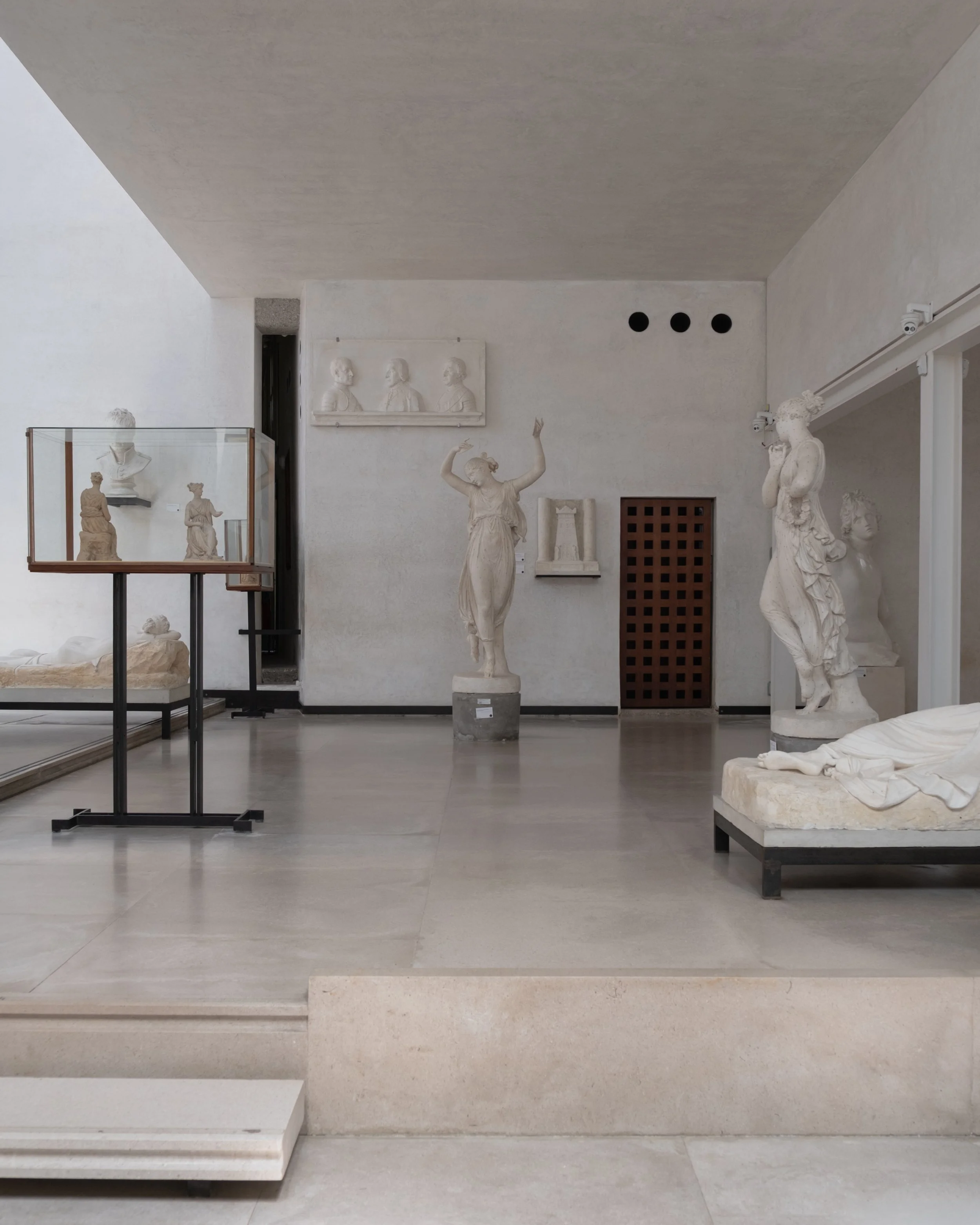
Left: View from the narrowest part of the gallery, Right: Different artwork exhibition strategies
Canova’s figures inhabit the space in total silence, in utter stillness. The Architecture, participates in this motionlessness and almost commands it to the visitors. Even large groups seem captivated by an inescapable quiet and are abruptly brought into a state of composure themselves. Meditation and peace become inevitable.
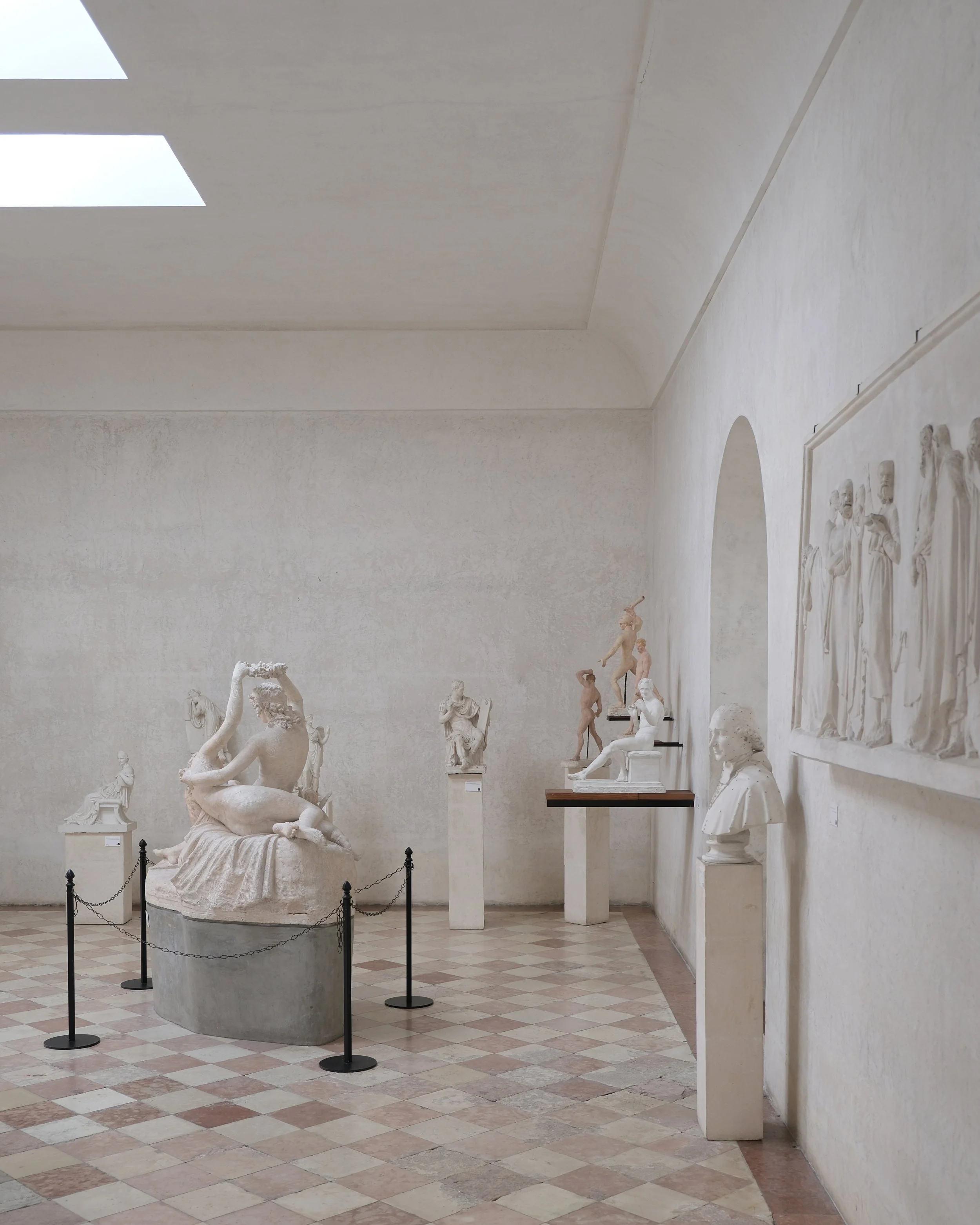
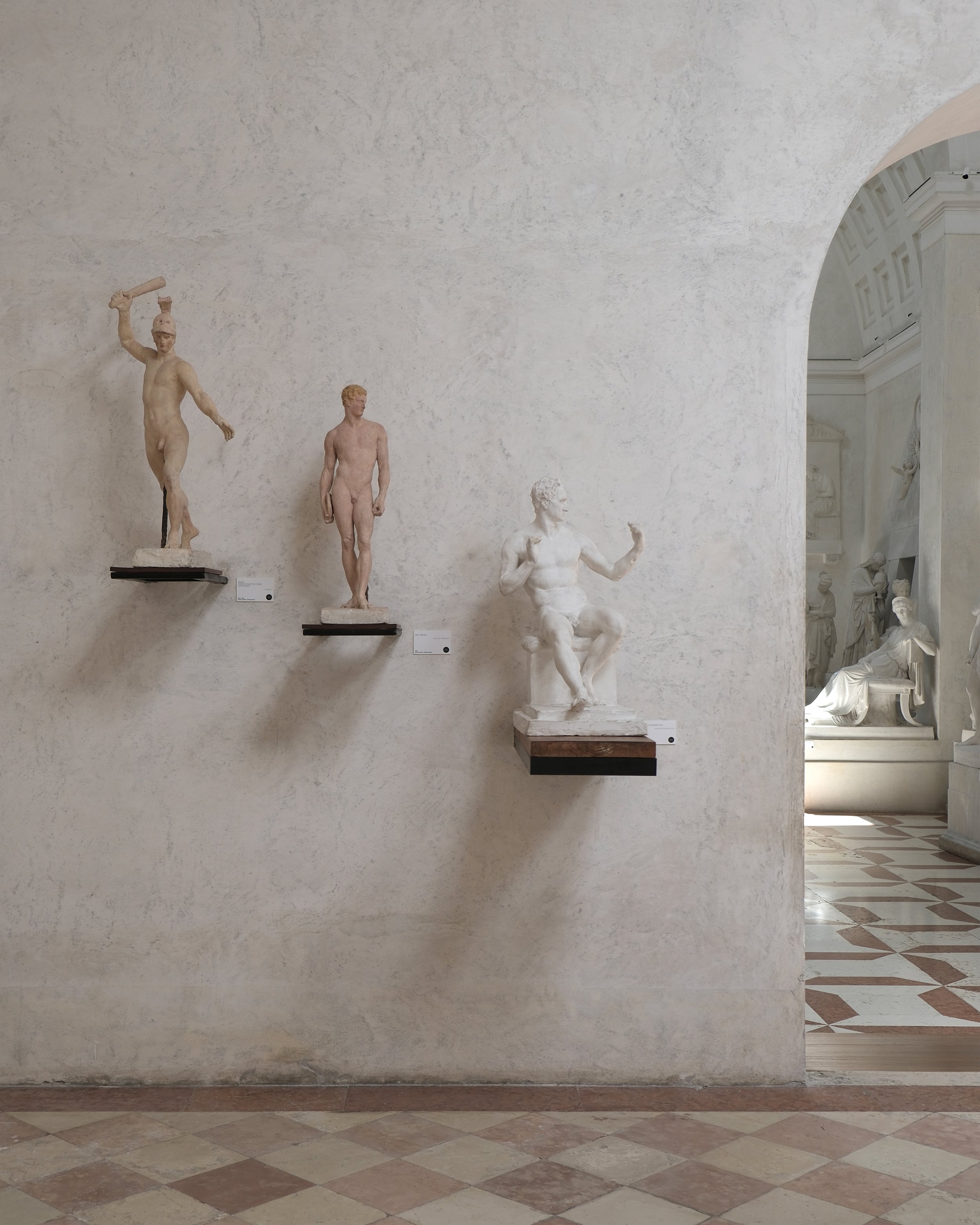
Left: Entrance area to the exhibition space seen from the Scarpa Wing, Right: Wall-mounted museography solutions
Sensitive detailing and restraint in material choices further reinforce how Scarpa’s architecture generates order: space is modulated via phases of compression, subsequent pauses and framed views, all the while clearly maintaining the sculptures as protagonists of the rooms.
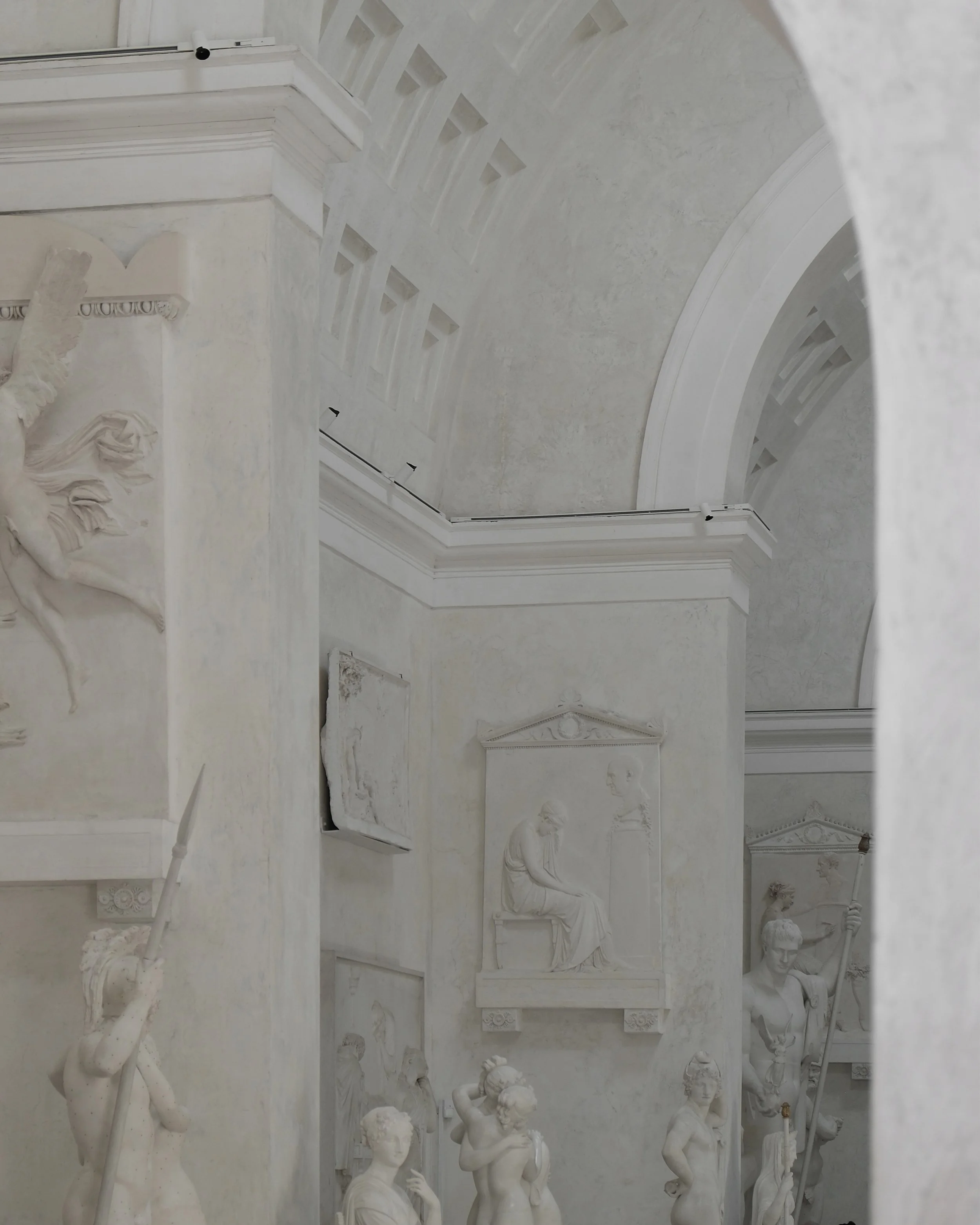
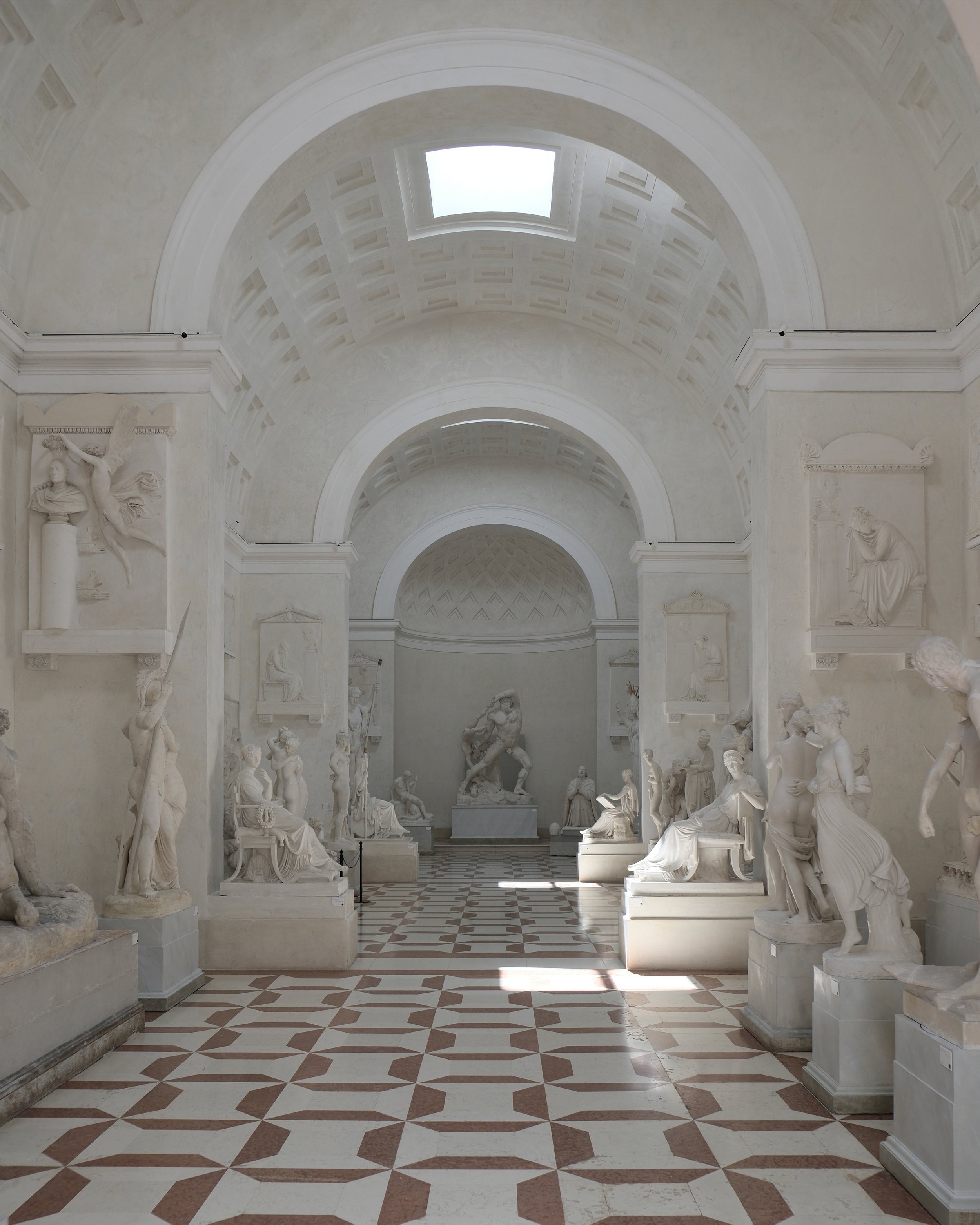
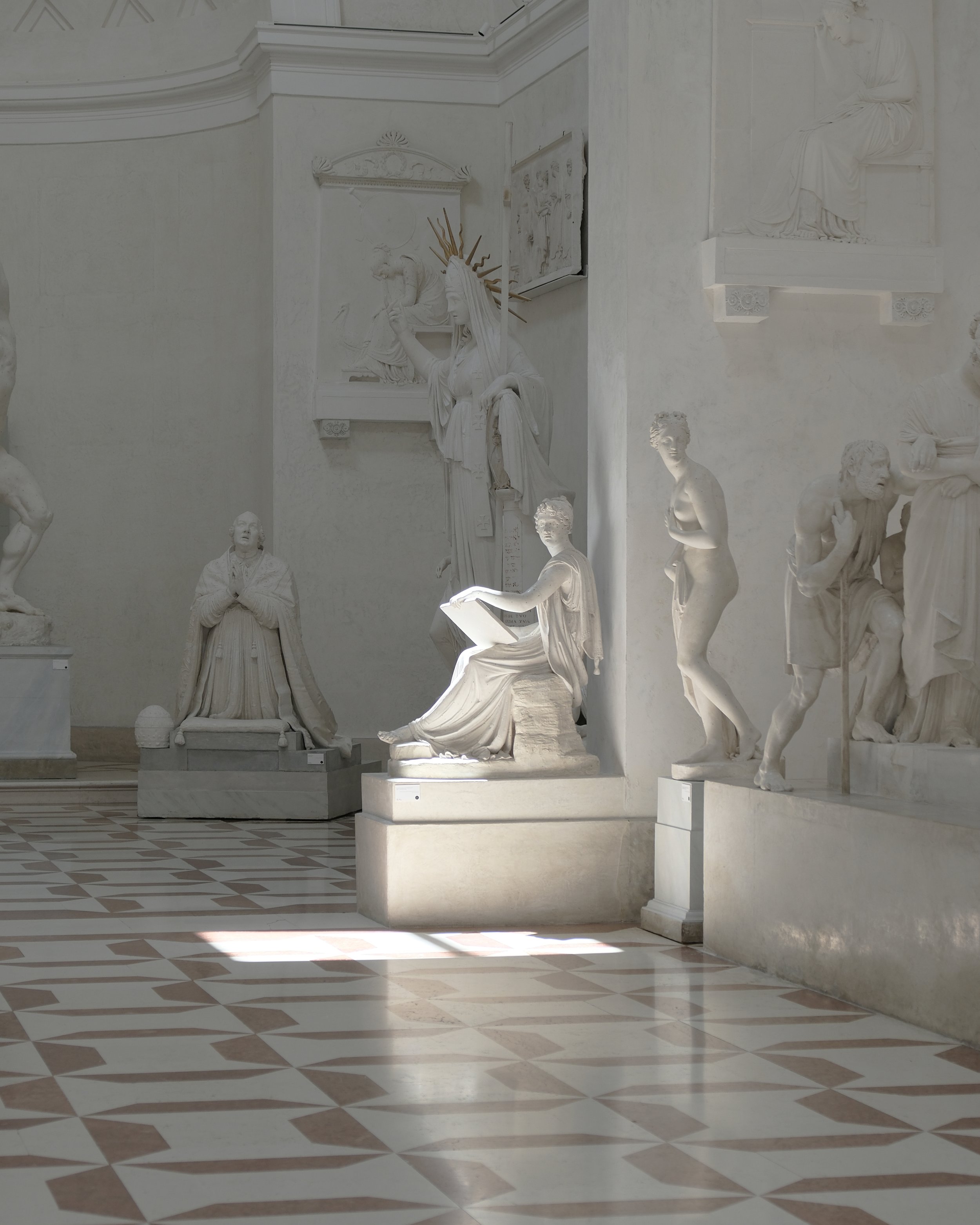
Left: Glimpse from the entrance to the Nineteenth-Century Wing, Middle: Main perspective of the Nineteenth-Century Wing, Right: Interplay between light and the statues
The museum allows you to meander between the sculptures, experiencing their spatial qualities from multiple angles. You find yourself among them, almost participating in their stillness, tranquillity or severity. You find yourself part of a sculptural inventory of human conditions and emotions: moving flesh and immovable plaster sharing the same stage.
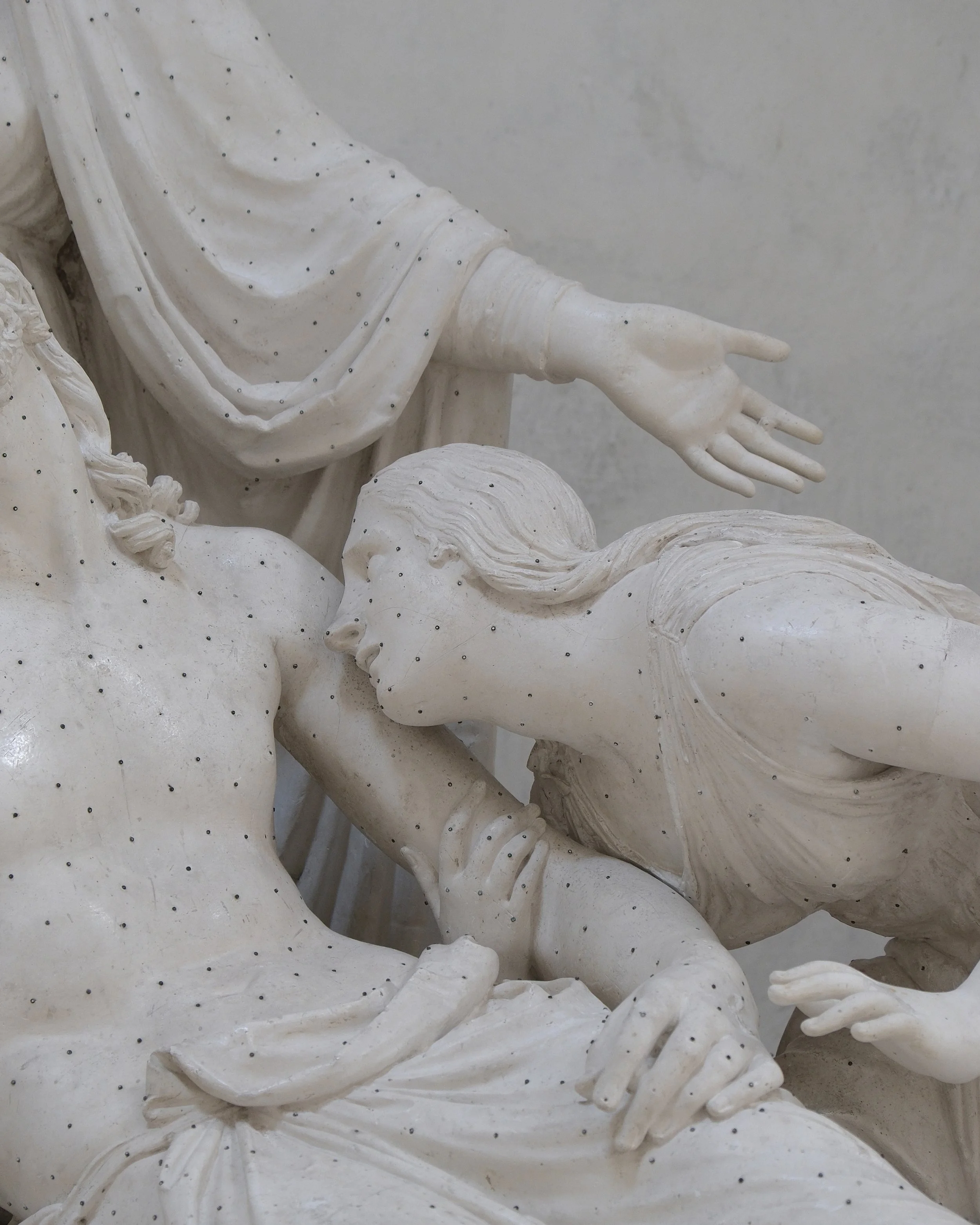
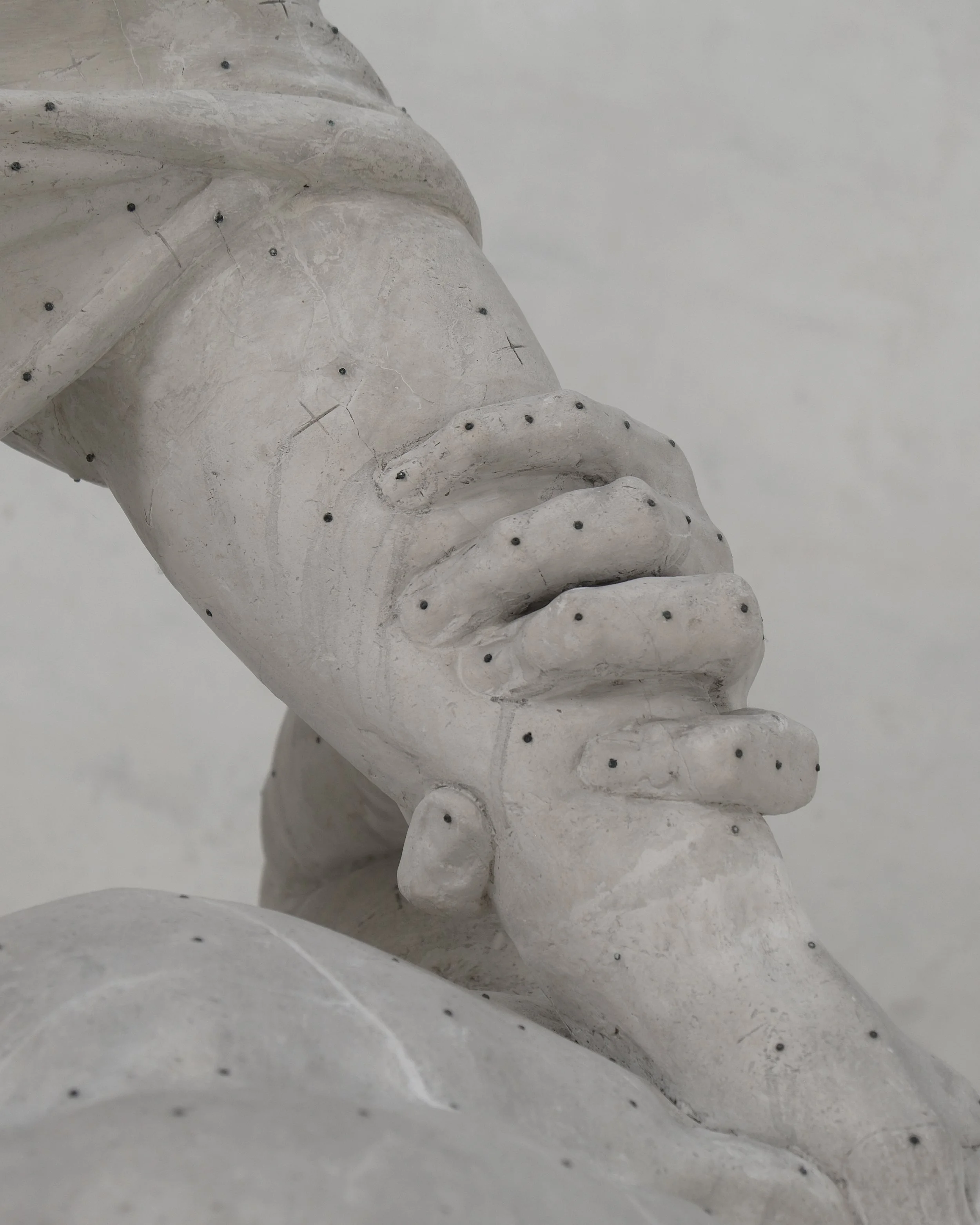
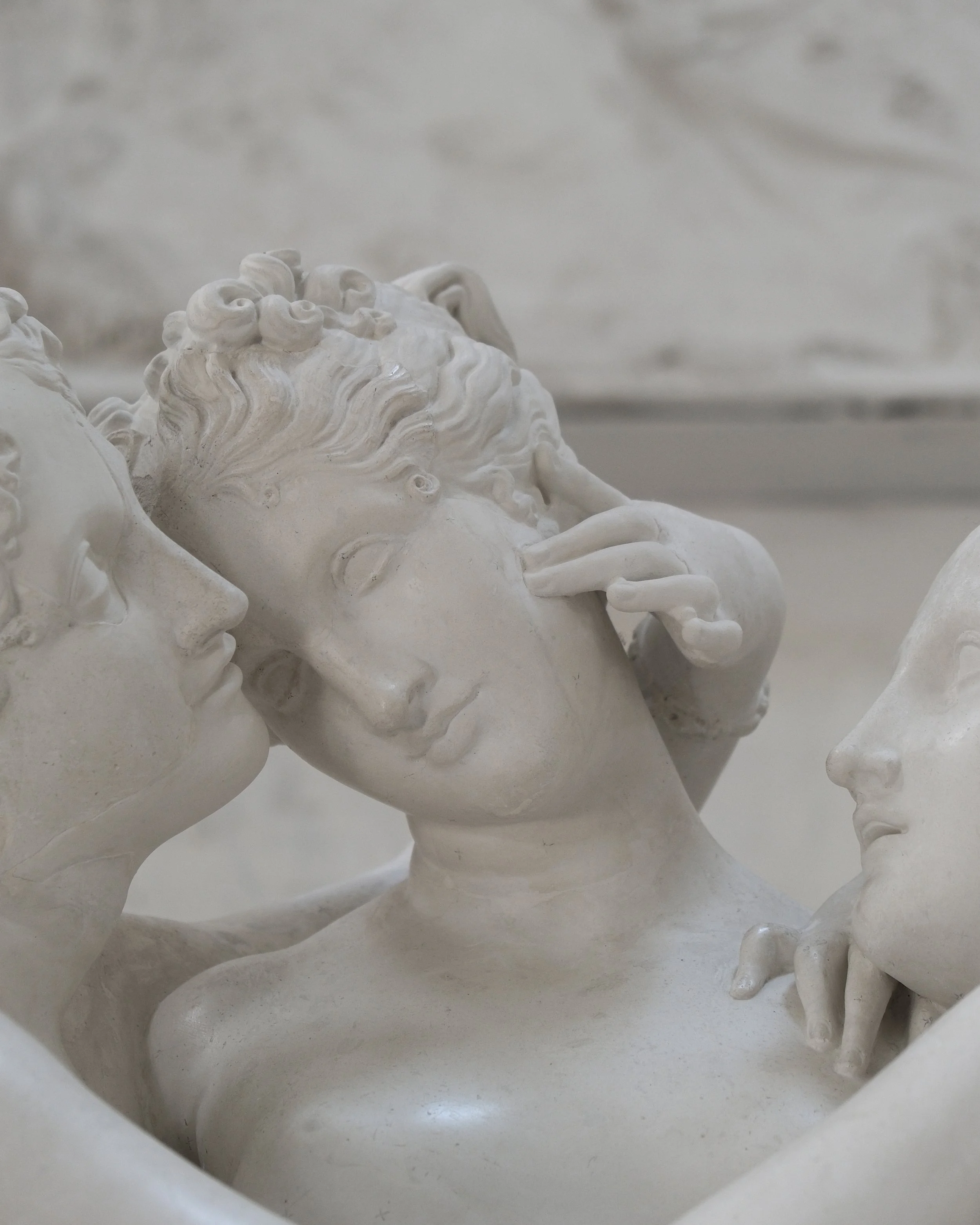
Left: Antonio Canova, Lamentation over the dead Christ (1822), Middle: Antonio Canova, Theseus defeating the Centaur (1805), Right: Antonio Canova, The Graces (1813)
Federico Bortot
Federico Bortot studied architecture at Politecnico di Milano, ETH Zürich and TU Delft, where he is now completing his Master’s. Currently based in Rotterdam, he has worked both in Italy and the Netherlands. In addition to his interest in architecture and construction, he explores photography as an analytical medium for representing buildings and spaces.
Instagram: federico.bortot | federico.bortot.arch
Photos by Federico Bortot